





Question and Answer
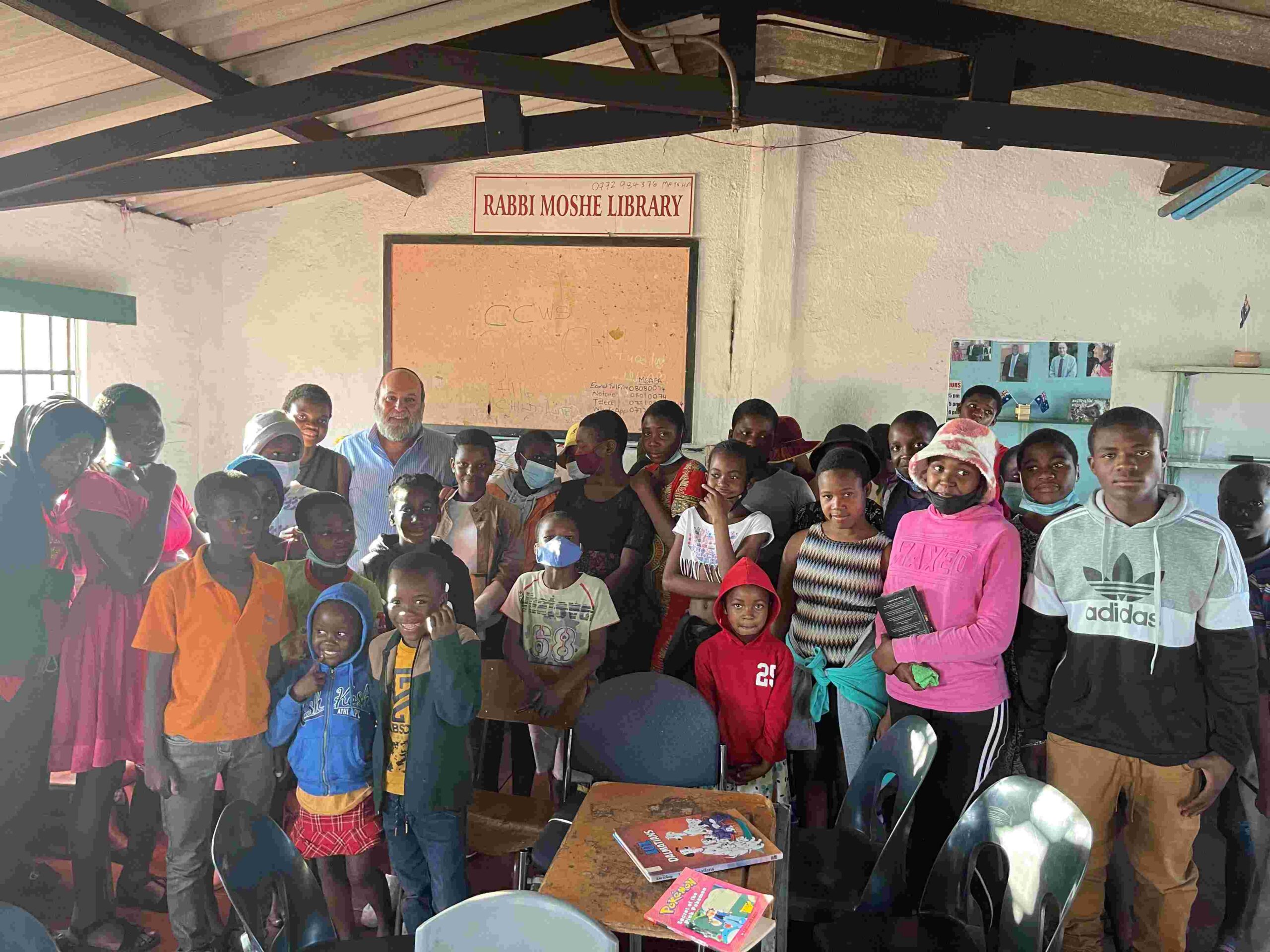
The wandering rabbi returns

Rabbi Moshe Silberhaft has just brought out his second book, The Travelling Rabbi – Journeys Continued. The SA Jewish Report speaks to him about it.
What drew you to becoming ‘The Travelling Rabbi’, and when and how did it happen?
In some ways, the journey began when I was 14 years old. As a pupil at Yeshiva College, I was part of a programme in which we travelled to small Jewish communities to help make a minyan and daven with Jews who rarely had the opportunity to pray as part of a congregation. I still remember the warmth with which we were welcomed and the difference such a simple visit made. I don’t think I realised it at the time, but that experience lit a spark that never really went out. After that, I went on other visits as part of the Yeshiva College country communities programme, and as a military chaplain during my national service continued to engage with and assist Jews living in the country areas.
In 1993, I was invited to become the country communities rabbi with the South African Jewish Board of Deputies. Before long, the work expanded across southern Africa, with the establishment of the African Jewish Congress. Following the production of a documentary by the SABC called The Travelling Rabbi, the title stuck, and I became known as ‘The Travelling Rabbi’.
You do unique work that few even consider. Why do you believe it’s so important?
Judaism teaches that every Jewish soul matters, wherever they may live. That belief has guided my work from the beginning. For someone living far from a synagogue or Jewish community, a rabbi’s visit is about far more than leading a service. It’s a reminder that they belong.
The work also extends to preserving Jewish cemeteries and conserving and promoting Jewish heritage in far-flung places across sub-Saharan Africa. Looking after these places and, to the greatest extent possible, ensuring that the records and physical legacy they have left behind are safeguarded for posterity honours those who built Jewish life before us. Ultimately, my role is about connecting past, present, and future.
What does it mean to you to do this work?
Over the years I have shared life’s most important moments with people across Africa, weddings and funerals, celebrations and heartbreak, often in places where there is little organised Jewish life. Many of the people I first visited as congregants have become lifelong friends.
The greatest lesson has been one of humility. People often think I’m bringing strength to isolated communities, but the truth is they continually strengthen me. Their resilience, generosity, and commitment to Jewish life remind me why this work matters and why I continue to do it.
Why was it important to share these stories in both The Travelling Rabbi – My African Tribe and now The Travelling Rabbi – Journeys Continued?
The first book introduced readers to a Jewish world that many never knew existed, replete with fascinating personalities living in faraway places few had even heard of, let alone visited. Fourteen years later, there were many more stories that deserved to be told. I wanted to preserve those stories before they became lost to history, and honour the people in them.
Why wait 14 years before writing a second book?
Writing a book requires time to reflect. Looking back after 14 years allowed me to see the broader story, not just individual journeys, but the legacy of a lifetime spent travelling, serving, and building connections. It felt like the right moment to continue the story.
Another important motivation was to pick up the threads of previous narratives and bring those stories up to date. A great deal has obviously changed since the first book appeared.
You’ve devoted considerable time to preserving Jewish graves and heritage. Why is this work so important to you?
A cemetery tells us that a Jewish community once lived, worked, loved, and contributed to that place. If we allow those cemeteries to disappear, we lose part of our collective memory.
This is aside from the sacred duty we have to ensure that the final resting places of our forebears are properly maintained and protected. Honouring those who came before us is one of Judaism’s deepest values. Preserving graves isn’t simply about maintaining stones; it’s about showing respect, preserving history, and ensuring that those who built Jewish life in Africa are never forgotten.
You spend time with Jews in some of the most isolated places in Africa. What does your visit mean to them, and what do they mean to you?
For many, my visit is a reminder that they haven’t been forgotten, that their fellow Jews still care about and value them as members of “the tribe”. It tells them that they remain part of the wider Jewish family, no matter how far they live from a synagogue or organised community.
The practical side of my visit may involve leading services, officiating at lifecycle events, providing Jewish-related items not obtainable outside the main centres like matza and wine for Pesach, siddurim and other literature, Jewish calendars, and so on, or simply sharing a meal. But often the greatest gift is presence – listening, sharing stories, strengthening a sense of connection, and offering them encouragement.
As for what they mean to me, they continually inspire me. Their commitment to Jewish life, often in circumstances that require enormous determination, reminds me that faith and belonging aren’t measured by numbers, but by the strength of the human spirit. Every journey leaves me richer than when I arrived.
You often speak about being a beacon of Judaism. Why is that so important to you?
Judaism has survived for thousands of years because each generation has accepted the responsibility of passing it on. That responsibility doesn’t belong only to rabbis, it belongs to every single Jew.
In many of the communities I visit there may not be a synagogue, a Jewish school, or regular communal life. Sometimes simply showing up, celebrating Shabbat together, or helping someone put a mezuzah at their front door, giving them a Jewish calendar or yahrzeit candle reminds people that Judaism is still alive where they are.
Being a beacon isn’t about standing in the spotlight. It’s about bringing light where it’s needed, helping people feel connected to their heritage, to one another, and to something greater than themselves. I hope my work has done that.
Looking back over your life, who are the people who have had the greatest influence on you?
Without question, my parents, of blessed memory, shaped the person I became. They taught me the importance of integrity, kindness, humility, and a deep commitment to Jewish life. Much of what I do today is rooted in the values they lived every day.
Both [the late] Chief Rabbi Cyril Harris and [the late British] Chief Rabbi Lord Jonathan Sacks, with whom I shared meaningful relationships. Their vision transformed the way I think about Jewish leadership. They taught that no Jew is ever too far away, geographically or spiritually, to deserve care and connection. That philosophy has guided every kilometre I have travelled and every community I have visited.
Africa has become your home on the road. Do you have a favourite place?
People often ask me that, but it’s almost impossible to answer. Africa is extraordinary because every country, every landscape, and every community has its own character. I have travelled through magnificent wilderness, vibrant cities, and tiny towns that few people have ever heard of. Each holds memories that are special to me.
If I have a favourite place, it’s rarely because of the scenery. It’s because of the people. Over the years I have built friendships across the continent that have enriched my life beyond measure. It’s those relationships that keep drawing me back.
What message would you most like to leave with Jewish communities across Africa?
Never underestimate the difference one person can make.
Some of the most inspiring Jews I’ve met live in places where they’re the only Jewish family for hundreds of kilometres. Yet they continue to celebrate, to remember, to teach their children, and to keep the flame of Jewish life burning.
Our history has shown that Judaism is sustained not only by large communities, but by individuals who choose to remain connected, wherever they may be.
My hope is that every Jew knows they are part of one family. No matter how distant or isolated they may feel, they are never forgotten. As long as we continue to care for one another, honour our heritage, and build for the next generation, the future of Jewish life in Africa will remain strong.







Nigel Cutting
October 5, 2026 at 12:59 pm
I am trying to contact a friend who was visited by the wandering rabbi in cape town a few years ago.
Who can I contact?