World
This Israeli filmmaker harshly criticises his country. Pro-Palestinian activists boycotted him anyway.

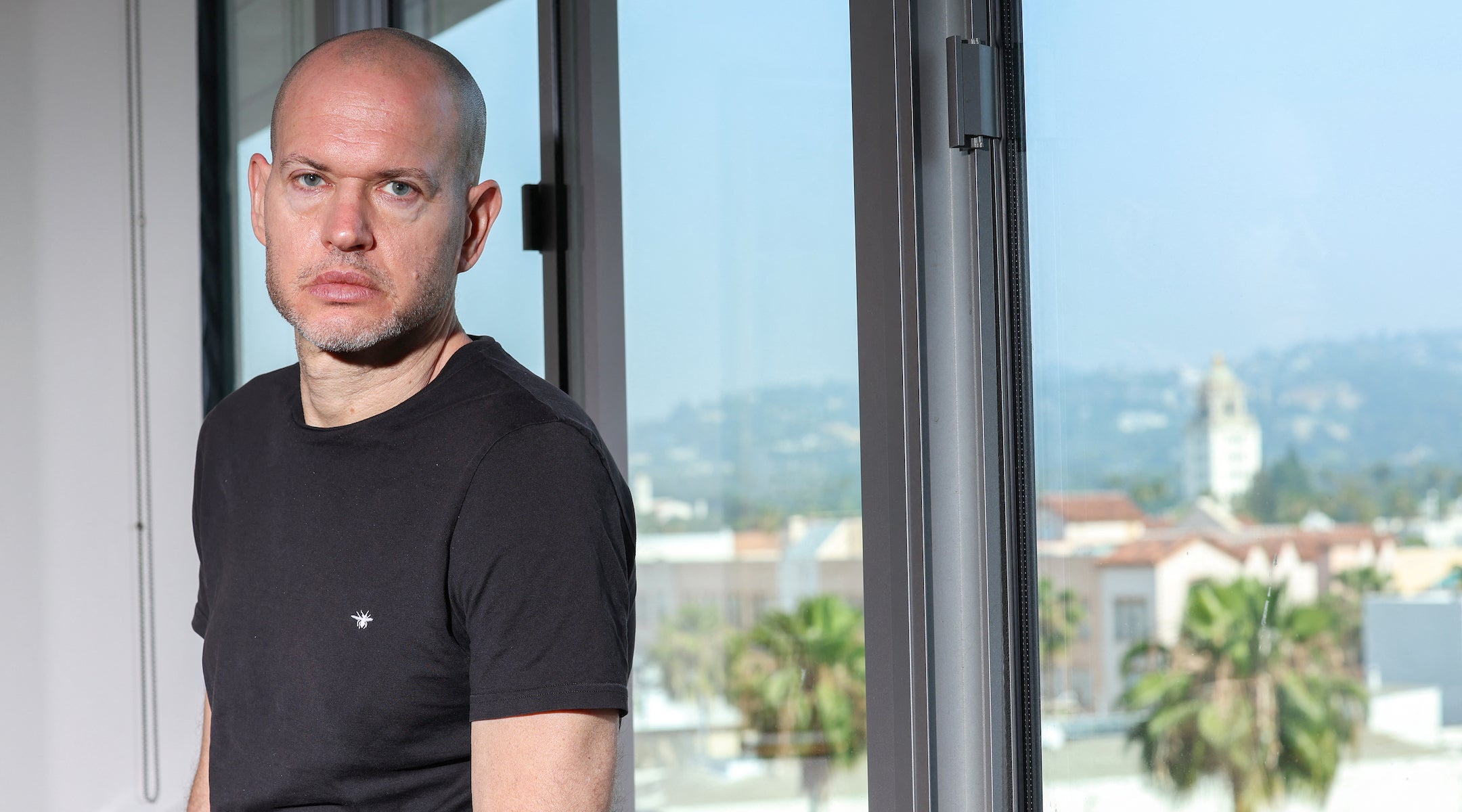
JTA – Earlier this year Nadav Lapid, the award-winning Israeli dissident filmmaker, travelled with his son to Marseille for a screening of his latest film. He fell in love.
“This city reminded me of Tel Aviv, in a way, with the beach and everything,” he recounted on Wednesday to the Jewish Telegraphic Agency (JTA), referring to the city he no longer lives in, having built a career with movies that take sharp aim at what he calls the “moral abyss” of Israeli society.
When a Marseille film festival invited him to serve on its jury for its upcoming instalment in July, he readily accepted. Then the boycotts started.
Last month, about a dozen pro-Palestinian filmmakers threatened to pull out of the Marseille International Film Festival over Lapid’s planned participation because, they said, he had accepted funding from the Israeli government to support his work. Lapid’s movies, including his latest, have received funding from Israel’s film fund. Following this, according to the accounts of both Lapid and the festival’s director, the festival had second thoughts about him serving on the jury.
While the festival offered him the opportunity to participate in a public master class instead, Lapid said, the protesters hadn’t relented, “It’s not enough for these people.”
Frustrated, the director earlier this week decided to pull out of the festival altogether. He’s not happy about it.
“To make people like myself the enemy when the actual state of things is so terrible, it’s insanity. It’s stupidity,” he told JTA. “For them, the highest triumph of the Palestinian cause is if they will cancel my master class in Marseille? I think it’s pathetic.”
Lapid has received a groundswell of support this week. Actress Natalie Portman and hundreds of other film-industry figures have signed open letters criticising the boycotts against him. While he’s uncomfortable with being in the spotlight for reasons unrelated to his films, Lapid said he’s pleased with this outcome.
“You could have composed an unbelievable cinematic programme from only the filmmakers that texted me during the last hour,” he said.
Even so, the filmmaker says, he’s now unsure if he is still welcome in France as a dissident Israeli.
“I asked myself whether they would like me to stop doing movies, or to leave France,” he told JTA. Elsewhere, he’s described himself as “homeless”.
It’s the latest unspooling of painful dynamics around artistic boycotts of artists and institutions seen by the left as normalising Israel. Last month, another French cultural figure, the Jewish comics artist Joann Sfar (The Rabbi’s Cat), faced calls to boycott his presence at a literary festival, also in Marseille. In its justification, a pro-Palestinian artist collective, pushing an Instagram post reading “Zionists out of our city”, cited Sfar’s signing of an open letter last year that argued a Palestinian state should not be recognised unless Hamas could be disarmed and Gaza’s Israeli hostages freed.
In recent months, in addition to broader boycotts of the Israeli film and TV industry, several leading cultural critics of Israel ‒ both Jewish and not ‒ have been targeted as well. Those include bestselling author Sally Rooney for publishing a Hebrew-language translation of her novel with a left-wing Israeli publisher (some prominent activists accused her of exploiting a “loophole” in the Boycott, Divestment, Sanctions (BDS) movement against Israel); Jewish Currents editor Peter Beinart for speaking at Tel Aviv University; and Jewish author Joshua Leifer for associating with a “Zionist” rabbi at a book event.
In Lapid’s case, the group organising against him, La Palestine Sauvera Le Cinéma, argued that “Nadav Lapid is not being targeted because of his Israeli nationality”. Instead, the collective asserted, its objection was due to Lapid having accepted funding from Israel to complete his latest film, Yes; the fact that the film premiered at the Cannes Film Festival as an Israeli co-production and competed for Israel’s highest film awards; and Lapid’s past participation in an Israeli film festival in Paris.
“The cultural boycott does not target artists because of their nationality or personal opinions,” the filmmakers wrote, in French, in a blog post. “What is at issue here is the reality of their integration into the institutional and political structures of the Israeli state.”
For Lapid, whose new movie follows Israeli musicians hired to write an openly genocidal post-7 October anthem for their nation, this argument doesn’t hold water. Lapid has long been critical of cultural boycotts, including BDS. Such measures, he told JTA, are a form of “dogmatic Stalinism” and don’t “move one piece of sand” in Israel.
“I became a test case of purity,” he mused.
Others agree. More than 350 entertainment industry figures signed the first of two open letters in the French newspaper Le Monde backing him, which was published on Sunday.
“Inviting an artist to a festival does not make them a cultural ambassador,” the letter reads, in French, decrying a “campaign of intimidation” against Lapid while also noting what the signatories said was the “genocidal logic” of Israel’s campaign in Gaza.
Among this letter’s signatories were Justine Triet and Arthur Harari, the Oscar-winning team behind Anatomy of a Fall; Harari is Jewish and a critic of Israel himself. Arnaud Desplechin, a French filmmaker who often features Jewish characters in his work, also signed. Others include acclaimed directors Claire Denis, Mati Diop, and Kleber Mendonça Filho; Romanian director Radu Jude, whose films have explored his country’s complicity in the Holocaust; and Palestinian historian Elias Sanbar.
A second open letter, published on Monday, calls the campaign against Lapid an “intellectual failure” and states, “No matter what crimes a state may commit, no one should be reduced to a passport.” It was signed by a smaller cohort of 10 names, including Portman; French-Jewish director Rebecca Zlotowski; and Oscar-winning filmmakers Jacques Audiard and Michel Hazanavicius.
Like Lapid, Portman, an Israeli-American actress who is one of the most prominent Jews in Hollywood, is a longtime critic of the Israeli government and opponent of the BDS movement.
Creative Community For Peace, a pro-Israel entertainment group, said on Wednesday its members also oppose the boycott of Lapid, adding that Israel “funds, screens, and honours films that challenge its leaders, criticise its society, and engage openly with its most difficult debates”.
Unusually, the Marseille festival’s own director, Tsveta Dobreva, also signed one of the open letters in support of Lapid after she appeared to acquiesce to the earlier demands to pull him from the jury.
In an email, Dobreva told JTA her festival “fully supports Nadav Lapid”, saying that she had removed him from the jury out of concern he would be targeted at the event. She did not believe she had “agreed to the boycotters’ demands”, she said.
“Few festivals or cultural institutions in our days have the courage to extend invitations that may provoke controversy, and we stand with Nadav in believing that this form of self-censorship must be resisted, as it only contributes to the problem,” Dobreva wrote.
Lapid intends his next movie to be a follow-up to Synonyms, his 2019 film about an Israeli expat in Paris that won the top prize at the Berlin Film Festival. The Marseille festival is scheduled for July, but he says now he has no intention of going: “I’ll find other beaches.”