





OpEds
Let’s refocus on helping the jobless

Every July, during Mandela Month, South Africans are asked to give 67 minutes to something bigger than ourselves. This year, perhaps we should begin by giving a few minutes to something Mandela said about unemployment when the stakes were still raw and the democracy still new.
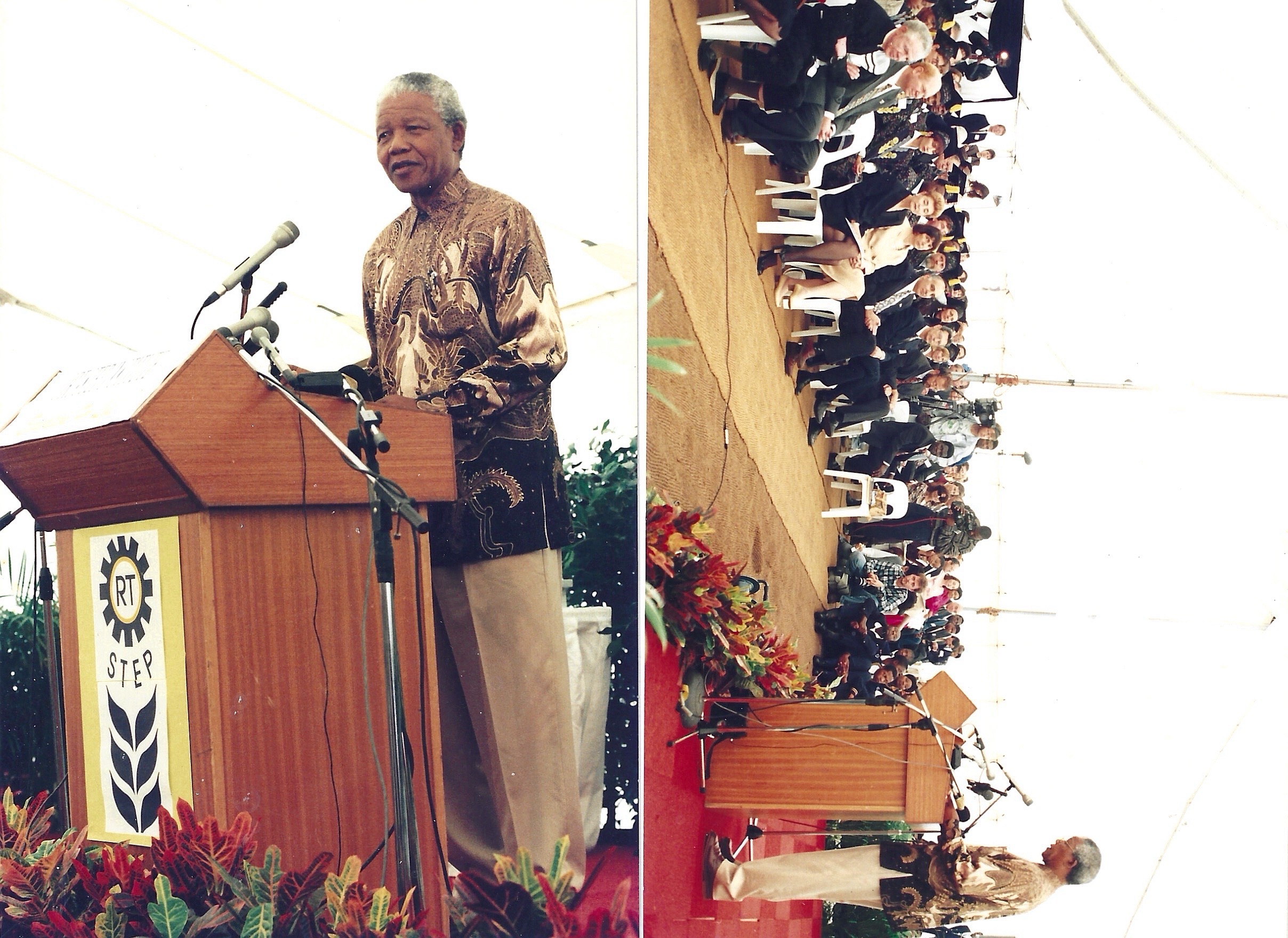
On 7 May 1996, speaking at the first graduation ceremony of the ORT-STEP Institute, President Nelson Mandela named the crisis directly. The country, he said, was faced with a huge unemployment problem, and education was a key ingredient in solving it because it gives people the skills the economy needs. He wasn’t describing a fixed number of jobs, with one group taking from another. He was describing capacity, a country emerging from apartheid with schools that had denied millions the tools to participate meaningfully in the economy. His answer wasn’t to shrink the pool of people chasing work. It was to grow the pool of people equipped to create it.
Thirty years on that distinction has been lost in the noise of this winter’s protests against foreign nationals. The anger isn’t difficult to understand. Joblessness in South Africa isn’t a statistic on a page. It’s rent unpaid, food stretched, young people sitting at home after matric, parents unable to provide, and communities losing faith that tomorrow will be better. That anger is real and deserves to be taken seriously, which is exactly why it matters where we point it.
South Africa’s unemployment crisis isn’t caused by foreign nationals. It’s caused by an economy that has failed to grow fast enough, a schooling and skills system that still leaves too many young people behind, a state that too often frustrates rather than enables enterprise, and a labour market that hasn’t created workplaces at anything close to the scale required.
The numbers are brutal. The Centre for Development and Enterprise (CDE) 2025 report describes South Africa as having the deepest and most persistent unemployment crisis in the world. More than 12 million South Africans want work but cannot find it, and for 17 years, roughly 1 000 people have joined the unemployment queue every day. The CDE’s diagnosis isn’t that migrants are taking jobs. It’s that policy and governance failures have slowed growth to almost nothing, and without growth, no unemployment solution can work.
Stats SA’s latest labour figures confirm the scale of the disaster. In the first quarter of 2026, the official unemployment rate stood at 32.7%. Among young people aged 15 to 24, it was 60.9%. Among those aged 25 to 34, it was 40.6%. That is the heart of the crisis: not a country with too many outsiders, but a country with too few pathways into work.
So, if the facts don’t support it, why does the narrative persist? An Afrobarometer study by Christopher Claassen, modelling the drivers of South African xenophobia, found that poverty, relative deprivation, and frustration with government were the strongest predictors of anti-foreigner sentiment, a mechanism of scapegoating, in which hopelessness looks for a visible target.
The immigration numbers don’t support the scapegoating narrative either. Stats SA’s 2022 Census recorded just more than 2.4 million international migrants, just below 4% of the population. That isn’t enough to explain a national jobs crisis of this depth.
This isn’t a story about who is taking jobs. It’s a story about jobs never being created in the first place, at anything like the scale the population needs.
None of this means South Africa shouldn’t have an immigration policy. Of course, the country needs lawful, competent, and fair immigration management. Home Affairs must work. Borders must be managed. Labour laws must apply to everyone. Employers who exploit undocumented workers, or use them to undercut South African workers, should face consequences.
But vigilantism is not policy. Most people caught up in this moment aren’t its architects; they’re frightened and out of options, looking for someone to blame in a system that has given them very little. Still, chasing people from spaza shops, threatening tenants, looting businesses, or blaming African migrants for state failure won’t create a single sustainable job. It will only destroy livelihoods, deepen fear, scare investors, and distract us from what needs to be done.
The research on migrant entrepreneurship often runs opposite to what the slogans suggest. A World Bank study found that between 1996 and 2011, immigrant workers in South Africa had a positive impact on local jobs and earnings, estimating that each immigrant worker generated approximately two jobs for local South Africans.
These positive outcomes are largely attributed to higher rates of entrepreneurial activity and self-employment among migrants compared with local residents. By engaging in the informal economy and establishing small businesses, these individuals provide vital services and generate a multiplier effect that benefits the wider community.
That doesn’t mean every foreign-owned business is good, lawful, or fair, no economy works like that. It means the broad claim that foreign nationals are the reason South Africans are unemployed is not supported by the evidence.
The informal economy also deserves a more honest conversation. In the fourth quarter of 2025, Stats SA reported that the informal sector accounted for 21.4% of all jobs, the second-largest source of employment after the formal sector. These spaces are where millions of South Africans survive, trade, learn, hustle, and build.
Instead of harassing informal traders, South Africa should be asking how to help more of them grow: how to make permits simpler, how municipalities can support trading spaces rather than destroy them, how to help spaza shops, hair salons, repair businesses, food traders, and township manufacturers access finance, training, digital tools, bulk buying power, and safer infrastructure.
Which brings us back to Mandela, standing at that first ORT-STEP graduation of technology and science teachers, calling the organisation’s work an imaginative and far-reaching contribution to opening doors that had been closed to most South Africans, built on a partnership of educators, business, and government.
At ORT SA, that partnership is the work we see every day: building skills, supporting teachers, opening pathways for young people, and helping communities access the tools that make participation possible. It is not dramatic work. It rarely fits into a slogan. But it is the work Mandela pointed to, patient, practical, and partnership-driven capacity building.
So, this Mandela Month, the 67 minutes’ worth of giving might not be a single act of service but something smaller and more sustained: mentoring a young person looking for their first opportunity, supporting a skills or enterprise programme in your community, hiring locally where you can, or simply correcting the record in a taxi rank, around a Shabbos table, in a staffroom, or a boardroom. Yes, the unemployment crisis is real. Yes, the anger is understandable. Yes, the state must do its job. But the fix was never going to come from fewer foreigners. It comes from more people equipped, and more doors held open.
- Ariellah Rosenberg, ORT SA chief executive, drives STEM, entrepreneurship, and skills programmes, expanding opportunities for outreach and Jewish communities, with more than 30 years of experience in education and the nongovernmental sector.






Ben Stein
July 10, 2026 at 10:09 am
One of the fundamental reasons why there is such poor economic growth and high unemployment is that the ANC
regards private business as its biggest enemy. Thabo Mbeki recently publicly admitted that this has been the case for the last 30 years. It is impossible for business to have the confidence to increase investment and employment when constantly opposed by such a powerful anti-capitalist ideology which is internalised within the very fibre of every ANC cadre and government employee.