





OpEds
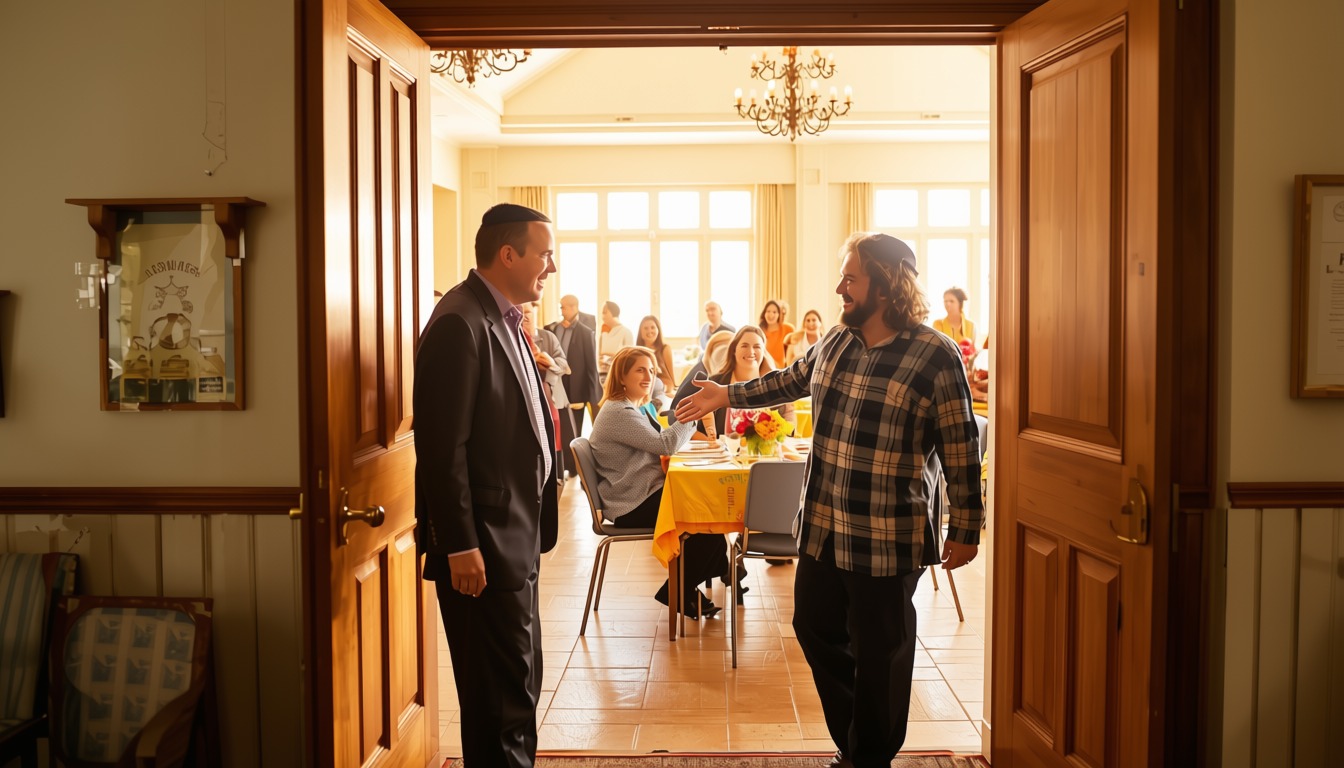
Showing up may be the bravest thing you do this week

There is a particular kind of loneliness that is hard to explain.
It isn’t necessarily the loneliness of having no one in your phone. Many people who feel lonely have family, contacts, WhatsApp groups, shul acquaintances, work colleagues, children, and grandchildren.
And yet, somewhere deep inside, there can still be a quiet ache. Where do I really belong? Who would notice if I disappeared for a while? Where am I expected? Where do I matter?
This kind of loneliness is often invisible. It hides behind busy lives, successful careers, full Shabbos tables, polite smiles, and the standard answer, “Baruch Hashem, all good.”
But for many people, all is not fully good.
Over the past few years, I have become increasingly aware of how many people are living with a deep social hunger. Some are single and tired of being treated as a “dating problem”. Some are divorced and feel awkward re-entering community life alone. Some are widowed and no longer know where they fit. Some are in their 50s, 60s, or 70s and feel that the natural social structures of earlier life have slowly fallen away. Some are married but still feel emotionally alone.
And many people aren’t staying home because they don’t want connection. They’re staying home because connection has started to feel risky.
They think about going to an event. They even want to go. But then the thoughts begin. Who will I talk to? What if everyone already knows each other? What if I stand alone and feel embarrassed? What if I feel even worse afterwards?
Arriving at an event can feel like crossing a bridge over a very deep river.
We need to become far more compassionate about that bridge.
There’s also something painful about the way adult friendships disappear. Often, there’s no dramatic breakup, no betrayal, no final conversation. They simply fade. One person gets busy. Another moves neighbourhood. Someone loses confidence. Someone stops being invited. Someone stops accepting invitations. Months become years. And then, one day, a person looks around and realises that their social world has become very small.
This is not only a personal issue. It is a communal issue.
We live in a time when communities have many institutions, many programmes, many shiurim, many fundraising dinners, and many WhatsApp groups. But still, people feel unseen.
The issue is that the social fabric has become thinner, and many people have quietly fallen through it.
Our task is to rebuild that fabric.
That means creating more gentle entry points into community life, smaller, more intentional spaces where someone can arrive alone and not feel alone for long.
It means having hosts, not just organisers. A host notices who is standing on the edge of the room. A host introduces people thoughtfully. A host remembers names. A host makes the first five minutes less terrifying.
It means creating gatherings where the goal is not performance, status, or networking, but simple human connection. A walk. A meal. A discussion. A music evening. A volunteer project. Something low-pressure enough that people can come as they are.
Connection is not fluffy. It is not a luxury. It is part of emotional health. Some of the most interesting longevity research points in the same direction.
Many people have heard of the “Blue Zones”, a small number of regions in the world where unusually high numbers of people live long, healthy lives, often into their 90s and beyond 100. Researchers studied places such as Okinawa in Japan, Sardinia in Italy, Ikaria in Greece, Nicoya in Costa Rica, and Loma Linda in California, trying to understand what these communities had in common.
The answer was not one magic diet, supplement, or exercise routine. Yes, lifestyle, movement, food, and a sense of purpose mattered. But again and again, one of the strongest patterns was belonging. People weren’t ageing as isolated individuals. They were woven into family, friendship, ritual, faith, neighbourhood, and community. They were expected somewhere. They had roles. They had people. They had a reason to get up and participate.
That should make us pause. Because it suggests that connection is part of the architecture of a long, healthy, and meaningful life.
Research increasingly confirms what our tradition has always known, people heal in relationship. After trauma, grief, or prolonged stress, being connected to others can help people regulate, recover, and feel less alone in their pain.
This matters profoundly in Jewish life today. In Israel, after the trauma and uncertainty of the past two years, and in Jewish communities around the world carrying their own fears and grief, connection is not a “nice to have”. It is part of how a people remains whole.
We need therapy. We need security. We need leadership. We need education. We need tefillah. But we also need each other.
So, what if we each took responsibility for one person on the edge of our community life? One person who used to come more often. One person who seems less present. One person who has gone through a divorce, bereavement, illness, move, or other life change. One person who may not have the courage to ask.
Not with pity. Not with drama. Just with a simple invitation. “Would you like to come with me?” “I’ll save you a seat.” “Come for half an hour.” “I’d love you to be there.”
These are small sentences, but they are not small acts. For the person receiving them, they may mean: I still matter.
And for those who are feeling lonely themselves, perhaps the first step is not to rebuild an entire social life. That can feel overwhelming. Send one message. Accept one invitation. Ask one real question. Invite one person for coffee. Let one person know you are trying to reconnect.
The way back to belonging is usually not dramatic. It’s made of small, repeated acts of courage.
This is part of why Wholesome Spaces was created in our community. The idea is simple: create warm, dignified, non-pressured spaces where people can meet, connect, laugh, share, participate, and slowly feel part of something again.
Not dating events. Not therapy groups. Not places where people are labelled as lonely. Just human spaces.
The Jewish people have always understood the power of community. We don’t mourn alone. We don’t celebrate alone. We don’t even say certain prayers alone. Our tradition is built around the idea that holiness often requires presence.
But presence doesn’t happen automatically. In modern life, we have to rebuild the pathways that bring people back to each other.
So perhaps the question for each of us this week is simple. Who can I help feel that they matter?
And if I am the one feeling disconnected, what is one small step I can take back towards life?
Because sometimes, showing up isn’t a social act. It’s an act of courage.
And sometimes, inviting someone else to show up is an act of love.
- Paul Bacher is a social entrepreneur, community builder, and business leader with a passion for fostering meaningful connections and creating spaces for personal and collective growth.





Ingrid
July 10, 2026 at 5:30 pm
Thank you for this piece. It’s so necessary to remind people that if everyone simply shows thoughtful interest in one other person we would create wonderful communities – because the world has forgotten this elementary and uncomplicated way of being… Ingrid