Featured Item
Travelling comes with antisemitic baggage

Two young South African women advised to hide their Judaism during a group tour in Ireland; a United States-based rabbi and his family confronted by an aggressive flight attendant en route to Cape Town. With increasing reports of Israeli and Jewish tourists facing verbal and sometimes physical attacks abroad, travel today demands heightened vigilance.
Channing Haefner, 24, and her friend, who travelled around Ireland on a Contiki tour in July, were afraid to express their Judaism while there. “Going in, we were aware that Ireland was quite antisemitic because it was around the time that they had banned all Israeli products from coming into the country,” says Haefner. She therefore removed her Magen David necklace before she travelled and checked numerous times that it was safely hidden.
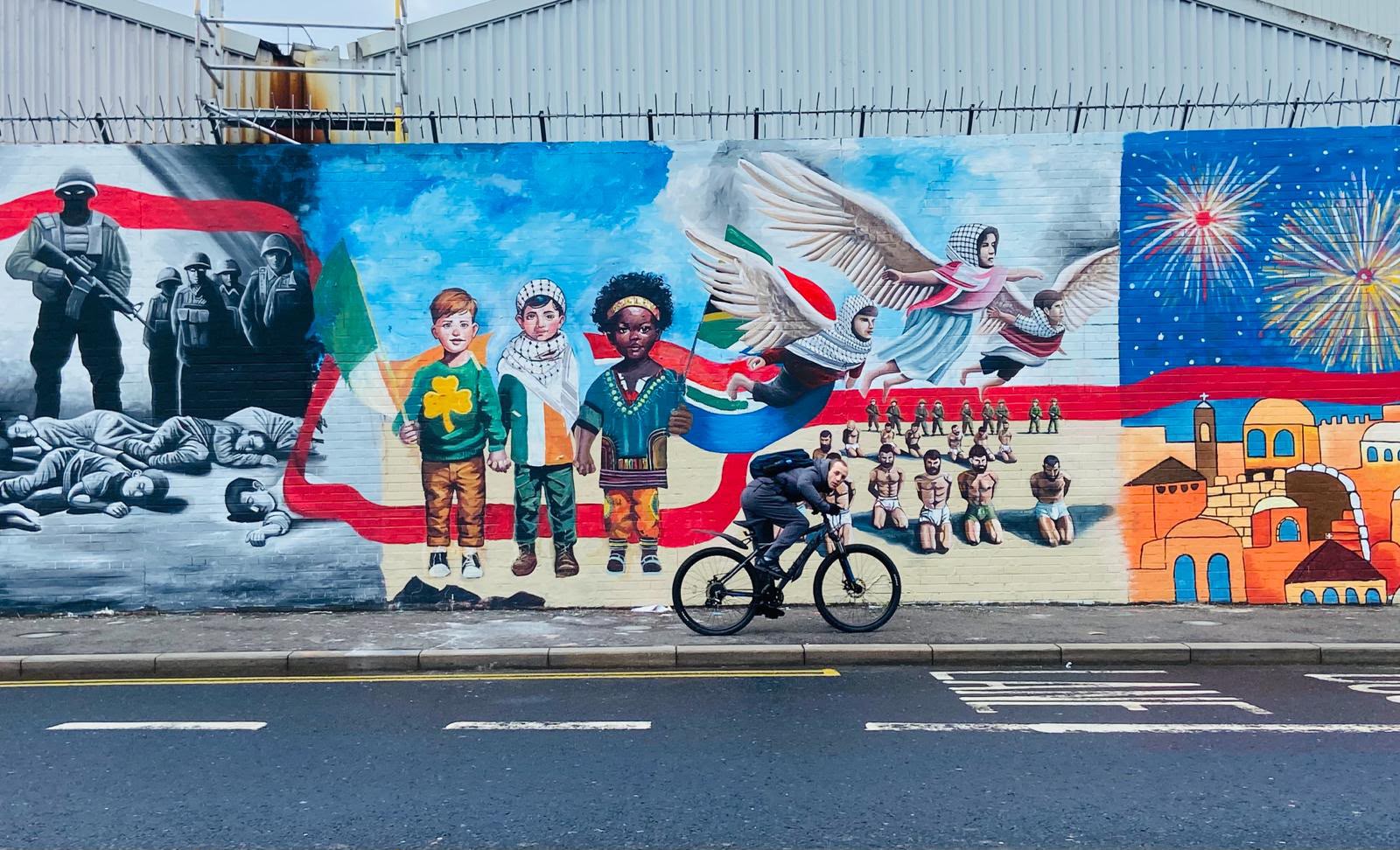
“The second we arrived in Ireland, it was very evident that this was not a place where Jewish people would be welcome,” she says. “There were pro-Palestinian flags everywhere and many frightening murals, especially when we went to Northern Ireland, which has had its own history with the Troubles.” This was a 30-year violent conflict between the Protestant unionists and Catholic nationalists. This history has led to strong pro-Palestine sentiment.
In Derry and Belfast, well-known murals depicting that conflict are frequently updated with pro-Palestinian imagery. One of the images the young women saw during a mural sightseeing tour in Belfast was of Israeli Prime Minister Benjamin Netanyahu with Israel Defense Forces soldiers and blood all around him, Haefner recalls. “I’ll never forget it. Then we saw the Peace Walls, which ironically have nothing to do with peace because everywhere it was written ‘Free Palestine’, ‘Jews aren’t welcome here’. They had an Israeli flag, and it was completely desecrated, vandalised with the most disgusting things.”
The experience was exacerbated by the attitude of their Irish tour guide. “She took it upon herself to spread her own agenda in terms of what she believes is happening during the Israel-Palestine conflict,” Haefner says. “It was blatantly antisemitic and anti-Israel, referring to Israel being genocidal and so on. It made us incredibly uncomfortable; we didn’t feel safe enough to say we were Jewish – we were genuinely scared at certain points.”
Their apprehension extended to interactions with fellow Contiki participants. A male friend they’d made on the tour advised them not to reveal that they were Jewish. “He warned us not to tell a specific Australian woman that we were Jewish as she was very pro-Palestine. Apparently, on an earlier leg of the trip that we missed, there was another Jewish girl, and the Australian woman went for her through verbal abuse, especially around Israel’s conduct.”
Following other members of the tour on Instagram, the two were unsettled to see that nine out of 10 were posting for Palestine and were passionate about the conflict.
“While we knew there would be issues, we weren’t expecting it to be so in your face or to the extent that it was. We don’t ever want to lie about who we are, but it was something that we were unfortunately forced to do.” Asked at one point if she followed a specific religion, Haefner said, “Not really.”
“I feel like if we’d said we were Jewish, it would have completely flipped everything on its head,” she says. “We’re two girls in our 20s and we didn’t really know how to navigate this specifically within a group setting like this. So, it was quite intense.”
After the trip, Haefner laid a formal complaint with Contiki about the blatant one-sidedness of the mural tour and their significant discomfort. While she received an apology, she worries that anti-Zionist and antisemitic rhetoric are still spread on such tours to people unfamiliar with the nuances of the Israel conflict.
Those who openly express their Judaism have also recently encountered antisemitism during their travels. While davening on a recent flight from New Jersey to Cape Town, Rabbi Uriel Vigler and members of his extended family encountered an aggressive flight attendant. Born in Zimbabwe and partially raised in South Africa, Vigler, now the director of the Chabad Israel Center of the Upper East Side of Manhattan, was flying to South Africa for two family simchas.
The 15-hour flight on a US-run airline meant that the family would have to stand up to do their daily prayers onboard. “We’re always mindful that we are guests on the aircraft and try to be as unobtrusive as possible,” he wrote, sharing their experience on Facebook. “We’ve done this on countless flights over many years without incident. This time, it was entirely different.”
The moment they started evening prayers, the flight attendant began shouting at them aggressively to move. “He did this repeatedly, frightening our children and shocking us all,” Vigler said. “Later that evening, my brother fell asleep and his legs drifted slightly in the aisle, something we’ve all done. But instead of waking him with a polite request, the attendant slapped his legs to wake him.”
Shortly afterwards, Vigler’s 12-year-old niece was returning to her seat after using the restroom, and as the attendant passed, he shoved her aside. “Her mother witnessed the entire incident and was left stunned. We lodged formal complaints with other members of the crew, but nothing changed.”
Speaking to the SA Jewish Report, Vigler said that one of the other flight attendants, in fact, laid tefillin on the flight too, but that didn’t curb his colleague’s behaviour. The next morning, the aggressive attendant again shouted at Vigler’s family while they prayed quietly. “He then repeatedly ordered my nephew, who was standing quietly at his own seat in the middle of the Amidah – the most important prayer – to sit down.”
Vigler asked the attendant to stop shouting, but this made him more aggressive. “So, I took out my phone and began recording the interaction, which only further angered him. Thank G-d, we arrived in Cape Town safely and celebrated our family’s joyous occasions together.”
Vigler hopes the airline conveys the importance of respectful prayer to the attendant, “so the next group of Jews on his flight aren’t subjected to the same treatment we were”. He says he has never had such an experience before. “I don’t feel vulnerable at all; I feel strong and proud as a Jew.”