





Featured Item
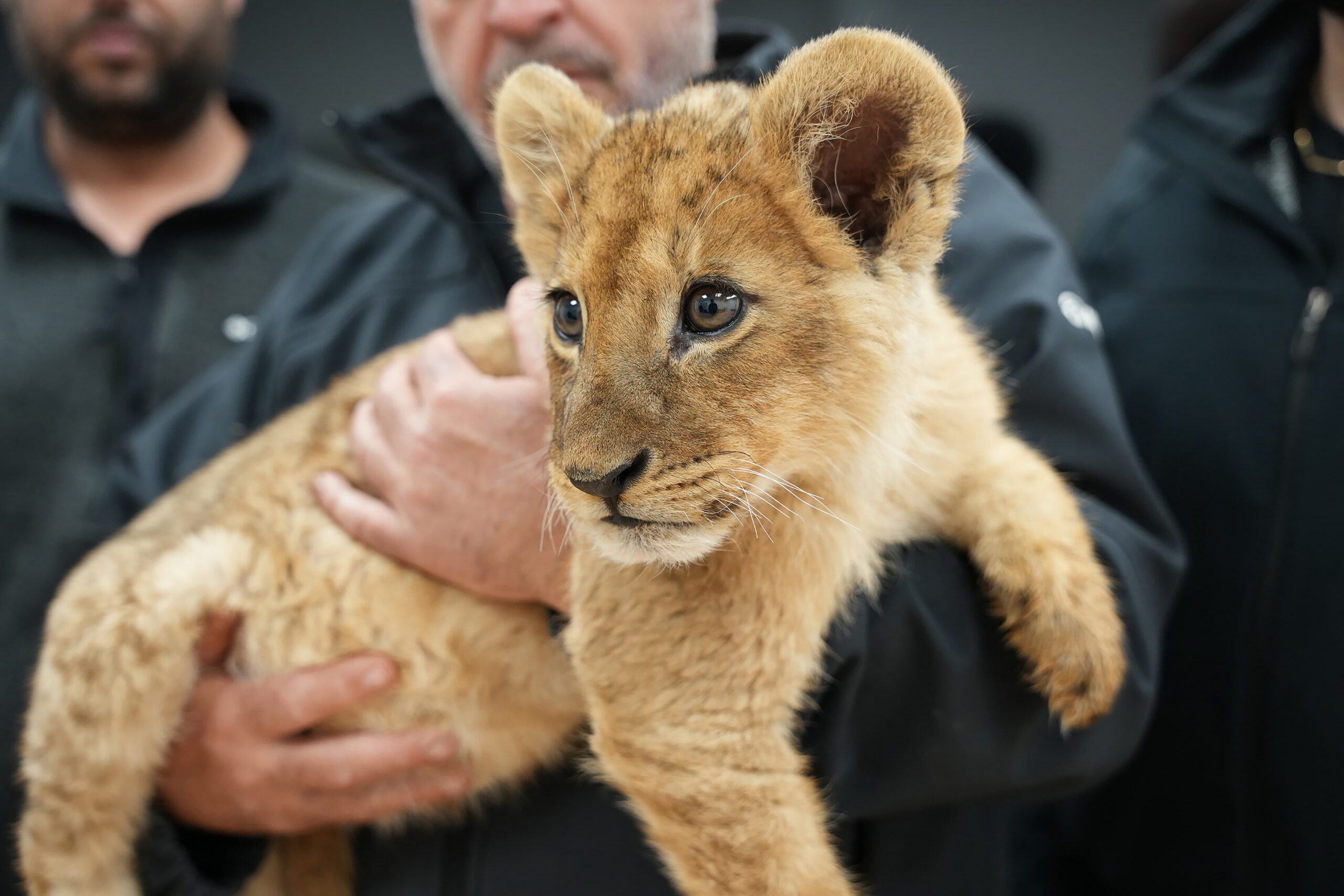
Lion cubs rescued in Israel find a home in SA

Snatched from their mothers while they were still suckling, two lion cubs endured the cruelty of the illegal wildlife trade, one found tied by a painfully short rope, and both kept in private homes in Israel.
Now, thousands of kilometres away, they are beginning a new chapter, at the Animal Defenders International (ADI) Wildlife Sanctuary near Winburg in the Free State.
According to Tim Phillips, the vice-president and co-founder of ADI, the cubs, Ben Tzur and Ori had been confiscated by the Israel Nature and Parks Authority from private homes after being trafficked into the country. They were kept in unsuitable conditions. Ben Tzur tied on a very short rope in a yard in the West Bank, and Ori found in poor health inside a house in the city of Kfar Qasim.
“People take these animals and want them as status symbols, often posing with them on social media for likes and to monetise their feeds. Others just to show off. And it’s an increasing problem because these animals can live for more than 20 years if they’re properly cared for. They grow very big, very powerful, very dangerous, and very expensive to feed,” Phillips said.
Lion cubs like these are flown across the Israel-Jordan border in drones in exchange for semi-automatic weapons, according to Dr Nicole Benjamin-Fink, the founder and director of Conservation Beyond Borders.
“Lion cubs who survive the journey will, on average, be traded three to four times before reaching sub-adulthood at around two years old. By then, they are too large to handle and are often kept in small cages. We cannot afford to ignore the increasingly alarming rate at which wildlife is being traded alongside illegal arms. This link is further intensified by ties to drugs and terror financing. One lion cub can be traded for up to $25 000 [R405 297],” she said. “Essentially, handlers raise these animals as pets and sell people the opportunity to take pictures with young, endangered lion cubs.”
These lions were taken from their mothers while they were still suckling, so when the Israel Nature and Parks Authority rescued them 16 months ago, it was difficult to assess their physical and psychological condition. Some problems become apparent only as they grow older.
“We hope it’s not too serious but not being nurtured properly when they’re infants is a serious problem. It also damages these animals psychologically. Ori was very nervous, very human dependent, which has kind of damaged his instincts and things like that,” he said.
“Ben Tzur has, in a way, looked after Ori like a big brother. So that’s helped him. But these people who take these cubs away to handle, and deprive them of their mothers so young, they are doing terrible damage to these animals. They show themselves cuddling [the animals] on social media, and they’re not friends, they’re not loving those animals, they’re depriving them and being cruel,” he said.
After being rescued, the cubs, along with four other rescued lions, spent a year at the Hai Park zoo in Kiryat Motzkin, northern Israel, where all six were housed together in a specially renovated enclosure.
However, as Ben Tzur and Ori grew older, wildlife experts became concerned that keeping several males together could eventually lead to aggression. They therefore decided to separate Ben Tzur and Ori from the three females and the remaining male and relocate them to the ADI Sanctuary. There, they will have more than a hectare to roam, explore, and grow in a more natural environment.
Ben Tzur and Ori were initially meant to be transported to South Africa in March, but due to war breaking out between Israel, Iran, and the United States, the departure was delayed.
On 2 August, the lions began their more than 50-hour journey to their new forever home.
“Because of the scarcity of flights, it was a pretty indirect route. We flew down to Cairo, where we spent more than two and a half hours changing cargo, and then flew up to Frankfurt, in the opposite direction to South Africa,” said Phillips.
“In Frankfurt, we were on the ground for about 12 hours before taking the final flight to Johannesburg. So, from the time they were put into their crates, it was a good 50-hour relocation. But the lions travelled well.”
Phillips said the lions arrived at the sanctuary on 5 August in pretty good condition because they had been treated well at the zoo.
“They’re in quite good physical shape. They will build up a lot more muscle and body tone here because they’ve got almost three acres to run around in, so they’re going to get more of a physical workout here than in a zoo. But they’ve been kept healthy, they’ve been looked after, and that probably helped with the whole transition,” he said.
“They’ll have a fuller, richer life at the sanctuary. They can’t go into the wild – animals that have been through what they’ve been through. But we can give them something as close to nature as possible. They’re surrounded by other lions, many of whom roared when they arrived. They’re kind of communicating with their own kind again. They’ll be able to run and play,” he said.





Alfreda Frantzen
August 13, 2026 at 9:24 pm
Shame, shame on the traffickers!! Be happy in your new home boys.