





SA
UCT lecturer paints Jews as ‘advocates of oppression’

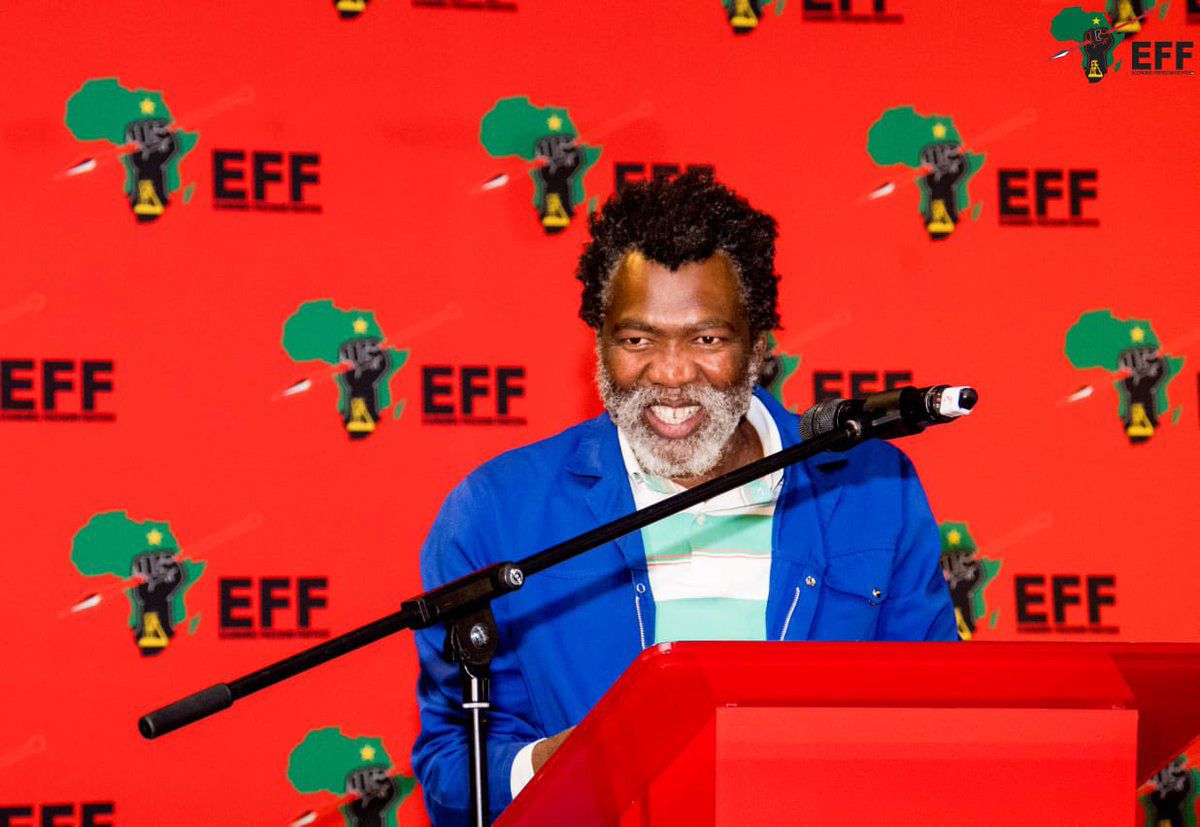
When University of Cape Town (UCT) politics lecturer Dr Lwazi Lushaba told students in 2021 that “Hitler did no wrong”, it caused an uproar and a UCT investigation. But five years later, Lushaba is still teaching and saying the same thing to first-year students. He makes his statements in a course that is compulsory for first-year politics students at UCT.
Lushaba is now also making biased statements about Jews.
In a lecture in March, Lushaba told students, “The fact that yesterday you were a victim doesn’t mean that today you will be an advocate for freedom, because we have seen the example of the Jews who were victims of oppression in Germany. When they come to South Africa they become advocates of oppression, or when they go to Israel, they become advocates of oppression.”
In recent weeks, another UCT lecturer, Dr Anandaroop Sen, told first-year history students that the Balfour Declaration, which led to the formation of the State of Israel, was “one of the greatest injustices of the 20th century”.
He subsequently sent the class content from Al Jazeera, which stated that “Leading up to Israel’s birth in 1948, more than 750 000 Palestinians were ethnically cleansed from their homes by Zionist militias”. The content also ignored key facts, such as Israel’s withdrawal from Gaza in 2005. Sen was teaching that department’s only course for first-year students in the second semester, making it compulsory for those taking history.
On 27 August, the UCT Department of English Literary Studies hosted local scholar Ali Ridha Khan for a seminar. Khan presented a paper that justified the 7 October massacre. It said that Palestinians shouldn’t pursue the peace process but rather engage in violence. In the paper, Khan victim-blamed Israelis, and denied that Hamas intended to target civilians. He implied that most of the atrocities were lies made up by Israel.
Members of the UCT community approached the SA Jewish Report out of concern that lecturers and a guest lecturer are pushing extreme opinions onto students, simplifying complexities, and making sweeping, biased statements.
As in 2021, this year Lushaba told students, “Hitler did nothing wrong. All Hitler did wrong was to do unto white people what white people have reserved for black people.” Lushaba was explaining the impact of Hitler’s rise to power and the Holocaust on the discipline of political science.
He said the world “invented” the “concept of the Holocaust” only because it was white people who were killed. “We are told six million Jews died as a result of the Holocaust. [But] when black people died, the world doesn’t remember,” he said. “When it happens to white people, they will invent a law called ‘genocide’, ‘Holocaust’, and other concepts.”
He said “all Hitler did” was question what scientists taught at the time, and asked, “Who should take responsibility for the Holocaust? It isn’t Hitler. All Hitler did was to give effect to an idea that was already existing. It wasn’t Hitler who was responsible.”
Lushaba said, “Once you profess not to care about the Holocaust, it’s as if you’ve committed a crime.”
A student in his class complained to the head of department, the Office of Inclusivity and Change (OIC), and the dean about Lushaba’s statements. After a long delay, the dean determined that no steps would be taken against Lushaba because of academic freedom. The OIC proposed a meeting between the student and Lushaba. The student declined, concerned about being targeted.
The SA Jewish Report asked Lushaba several questions, but he didn’t respond.
When Lushaba said “Hitler did no wrong” in 2021, the university established an evaluation panel, which found the lecture was acceptable within academic freedom. It said no action was necessary, according to UCT spokesperson Elijah Moholola.
But a source familiar with this investigation, speaking anonymously for their own security, says this was a “sham process”. They say that in 2021, a panel examined the issue and met with the lecturer. “Lushaba refused to provide an explanation of his statements, but a majority on the panel was inclined to give him the benefit of the doubt.”
According to this same source, “in 2021, Lushaba could plausibly claim that he misspoke or was misunderstood. This defence falls away when he returns to make similar statements.”
The SA Jewish Report also sent questions to Sen and Khan, head of the English department Dr Hedley Twidle regarding Khan’s lecture, and to Moholola, regarding all three incidents.
Only Moholola responded.
He says UCT takes seriously concerns raised about the conduct of its staff, including concerns about statements attributed to individual academics.
“At the same time, universities are spaces in which staff and students must be able to engage with difficult, contentious, and uncomfortable ideas as part of legitimate academic inquiry,” says Moholola. “Academic freedom doesn’t mean that every statement made by staff represents the position of the university, nor does it imply institutional endorsement.”
He says UCT can confirm that concerns about Lushaba’s comments were previously investigated, “and the investigation didn’t find any wrongdoing”.
Regarding Sen’s comments, “UCT isn’t aware of any formal report or complaint. The university therefore cannot comment on allegations that haven’t been considered through formal processes.”
Regarding Khan’s lecture, Moholola says, “The seminar was a departmental academic event and shouldn’t be understood as an endorsement by UCT of the views expressed by the speaker, or of any particular position.”
He says UCT is committed to academic freedom and to providing space for scholarly engagement with contested subjects, including through debate and critical scrutiny. “This doesn’t mean that the university endorses every position advanced by speakers at its academic events.”
He says UCT has processes for addressing conduct that “falls outside the lawful bounds of academic freedom or the university’s policies”, and which is brought to its attention. “Those processes are based on evidence and due process.”
In addition, “academic freedom carries responsibilities”, says Moholola. “University teaching should facilitate critical engagement, and university students should be capable of assessing arguments critically; and interrogating evidence and competing interpretations rather than simply accepting an academic’s views.”
But an academic speaking anonymously says that no lecturer should “force feed” their political views to students. “Lecturers are supposed to guard against exactly this. They aren’t political advocates, and students aren’t there to be lectured on their political beliefs.”
Moholola says that where there are specific allegations of misconduct, “students are encouraged to report them through the appropriate channels, and the university will consider them in accordance with its policies and applicable procedures.”
Head of the South African Union of Jewish Students Western Cape, Rachel Segal, says UCT must “absolutely” call out antisemitism, demand accountability, and refuse to normalise it.
“But we shouldn’t allow it to define our experience as Jewish students. The Jewish community at UCT is resilient, proud, and flourishing,” she says.
“I don’t believe it is accurate to portray UCT as an inherently unsafe place for Jewish students,” says Segal, who attends the university herself. “Antisemitism is a very real and concerning issue across university campuses, and UCT is certainly not unique in grappling with it.”
She says the “response should be to live as prouder Jews, and to continue creating a Jewish presence on campus that cannot be diminished by the prejudice of others”.
Cape SAJBD executive director Daniel Bloch says the Board is aware of the three lectures and the concerns raised. The Cape SAJBD recently received further information relating to the matter involving Lushaba. “While the incident took place some months ago, we believe it is important to review all the information now available before reaching any conclusions,” he says.
“We also need to consider these comments in light of previous concerns raised about statements made by Dr Lushaba,” says Bloch. “We will review all the available information, establish the facts, and then determine whether there are grounds for any further action.”
He says the Cape SAJBD remains committed to advocating for Jewish students and staff, “and will take appropriate action where warranted.”




Samuel Ginsberg
September 4, 2026 at 7:20 pm
This is all part of a consistent pattern at UCT.