





News
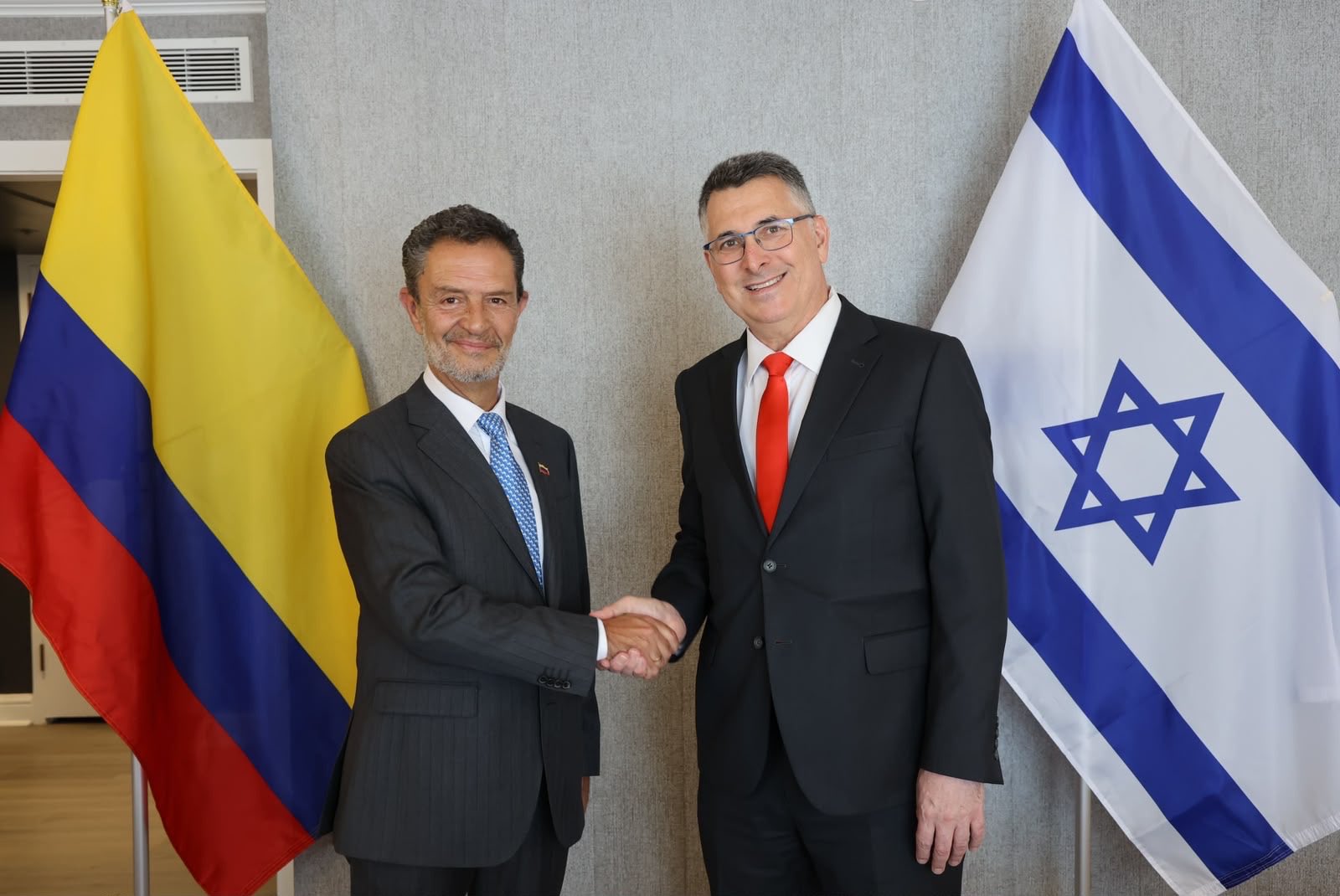
Will other countries follow Colombia’s withdrawal from SA’s ICJ case?

Colombia’s decision to withdraw from South Africa’s “genocide” case against Israel at the International Court of Justice (ICJ) has reignited debate over the future of Pretoria’s legal challenge, with analysts divided over whether the move is an isolated political shift or the start of a wider international realignment.
The announcement came days after Colombian president-elect Abelardo de la Espriella said his incoming government would restore diplomatic relations with Israel, reopen its embassy in Jerusalem, and withdraw Colombia’s intervention in South Africa’s case before the ICJ. Colombia had joined the proceedings under former President Gustavo Petro, one of Israel’s fiercest critics in Latin America.
South Africa launched proceedings against Israel in December 2023, alleging violations of the Genocide Convention during the war in Gaza. Israel has rejected the allegations, describing the case as unfounded and arguing that its military campaign has been conducted in self-defence following the Hamas-led attacks of 7 October.
A number of countries have intervened in support of South Africa’s position, while others have backed Israel. Colombia’s withdrawal marks the first intervention to be reversed following a change in government.
Political analyst Terence Corrigan believes the development is primarily about domestic politics in Colombia rather than a broader rejection of South Africa’s case. “Right now, it’s probably most accurately seen as something specific to Colombia,” he said. “The change of government was in an ideological sense quite dramatic.”
He said De la Espriella wanted to fundamentally reposition Colombia internationally. “Re-establishing ties with Israel and dropping the ICJ case are just elements of this agenda,” Corrigan said. He said that the incoming leader had also indicated a desire for Colombia to withdraw from institutions including the Inter-American Court of Human Rights and even the United Nations.
Corrigan said the decision reflected broader political changes across Latin America. “Twenty years ago, the talk was of a Pink Tide, as left-leaning governments were ascendant. Today, it’s the other way. Leftists are a declining group.”
However, he cautioned against reading too much into Colombia’s decision. “I would say that Colombia’s change is indicative less of a broader move regarding Israel and the ICJ than a reminder that commitment to this case is embedded in the politics of each country.”
Although losing any participant was politically significant, Corrigan said the ICJ case remained supported by influential countries including Brazil, China, Spain, and Ireland. “I don’t think it materially weakens the case,” he said.
Political commentator Frans Cronje also linked the decision to Colombia’s domestic political changes. He said the election had replaced “the former radical populist administration” with “a new centrist administration that wishes to restore economic pragmatism and relations with liberal democracies”.
Cronje said Colombia’s economic performance had weakened under the previous government, prompting the incoming administration to prioritise national interests. “The new administration wishes to set that sort of thing right by making pragmatism and national interest central to government policy,” he said.
Others believe the implications extend beyond Colombia.
Advocate Mark Oppenheimer said the incoming administration had concluded that continued participation in the ICJ proceedings was inconsistent with Colombia’s national interests. He said the government recognised that “the country would be better served by maintaining strong relations with both Israel and the United States”.
Oppenheimer argued that Colombia’s withdrawal could encourage other countries to follow suit. “Colombia’s withdrawal sends a clear signal to the other countries that have intervened in support of South Africa’s case: they are backing the wrong horse.”
He suggested governments seeking closer ties with the United States might review their involvement in the proceedings. But he didn’t expect South Africa to follow Colombia’s example because the ICJ case had become “an expression of the government’s ideological foreign policy rather than a sober assessment of South Africa’s national interests”.
Michael Bagraim, speaking in his capacity as a lawyer, said, “It’s good news that we see people pulling out of the case. I think it’s reflecting a general trend.”
Bagraim said South Africa’s recent request for an additional 18 months to file its reply at the ICJ had undermined the urgency the government had attached to its claims. “If you believe your allegations, you would deal with the papers as quickly as possible.”
He argued that the lengthy procedural timetable suggested the matter wouldn’t be resolved for years. “We’re now in 2026. We’ll hear the case in 2030, if they’re lucky. It may even be 2031,” he said.
Discussion of the ICJ case had largely disappeared from parliamentary debate, said Bagraim, who is also a member of Parliament. “I haven’t heard anything about this ICJ case in Parliament since February. It was literally the discussion point every day before that.”
He believes Colombia may have set a precedent. “I think this is the first country. We’re going to see others jumping forward and saying, ‘Leave us out of it.’” Asked whether the withdrawal weakened South Africa’s international position, Bagraim said it did.
The South African Zionist Federation national chairperson, Craig Pantanowitz, described Colombia’s decision as an example of a government reassessing whether an inherited foreign policy continued to serve its national interests. He contrasted that with South Africa’s approach, saying, “Pretoria has no such excuse. It chose this course, it has defended it for two and a half years, and it alone can change it.”
He also pointed to what he described as growing costs associated with South Africa’s foreign policy, referring to uncertainty around the African Growth and Opportunity Act, proposed United States tariffs on South African goods, and South Africa’s exclusion from the next G20 summit. “And every one of those is a line item in someone’s job security,” he said.
He also questioned South Africa’s request for an 18-month extension before filing its reply at the ICJ. “The urgency was for the podium. The timetable is for the record.”
Pantanowitz said Colombia’s decision showed governments could revise their positions when circumstances changed. “Course corrections are always available, but they get more expensive the longer they are deferred,” he said.
Corrigan said South Africa was unlikely to change course regardless of what other countries did. He said support for the Palestinian cause occupied a unique place in the country’s foreign policy and had been pursued with unusual consistency. “I don’t believe it will abandon this case even if every other participant does, irrespective of what it costs the country and however long it takes,” he said.
For now, Colombia’s withdrawal appears unlikely to alter the legal trajectory of the case before the ICJ. However, it has intensified debate about the political calculations behind international support for the proceedings and whether future changes in government elsewhere could produce similar reversals.





Francois Theron
July 23, 2026 at 4:20 pm
Whatever may be said about the situation in Israel and the Middle East generally – and it can be argued that Israel’s war against Hamas has long ago transitioned from self-defence to a series of offensive campaigns – the decision by the ANC to initiate the genocide case at the ICJ must be one of the foolhardiest steps in the history of post-1994 South African foreign policy. This followed siding with Vladimir Putin in his war against Ukraine, joining BRICS and effectively outsourcing foreign policy formulation to the Chinese Communist Party, antagonising the United States, (of which the ICJ case is only one element) and the list goes on. Almost every single ANC foreign policy decision since at least 2010 has been “an expression of the government’s ideological foreign policy rather than a sober assessment of South Africa’s national interests”, as suggested by Advocate Mark Oppenheimer.
South Africa’s foreign policy is in a state of decrepitude as literally evidenced by the structural decay of South Africa House in London, the Embassy at The Hague, and other missions. Almost all of the evidently waning energy of the ANC has been focussed on Israel which has mainly served to expose the hypocrisy and incompetence of the foreign policy establishments at Luthuli House and at the Presidency and DIRCO.
Sheldon
July 24, 2026 at 2:45 pm
Suddenly Columbia is the beacon of moral clarity for some people…
Monica Powell
July 26, 2026 at 7:56 am
The TRUTH will finally triumph over the lies that consume uneducated people who are consumed by hate.