



OpEds
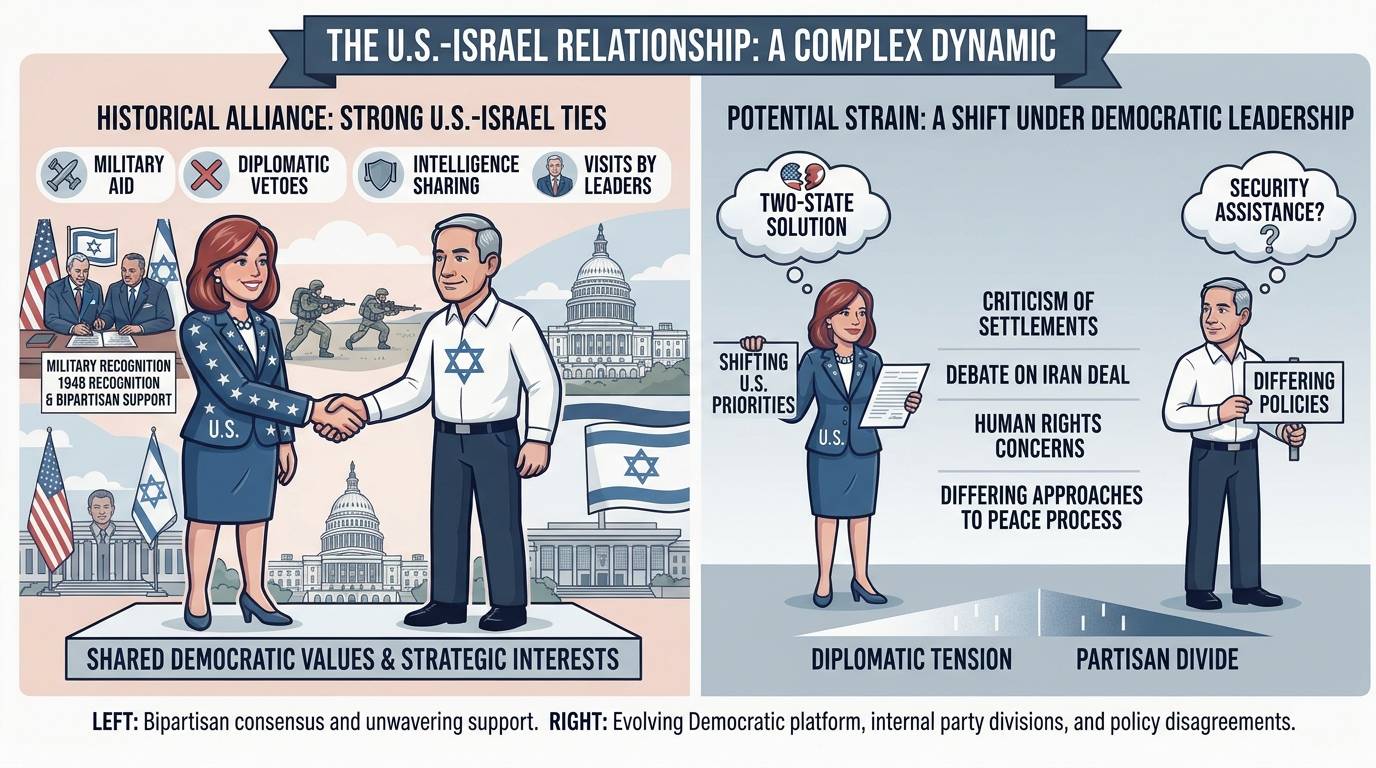
The biggest change to US-Israel relations in half a century?

With the Republicans having suffered a “brutal shellacking” in the midterm elections on 3 November, it is important to analyse the reasons, as well as the potential seismic shift in US-Israel relations, that might follow come January, when the new Congress is sworn in.
Although the ruling party traditionally does badly in midterm elections, this was worse than normal. The Democratic Party had the largest congressional margin of victory, looking at the popular vote, since 1976 and the aftermath of the Watergate scandal. They won in places like Texas and Kansas, solidly Republican states, and even won in Mississippi, which they never expected in their wildest dreams. So why did this happen? The answer is the six Is:
- Immigration
Although on this one issue President Donald Trump has actually been successful, almost totally shutting the southern border, the cruelty and harshness with which Immigration and Customs Enforcement (ICE) agents have gone about doing this has turned voters off. There have been many reported cases of the deportation of supposed illegals who then turned out to be legal US citizens, and even of some being shot. Hispanic voters, in particular, were unhappy about this, and, after supporting Trump in 2024, they deserted the Republicans in droves. This was costly in states like Texas – although the Republicans had a poor candidate there as well.
- Iran
The Iran war was without doubt one of the major issues in the midterms. After campaigning in 2024 to end “forever wars abroad”, Trump miscalculated badly in the Iran war and has taken the US straight back into another unpopular war that has no clear strategy or end in sight.
- Inflation
Having campaigned heavily on a pledge to bring down inflation and the high cost of living, Trump’s decision to go to war with Iran has directly driven up energy and fertiliser prices – US motorists are paying more than $1.66 (R28.15) a litre for diesel – as well as food prices. Americans always vote on the cost of living, and with the costs of housing, transportation, and food eating up 63% of the average citizen’s spending, people went to vote looking for change.
- Impropriety
There are too many unexplained matters concerning the president and his entourage doing very well out of the office, which has turned voters off. They are unhappy with issues including Trump’s memecoin, who paid for Donald Junior’s wedding festivities, and son-in-law Jared Kushner’s business dealings, although nothing untoward has been proven.
- Illogical policies
Trump’s bizarre attacks on Canada, even suggesting it should become the 51st state, and his economic warfare against one of the US’s oldest allies, have been impossible to justify logically. Add to this his tariff policy, which has driven up prices in the US even more, and led to ludicrous results, like tiny Lesotho being one of the most tariffed countries in the world at a stage. The tariffs have also created unnecessary tension with vital allies like India, which has been subjected to volatile tariffs that went as high as 50% before dropping to 18%, and led the country to explore alliances with more reliable countries, and even a rapprochement with China.
- Artificial Intelligence
The final I is AI, with the billionaire tycoons in the AI industry becoming obscenely wealthy, and with it accruing unrivalled power over business and politics, the average citizen is unhappy and concerned. Add to this the daily news reports about some new improved AI version “jumping out of its protected testing sandbox and executing some unauthorised cyberattack” and there is real angst among citizens. Many want more regulation of AI and possibly even higher taxation of those that run the major companies (although California’s proposed wealth tax, Proposition 40, on billionaires, was defeated in a referendum on 3 November), which the Democrats can bring.
The effect on US-Israel relations?
With the Democrats now controlling both houses, and Vice-President JD Vance being widely quoted as saying that, in addition to the Iran war, one of the issues the Republicans have to address to bring voters back is “change our relationship with Israel”, Israeli commentators and academics have gone into panic mode. The Jerusalem Post has led with headlines like “Vance is beginning to sound like Rahm Emanuel” – referring to the veteran Democrat who has questioned the cost of the alliance with Israel – and “Washington has changed. Israel would be reckless to ignore it”. What are the concerns?
The first is that the hard right of the Republican Party and the hard left of the Democratic Party seem to have found common ground on Israel, although for different reasons. They both think the US is too supportive of Israel to its detriment.
The second concern is that with the Democrats controlling Congress, Israel might find it a lot tougher to buy US weapons and fighter jets. Although Trump seems to have already ended the $4 billion (R67.8 billion) of US aid that was meant to run until September 2028, that didn’t cause major alarm bells, as the amount is a small percentage of Israel’s economy and Israel is wealthy enough to pay for its own weapons. A much bigger concern is whether a new Democratic-controlled Congress will either block the sale of weapons to Israel altogether, or impose stringent conditions on how they may be used. For example, there might be a block on using new fighter jets to bomb Gaza or Lebanon.
Of course, not every Democratic congressman and woman opposes military aid or weapons for Israel, and, in addition, Trump still has a veto over legislation. But Congress can override a presidential veto by passing any act by a two-thirds vote in both the House and the Senate. The Democrats don’t have a two-thirds majority, but could get there with the support of some Republicans who support Vance’s position on Israel.
Conclusion
Israel runs the risk that its traditional close relationship with the US might cool markedly once the Democratic-controlled Congress takes effect in January. Its academics are right to fear the worst. Its politicians must grasp the urgency of the situation and realise that a centrist government of national unity in Israel is now a pressing priority. In addition, they must ensure own goals like the unrestrained violence in the territories are quickly halted, as the continued images of journalists being attacked in the area will be manna from heaven for the likes of Michigan senator-elect Abdul El-Sayed.
Finally, they need to get the message across to both Congress members and the US public alike that the US, too, gains significant advantages from the relationship. Not only does it benefit from intelligence sharing and Israel’s technological prowess in developing new weaponry, but it won’t find a more stable and pro-Western ally anywhere in the region.
Sadly, this message has been lost on the likes of Vance and Emanuel, and needs to be reemphasised through a sustained public relations campaign and mobilisation among Israel’s supporters. Emanuel famously said in his recent The Jerusalem Post interview, “Israel doesn’t have a problem with the Democratic Party. It has a problem with America.” Israeli politicians have a critical obligation to ensure that Israel has a problem with neither.
- Baruch the Balanced is an attorney who can’t be named for professional reasons, but who also studied both politics and international relations at university.