


Lifestyle/Community
90 years of empowering SA through education

From vocational training and educational opportunities during apartheid to teaching coding, robotics, and cybersecurity, ORT South Africa has been adapting to the country’s changing needs for 90 years. All the while staying true to its mission of empowering people through education.
As ORT SA celebrates its 90th anniversary on 17 November, it reflects on nine decades of educational transformation, community upliftment, and the Jewish value of tikkun olam, repairing the world.
Chief executive Ariellah Rosenberg explained that while it’s almost impossible to quantify how many lives ORT SA has touched, what matters most to her are the personal stories.
“There have been many projects over the years that weren’t documented. For example, Cyril Ramaphosa was a board member of ORT SA in the 1980s and was aware of the work we were doing in these communities,” said Rosenberg. “But while numbers are important, the true impact of education can’t always be measured in statistics. Often, it’s the individual stories that really show the difference education makes.”
ORT SA was established in 1936 after representatives of World ORT toured the country and identified the need for a local organisation.
Founded in Russia in 1880, World ORT sought to equip Jewish communities with vocational and practical skills to help them earn a sustainable living. ORT SA initially served primarily as a fundraising arm, supporting educational and vocational training projects globally, including programmes for Holocaust survivors and displaced persons after World War II, as well as initiatives in Israel.
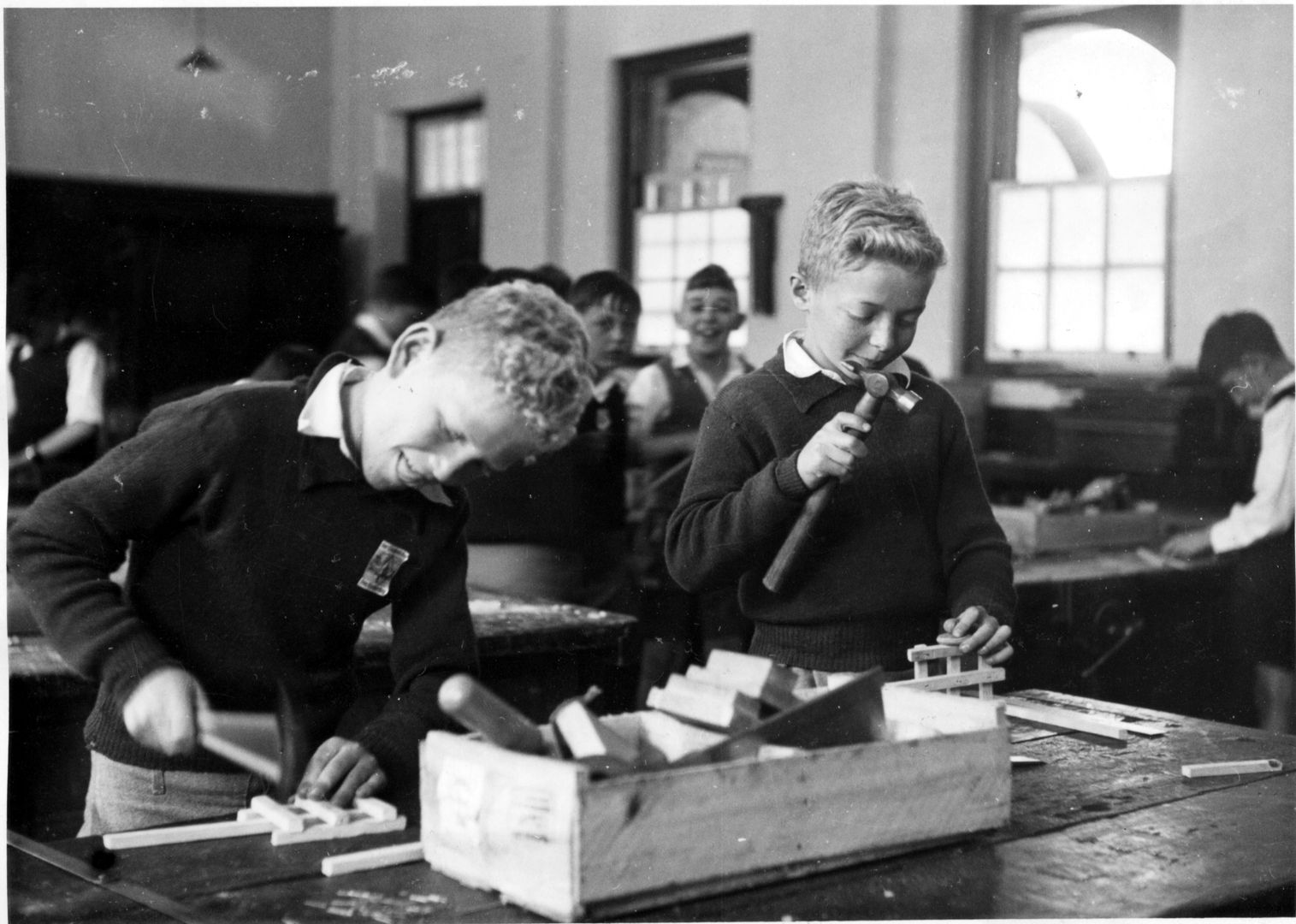
Over time, its work expanded beyond fundraising to include vocational training within the Jewish community and outreach programmes in disadvantaged communities. During apartheid, ORT SA provided university bursaries to black pupils, later establishing a technical high school and introducing teacher training programmes as South Africa transitioned to democracy.
“Since then, ORT SA has continued to grow, remaining focused on its original mission of employability. With South Africa facing high unemployment, we are constantly looking for ways to create opportunities through education, skills development, and entrepreneurship.”
Rosenberg explained that in the early years, ORT SA was a social centre for the South African Jewish community.
“ORT SA gradually grew its membership, with chapters established across the country. For many in the Jewish community, it became a place to socialise with meaning and purpose. Women played a particularly important role in running these chapters and organising fundraising initiatives.
“What we also discovered was that, even during apartheid, there was a great deal of passion for working in disadvantaged communities. ORT SA was already involved in outreach programmes, including work with mining communities,” said Rosenberg.
As South Africa moved towards democracy, Ramaphosa remembered ORT’s work and approached the organisation to help introduce a new technology curriculum as the country moved away from Bantu education. In 1994, ORT SA established a high school offering technical subjects to black pupils, providing them with skills that would help them find employment.
“One of the former students, who will be participating in our anniversary panel, described how, even before democracy, the school gave him his first real experience of freedom through education. Many of those students are still in touch today, and graduates have gone on to become university professors, business owners, and successful professionals. It shows the lasting impact that education can have on people’s lives,” said Rosenberg.
“Something else we’ve discovered while researching our history is that ORT SA provided bursaries to black students to study at university during apartheid, in partnership with Unisa. This was significant at the time and reflected the national executive committee’s commitment to supporting disadvantaged communities. We’re still trying to trace some of those bursary recipients as we piece together the organisation’s history,” she said.
Since 1994, ORT SA has focused on improving education through teacher training, particularly in science, technology, engineering, and mathematics. In 2006, it introduced Singapore Maths to township schools in Gauteng, with the programme proving so effective that the Department of Education incorporated some of its teaching methods into its textbooks.
Over the years, ORT SA has expanded its work, introducing coding and robotics, equipping teachers and pupils with critical thinking and technological skills to address South Africa’s educational challenges.
Since 2015, ORT SA’s coding clubs have reached more than 7 000 schoolchildren, helping to bridge the digital skills gap through teacher training and support. One of them is Tanaka, a Grade 9 pupil who discovered her passion for coding in 2018. She went on to study computer science and establish coding clubs for girls in her Soweto community. Now working at Raspberry Pi, she reconnected with ORT SA and encouraged the organisation to apply for a new project.
As a result, ORT SA is set to expand its coding clubs to 80 schools in the Eastern Cape in 2027, reaching another 7 000 pupils.
Rosenberg said it is noteworthy that ORT SA has evolved along with South Africa and its Jewish community. While raising funds for World ORT’s international projects, the organisation also supported education and skills development locally, including donating the first computer labs to the King David Linksfield and King David Victory Park schools.
“ORT SA also became a place where members of the Jewish community could socialise with meaning and purpose, coming together to support a shared cause. At one point, the organisation had around 10 000 members, if not more, demonstrating the important role it played in bringing the community together,” said Rosenberg.
“Reaching 90 years shows that we are continuing a legacy while evolving with the times and looking towards the future. We also have a responsibility to carry forward its mission of educating for life and making an impact through education,” said Rosenberg. “While respecting our roots, we must continue to evolve. That’s why we’re introducing programmes in areas such as cybersecurity, cloud computing, and big data for unemployed youth. It’s about honouring where we’ve come from while preparing for the future.”