Sport
‘This Bafana side has the makings of something special’

Stan Matthews, the former director of football for SuperSport United, has only praise for Bafana Bafana for reaching the last 32 of the World Cup for the first time.
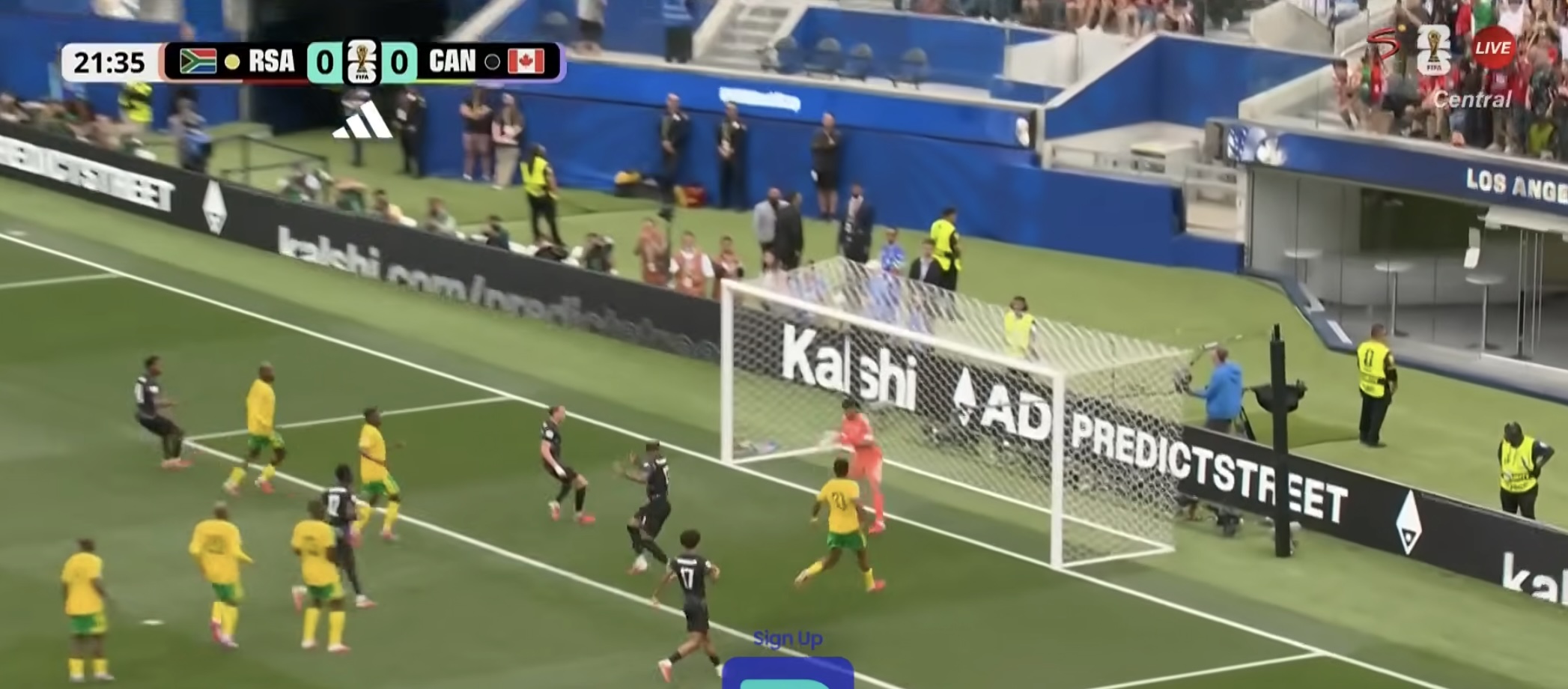
The anguish of the 1-0 loss to Canada in Los Angeles on Sunday night is one he shares with the rest of us, but he says, in mitigation, that this is a young team who did a nation proud. With the right environment, the national side will only get better, he believes.
“In a way this ‘local is lekker’ side, most of whom still play in the Premier Soccer League (PSL), is a great advert for local football,” says the man who has also recently been an adviser to Siwelele FC, SuperSport’s new incarnation. “Bar one or two of the older players, who’ll retire, this side has a real opportunity to develop into something quite special.
“Sure, I was disappointed we couldn’t beat Canada, but I think after that points deduction in qualifying, and the problems with the team’s visas before the World Cup, this was very heartening, the Mexico game excepted, of course. I’m a big fan of what Hugo Broos brought to this team. I have unbelievable respect.”
Matthews, who still sits on the PSL executive, as well as recruiting and liaising with a Western Cape club about young upcountry talent, doesn’t want to be overly critical. He does, however, bemoan the fact that the national team aren’t penetrative enough in the final third.
“We don’t have a [Mo] Salah, a [Cristiano] Ronaldo, or a [Lionel] Messi. There’s just that lack of something special in front of goals,” he says, a statement with which few would disagree.
“In the strategic hallways of South African football, I think that’s a conversation that they really need to be having. Look at Mamelodi Sundowns. Even they can’t find a quality local striker. That’s why they’re heading across to South America to fork out $3 million [R49.2 million] for a South American.”
Matthews points out that this World Cup was for him the highlight of a long and distinguished career in local football administration ‒ and one that compares favourably with his experience of 2010. Shortly after South Africa hosted the World Cup 16 years ago, SuperSport United sold defender Bongani Khumalo to Tottenham Hotspur. At the time the move was hailed as a momentous one for local football, and although Khumalo spent his entire career at Spurs out on loan, his sale was an event about which Matthews remains proud.
“The fact that seven players in this World Cup ‒ and that’s not counting the physiotherapist and the goal-keeper coach ‒ came through SuperSport United structures as 15- and 16-year-olds made it a very personal World Cup for me,” he says.
“We picked up [Bafana centre-back] Ime Okon when he was playing for Randburg in the Friendship Cup. He could have qualified for Nigeria, his brother sprinted for Nigeria, but he chose to play for South Africa. Thalente Mbatha came from Highlands Park, Thapelo Maseko came from Sebokeng in the Vaal. These guys all lived in the club’s Midrand House. They have wonderful stories to tell. In the house they were basically brought up by cooks and cleaners.”
One of the best of those stories concerns Bafana skipper Ronwen Williams, another SuperSport Academy product. Williams’ parents were “magnificent”, Matthews says, because they were endlessly supportive while their son appeared to be standing still, sometimes loitering in the second or even third team. “There’s a lesson there for Jewish parents,” says Matthews. “Rodney and Hazel [Williams] stood by their boy. They never threatened to move clubs. They didn’t complain and never demanded to know why Ronwen wasn’t cracking it. They’re heroes and heroines in my book. It’s that kind of backstory that made it such a memorable tournament for me.”
Bafana’s Oswin Appollis is another with a salutary yarn. Matthews says Appollis, who grew up in Bishop Lavis in Cape Town, initially struggled to make the transition to the SuperSport Academy as a young tyro. His academic work suffered and his football, frankly, “went backwards”. Appollis was anything but happy.
“He struggled, yes, but he persisted. Look where he is now. Playing in the shop window of the world.”
Speaking about the World Cup in a more general vein, Matthews says he doesn’t easily understand the benefits of a 48-team competition. “I just don’t see the point of some of the teams,” he says.
On the other hand, it’s interesting to see how most teams find a way to be competitive. He certainly sees a narrowing of strength and talent at the World Cup bar some obvious exceptions.
When asked to name names of those he expects to be there towards the end or thereabouts, Matthews says he doesn’t really know. “I quite like Colombia, they’re quite an interesting team,” he says. “And I would love a South American team other than Brazil or Argentina to do well. Spain, France, and Germany, of course. And as far as African teams are concerned, I think that Senegal and Morocco will fly the flag, maybe Ghana.”