Sport
Maccabi SA Juniors not going to Games

The dreams of more than 100 South African Jewish teenagers have been dashed by the decision to pull them out of the 2026 Maccabiah Games in Israel.
Maccabi South Africa made the choice to cancel all junior participation because of security concerns, international withdrawals, and mounting logistical challenges.
After the Games were cancelled altogether last year, athletes trained hard for an opportunity to play this year. For some, it was their last chance to compete as juniors at the Games, often called the “Jewish Olympics”.
“It’s the most incredible opportunity,” said Bianca Rubinstein, whose 14-year-old son, Judah, had been selected for junior soccer. “You don’t know if you can ever do it again because if it’s only in four years’ time, that opportunity is gone.”
The Maccabi South Africa board took the decision on 4 May 2026, and junior athletes and their families were informed in personalised letters two days later.
Maccabi South Africa is doing its best to make up for it. Chairperson Clifford Garrun said. “We decided to convert the disappointment into opportunity. We’re going to have our inaugural Maccabi Africa Junior Games in September this year.” It will bring together the junior athletes from across South Africa who had been preparing for Israel.
However, for many families this cannot replace the experience of competing in Israel alongside Jewish athletes from around the world.
Rubinstein said the appeal of Maccabiah extended far beyond sport. “It’s about the experience of going and playing and socialising,” she said. “Playing with young people from all over the world at an elite level.”
The Maccabiah Games are held in Israel every four years and traditionally attract thousands of Jewish athletes from dozens of countries. South Africa has long been one of the strongest participating nations, particularly in junior rugby and cricket.
This year, however, the war with Iran and growing instability around travel to Israel dramatically affected participation. “As the war dragged on, the challenges just increased,” Garrun said.
Countries including Canada, Australia, and Great Britain either withdrew junior delegations or faced strict travel restrictions that affected flights and insurance. “To have an actual event itself, you need a minimum of three countries participating,” Garrun said. “The competitions themselves were just becoming not viable.”
South Africa had planned to send rugby and cricket teams. “We generally have dominated those sports over the years,” Garrun said. “Then Great Britain withdrew their rugby team and it just became untenable.”
Safety concerns also became increasingly difficult to ignore. “The prospect was reducing and the risks just increasing,” he said. “We would have had a junior group there facing rockets, bomb shelters, and uncertainty.”
More than 100 South African juniors had been expected to compete, making up most of the planned national delegation. Physiotherapist and soccer convener Darryn Edinburg was to manage the boys junior soccer team, while his daughter had been selected for the girls futsal side.
“I’m very disappointed for the kids because I know they all looked forward to it,” he said. “It’s normally the most amazing experience.”
Edinburg said many parents felt torn between protecting their children and not wanting them to lose a once-in-a-lifetime opportunity. “I’m actually relieved not to have to take them into an environment that’s unstable,” he said. “It could have become a negative experience rather than the positive thing Maccabiah normally is.”
He said fears about rocket attacks, flight disruptions, and uncertainty around getting children home safely weighed heavily on families. “Our kids aren’t used to that,” he said. His daughter, now in matric, will probably not have another chance to compete as a junior athlete. “She’s disappointed because she’s waited so long to go,” he said.
Jordan Kletz, who had been selected for junior soccer, said players understood why the decision had been made, but were still heartbroken. “Everyone was really looking forward to it.”
Another parent, who asked to remain anonymous, said many families had already sensed for weeks that the trip was unlikely to happen. “Training had dipped off and the enthusiastic approach had changed,” she said.
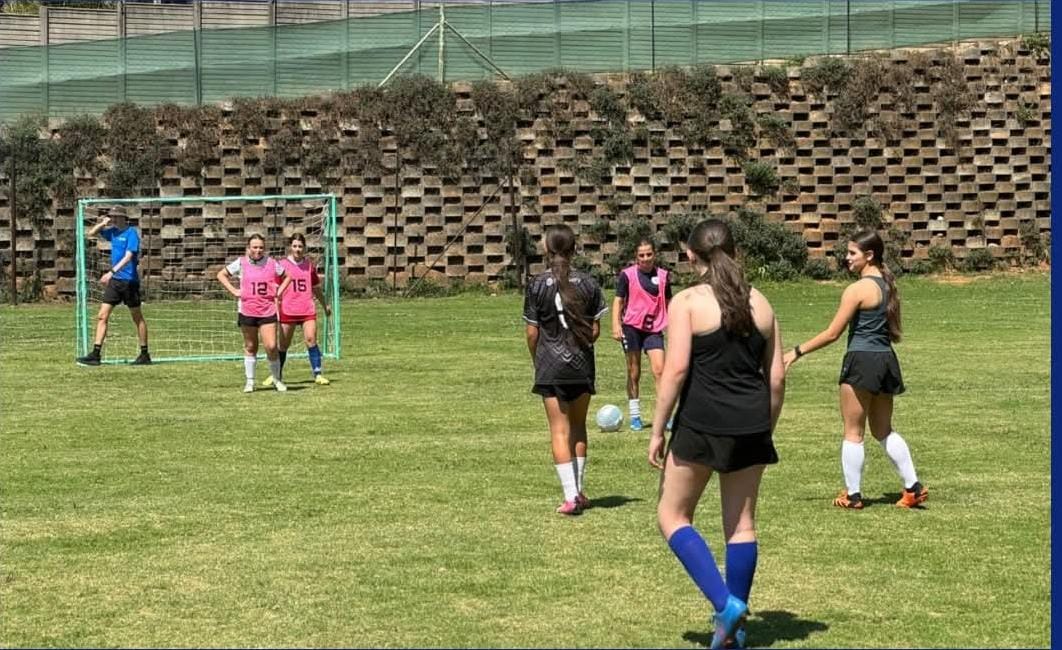
Her daughter had been selected for a newly created junior girls soccer side that would have competed at Maccabiah for the first time. “There was quite a lot of excitement around that.”
She criticised the way the cancellation was communicated, saying some parents first heard through WhatsApp groups rather than directly from organisers. Still, she said the decision itself ultimately made sense. “The bigger teams, the UK, the US, and Canada, had already pulled out,” she said. “There wasn’t actually much of a tournament left.”
Garrun said Maccabi South Africa had surveyed parents before making the final decision. “The large majority of parents were very unwilling about travelling and the risk involved,” he said.
Although a small number of South African senior athletes may still travel to Israel for sports including tennis, cycling, golf, and padel, Garrun said participation would be extremely limited. “It’s a handful,” he said.
Attention has now shifted to the proposed Maccabi Africa Junior Games. According to Garrun, the concept has already been approved internally, and planning structures are beginning to take shape. “We’re going to really put on a significant community sporting event for under-18s,” he said.
Edinburg, who is helping to organise the event, said he hoped it could strengthen Jewish youth sport locally and create opportunities for families unable to afford overseas tournaments. “A lot of kids stay away from trials for overseas competitions because they can’t afford to go.”
Even so, he acknowledged that for many teenagers, the cancellation of the Israel trip remained deeply painful. “There’s disappointment,” he said. “A lot of disappointment.”