Sport
The unexpected favourites for the Fifa World Cup

Germany has emerged as the team best-poised to win the World Cup, which kicked off in Mexico this week, according to two esteemed local football personalities canvassed by the SA Jewish Report.
It’s perhaps surprising, given the claims of Spain, France, and Argentina, but both Ronnie Schloss, the former Chief Operating Officer of the Premier Soccer League, and Raymond Hack, former Chief Executive of the SA Football Association, fancy the claims of “Die Mannschaft”, as many fondly call the German national team.
“Part of the reason for my decision,” says Schloss, “is that the Bundesliga just don’t have that many foreign players. It’s home-grown talent for them, which will serve the national team well. I also like France as a front-runner, followed by Spain and Portugal.”
Hack, who gives the impression of having watched the world’s top nations closely in the last few months, isn’t sold on either France or Spain. “With both of them it’s a case of too many chiefs and not enough Indians,” he says with what you imagine is a twinkle in the eye.
“I wouldn’t write off Belgium, they’re a young side, and I think they could do something exciting,” he says after watching Belgium’s 5-0 home demolition of Tunisia in a pre-world Cup friendly in Brussels at the weekend. “Portugal ‒ they will certainly be there.”
Widening his lens, the first South American contender that Hack mentions will surprise many; Paraguay. He says he’s watched their recent run of results in qualifying and thinks they might be hitting their straps as they gallop down the World Cup straight.
For those who’ve forgotten, Paraguay came only sixth in the South American qualifying group. But that’s slightly misleading in that they accumulated the same number of points as Brazil, Uruguay, and Colombia but were beaten into sixth on goal difference, a technicality.
During their campaign, they beat qualifying group winners Argentina, 2-1, thanks to a Tony Sanabria bicycle-kick, and also beat Uruguay earlier in the campaign. Hack could well be right in identifying their chances as a dark horse in the outside lane.
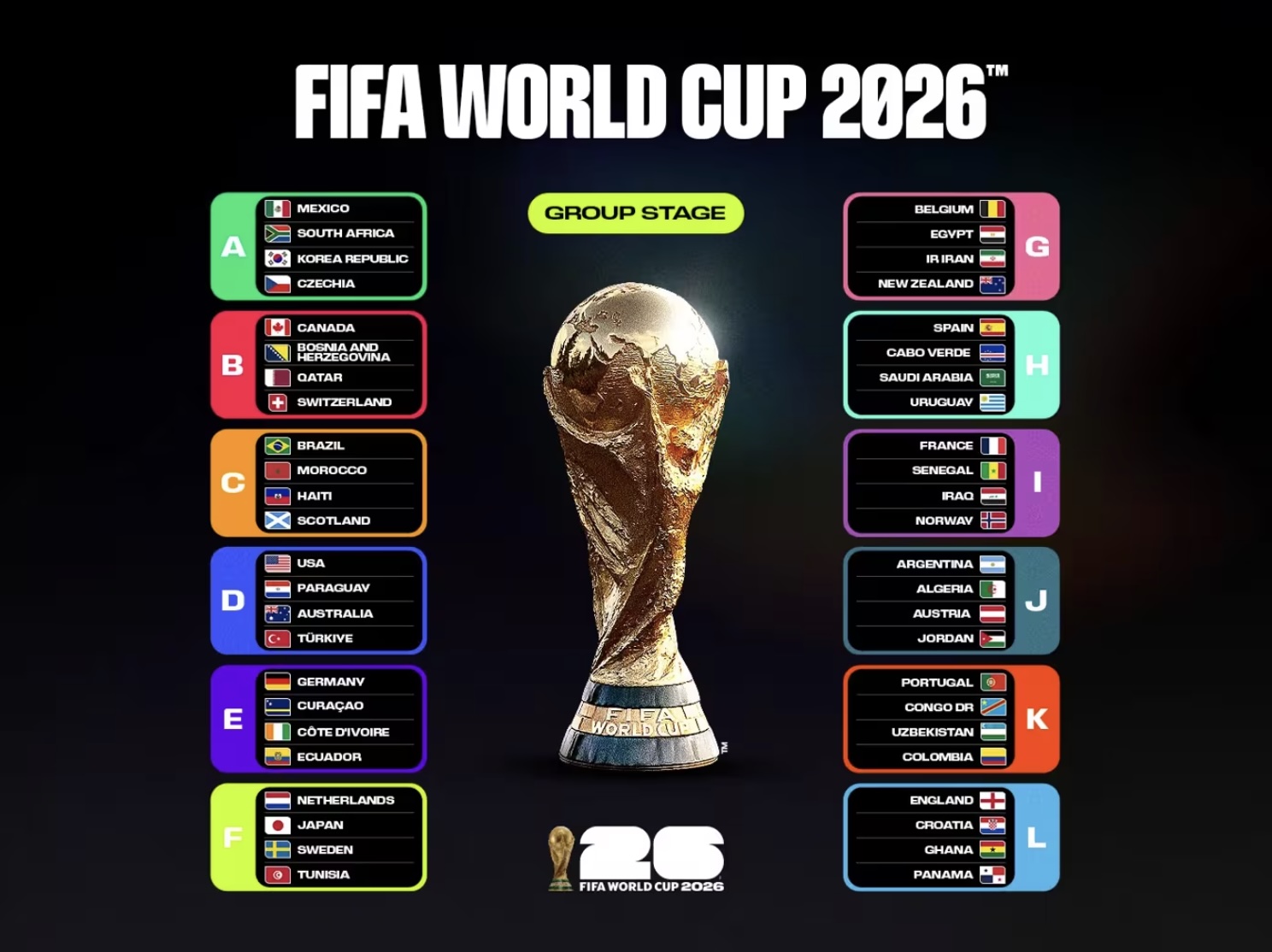
In the World Cup Proper they are drawn in Group D with the United States, Australia, and Turkey, a group they should get out of. The caveat to this is that while they don’t concede many goals, they don’t score an armful of them either. Only Ecuador had a better defensive record in South American qualifying.
And for those who enjoy their obscure factoids: Paraguay conceded the same number of goals in qualifying as Argentina.
Not content to stick his neck out and identify simply Paraguay, Hack names Japan and South Korea as teams he fancies to go further. “Don’t underestimate either of them,” he says. “They’re both fast, technically-accomplished teams.”
As for the Africans, Schloss likes the cut of Morocco’s, Senegal’s, and Egypt’s jibs. “None of those three have been pushovers,” he says. “And the heat in the US and Mexico could be in their favour. They won’t win the tournament but I think they could surprise a few people.”
Schloss likes the idea of a 48-team expanded tournament, saying he thinks it is a good thing from a marketing perspective to expand the competition. Once the opening rounds are over, however, he expects the smaller teams to fall away ‒ this World Cup finds places for Uzbekistan, Jordan, Cape Verde, and both Iran and Iraq ‒ with the usual suspects, more or less, progressing to the round of 16.
By contrast, Hack isn’t convinced that 48 teams is the way to go. “The expanded tournament is going to be financially successful, but from a footballing perspective, it’s going to be an absolute disaster,” he says.
“The cost of everything is exorbitant. Hotel prices have been jacked up. There’s too much distance between venues and therefore too much travel. A ticket costs $3 000, that’s R49 500 ‒ it’s not designed for the fans. For me, it’s not a thing.”
He also takes issue with the fact that eight of the third best-placed teams in their group – there are 12 groups in all – will qualify for the round of 32, the first knock-out round, in other words. “I’m just not in favour of 48 teams from a football point-of-view,” he says. “You have a situation where you have three draws and you go through. For me that’s not what football is about. It’s about skill.”
As far as Bafana Bafana’s claims are concerned, neither is bullish. One feels that Schloss is erring on the side of diplomacy when he says, “Hopefully Bafana will progress.”
He and Hack are asked towards the end of their respective interviews what they would do if given R500 to have a flutter on the team of their choice. I am quietly surprised by both answers, sort of expecting that they might wager on long odds on an outsider like England, say, or even a Norway, who beat second-placed Italy 3-0 and 4-1 for maximum points in qualification.
Perhaps demonstrating the prudence which made them top football administrators, both put their money exactly where they started off, with Germany, which many bookmakers put at 14-1 winners.
It’s a tasty bet. Time will tell whether they are right.