Featured Item
Their lives changed on 7 October

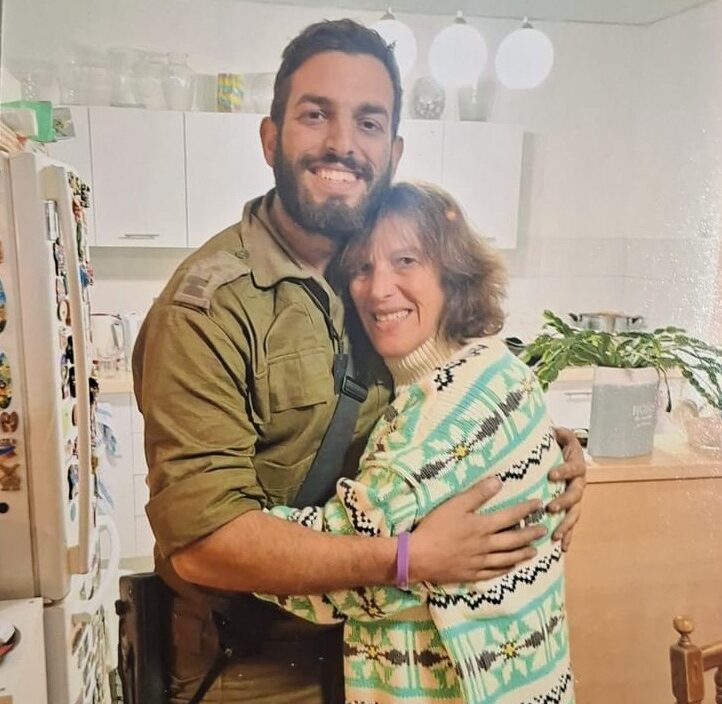
Three Israeli women with South African roots were confronted with the unimaginable on 7 October. One lost her son in battle, one was taken hostage by Hamas, and one fought to save her family while holding her newborn daughter.
For Debbie Chitiz, the day began with a family Shabbat still fresh in her mind. Her son Yaron was serving in the Israel Defense Forces (IDF) and would eventually be killed in battle. For Aviva Siegel, the morning became a fight for survival. She and her husband, Keith, were taken hostage to Gaza, where she spent 51 days. For Liora Ben Tsur, the first hours were spent desperately trying to reach her husband, children, and South African-born mother, who were trapped on their kibbutz.
Three years later, each woman is living with the consequences of that day.
Chitiz, who lives in Ra’anana, woke at 06:30 on 7 October to a siren. She and her children went downstairs to the safe room without initially understanding what was happening. They later dressed to attend shul, but on the way, they saw that synagogues were closing.
“At some stage we started hearing snippets that the terrorists had infiltrated,” Chitiz said. “It was really the biggest balagan [chaos]. Nobody knew what was going on.”
Her son Yaron was serving in the IDF’s permanent force, in the Givati Brigade. Her third son, Dovie, was called up after the attack.
Yaron’s unit was deployed to the south, and he didn’t return home until 21 December, after about 80 days away. It was his first and only weekend at home. He spent that Shabbat surrounded by his family. He received an aliya, visited friends, and ate the food he’d asked his mother to prepare.
Chitiz remembers the weekend as surreal. “We weren’t realising that this was his last Shabbat in this world,” she said. Yaron returned to his unit on the Sunday morning. He was killed two days later, on 26 December.
In the months that followed, Chitiz learned more about Yaron from people who’d served alongside him. She heard how he had helped lone soldiers, resolved problems, and refused to leave until the people around him were taken care of. One commander recalled Yaron repeatedly calling about a lone soldier’s debt. He continued pushing for a solution until the soldier received help. For Chitiz, these stories reinforced what she already knew about her son. “He always took care of the other first.”
Yaron was also a passionate Liverpool supporter. The club’s motto, “You’ll never walk alone”, has taken on a new meaning for the family. Chitiz has adopted her own version through swimming. “You’ll never swim alone,” she told the SA Jewish Report.
Swimming has become an important part of how she copes with her grief. Yet she says the hardest part remains the longing for the future Yaron never got to experience. “You long for the person that’s not here,” she said. “You long for what he would have been.”
On 7 October, Aviva Siegel was on a kibbutz under attack. She and her husband Keith were woken by the sound of the Tzeva Adom, Israel’s nationwide rocket-alert system, which warns residents of incoming rocket fire.
The couple had lived with rocket attacks from Gaza for years. Initially, the morning seemed familiar. Then the sounds changed. “We looked at each other and said, ‘What’s happening? It’s different. It feels different, it sounds different,’” Aviva said.
The couple eventually heard shooting outside their home. Their house was attacked and terrorists entered. The couple was beaten, shot at, and forced from the house. Aviva injured her knee and Keith suffered broken ribs and a gunshot wound.
They were taken to Gaza. For 51 days, Aviva was held underground and subjected to starvation, threats, violence, and conditions in which she repeatedly believed she was going to die.
During that time, she became convinced that her son, Shai, had been killed. She returned to Israel believing she had lost him. Then she was told he was alive. “I was 100%, not 99%, I was 100% that my kid was dead,” she said. “And there he was standing in front of me and giving me a hug.”
Keith remained in captivity for more than a year before he was released alive.
Aviva says she is still recovering from the trauma. Everyday experiences can trigger memories of captivity, including drinking water, opening the fridge, sudden sounds such as someone sneezing, hearing an aeroplane, rain, hearing Arabic being spoken, or seeing places that resemble Arab towns. “I’m still feeling many, many things because of the trauma,” she said.
The Siegels won’t return to live on the Kfar Aza kibbutz. Sixty-four members of their community were killed on 7 October, Aviva said, while many others were physically and psychologically injured.
For Ben Tsur, the attack unfolded from a different perspective. She was in hospital with her newborn daughter, Asif, while her husband, other children, and mother were on the Ein HaShlosha kibbutz. At first, Ben Tsur struggled to understand why the rockets were heading towards the area around the kibbutzim rather than central Israel.
Then her family stopped answering their phones. As a former journalist, she began contacting everyone she could, including the army, police, and medical contacts. Eventually, her husband reached her. “Baby, I love you,” he told her. “Please do everything that you can to save us.”
Ben Tsur contacted her brothers, who travelled more than 100km to help rescue the family. Her mother, Marcelle, was murdered on the kibbutz. The day before, on 6 October, Marcelle had met Asif for the first and only time. Ben Tsur discovered afterwards that her husband had taken a photograph of the moment. She describes the photograph as a gift from her mother.
Marcelle was born and raised in South Africa before making aliya. Ben Tsur remembers her as deeply committed to Israel and says her mother’s belief that Israel was her homeland shaped the family.
After burying her mother, Ben Tsur decided that she would return to the kibbutz with her children. It wasn’t an easy decision. Her mother had been murdered only 100m from her home. Still, Ben Tsur wanted her children to have a future there.
“I knew that we needed to go back,” she said. “I told them that we will rebuild and go back to the kibbutz and make it much better and larger.”
She subsequently joined other residents of the Otef region in rebuilding their communities and encourage residents to return. For Ben Tsur, rebuilding is about more than repairing houses. It is about allowing the people who lived through the attack to shape the future of the region.
For all three women, 7 October remains a defining point in their lives. Their experiences are different, but none of them describes 7 October as something that ended that day. Three years later, their lives remain shaped by what happened that morning.