Featured Item
Where were you on 7 October?

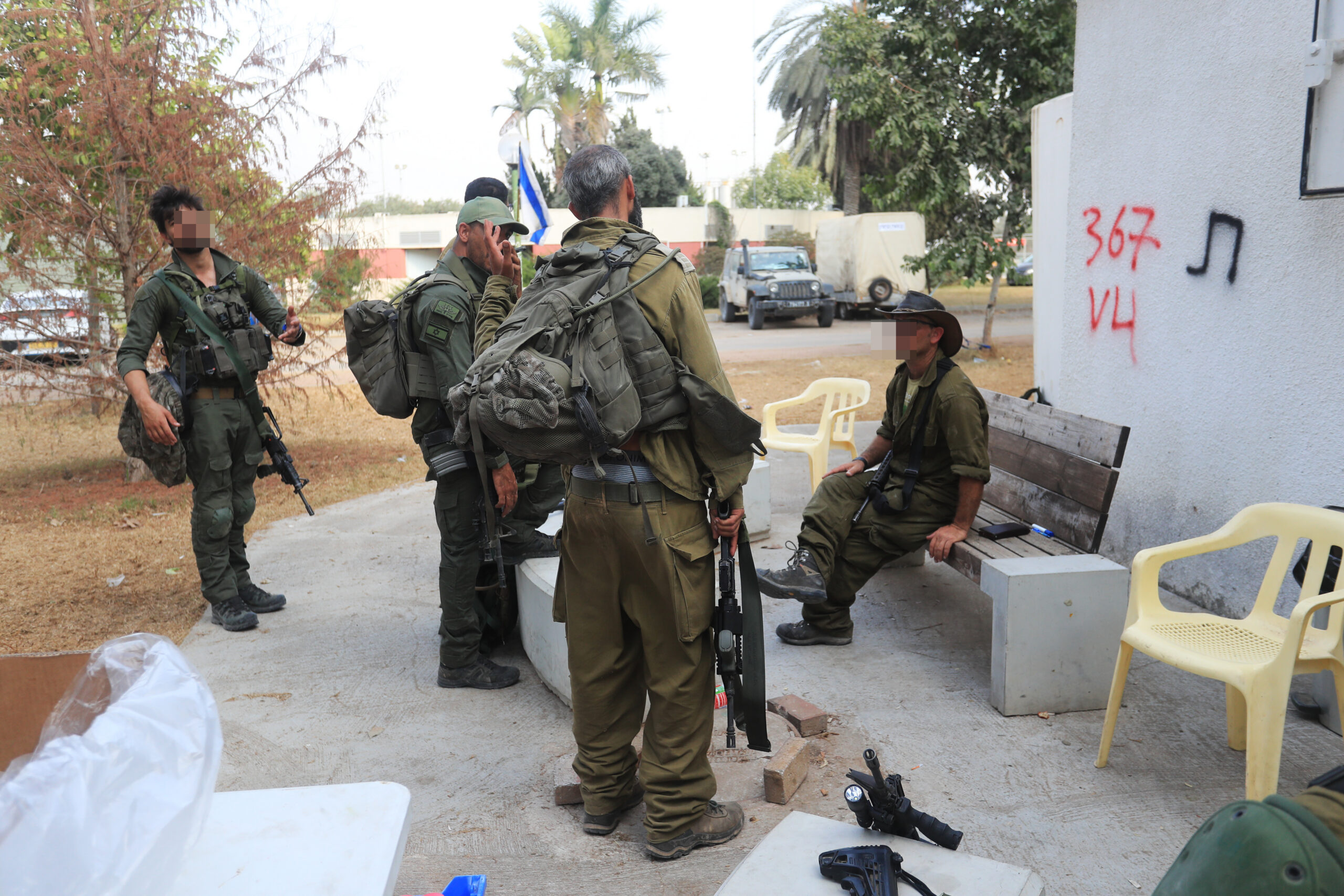
Three years after the Hamas attacks of 7 October, South African Jews remember where they were when they first started hearing about the massacre in Israel, and how that morning changed their lives. For some, the first indication was a siren in Israel. For others, it was a WhatsApp message from a child called up to reserve duty, or a conversation at the gates of a synagogue.
For Amy Markus, the morning began in Tel Aviv with a siren that came at the wrong time. Markus had made aliya seven years earlier and was accustomed to rocket warnings. Usually, she said, the alerts followed a pattern and residents could prepare for them.
On 7 October, however, the siren sounded in the morning. “I heard the siren, I put on my gown,” she recalled. She was looking after a friend’s cats and went outside, where she saw similarly confused neighbours.
She returned to bed, but another siren sounded about half an hour later. This time, her body began shaking. Then two messages arrived, one from a friend in Albania and another from South Africa.
Both told her to pack her bags and leave Israel immediately. “I told myself this can’t be real, this isn’t a real thing,” Markus said. She switched off her phone and went back to sleep for about five hours.
When she switched it on again at around 12:30, the scale of the attack was becoming clearer. Friends were trying to establish what had happened, while people who couldn’t reach her worried she might have been at the Nova festival.
Markus was working as a nanny in Tel Aviv. Three families contacted her and offered to take her with them as they left Israel. One was travelling to Berlin, another to Athens, and the third to New York. She chose New York.
Her father, however, told her not to leave. “He phoned me and he said, ‘You don’t leave, you stay’,” she said. Markus left anyway in the coming days, and stayed in New York for three months.
“It felt so personal how the whole thing happened,” she said. “They attacked us. It felt personal.” She struggled to process the reports from Israel while living thousands of kilometres away. She also encountered hostility and protests in New York, including the removal of hostage posters she had put up.
Markus said the experience strengthened her Jewish identity, but also changed her relationship with Israel and her sense of safety. After returning to South Africa for five months, she went back to Israel but stayed for only two months because she found the war too difficult. “I’m still that person,” she said. “If there’s going to be a big war, I’m going to leave.”
Sue and Ian Levin experienced 7 October from inside Israel, but weren’t at home when the attack began. The couple, who’ve lived in Israel since 1977, had been in Ra’anana and decided to return to their home in the Negev.
They knew something was happening, but didn’t understand what they were driving towards. Ian drove towards their community through Ofakim as roads began closing. When soldiers stopped him, he turned around, and eventually drove through fields to try to get home.
When they arrived, the gates were locked and had to be opened for them. The couple entered their safety room and remained there. The following morning, security officials instructed residents to gather at the gate and evacuate.
There was a line of cars stretching about three kilometres. The convoy was taken towards Beersheba, but Ian left it and went to a friend near Yokneam. The couple eventually stayed in Haifa, first in one hotel and then at the Kedem Spa Hotel.
They remained away from home for about four and a half months. Their neighbours hadn’t been so fortunate. One neighbour’s daughter was killed at the Nova festival, while another neighbour’s daughter, a police officer, was also killed.
Returning home was emotionally difficult for Sue. The couple had been looked after in the hotel, where they received meals, clothing, and other necessities. Back on the moshav, normal responsibilities returned. “It was hard for me to settle down back here on the moshav,” she said.
The wider community faced extraordinary disruption. Some residents stayed behind to farm and maintain their homes, while others were evacuated. Soldiers helped residents with basic needs, including getting food and attending medical appointments. The couple said the experience had changed their understanding of their own security.
Rachel* was thousands of kilometres from the fighting when her three adult children were called into reserve duty. She lives in Houghton, Johannesburg and has three children who made aliya after completing high school at King David. On the morning of 7 October, all three were called up.
Her middle son sent her a short message, “Called up. Pray.” Within two hours, all three children were in uniform and heading to different staging areas. “My life became like Saving Private Ryan,” Rachel told the SA Jewish Report.
She described the distance between South Africa and Israel as agonising. “You sit in your lounge in Houghton, looking out at a tranquil garden, while your entire heart is on the other side of the world in a bomb shelter or an armoured vehicle.”
Her children were serving in different locations. Her daughter was on the northern border, one son was involved in combat engineering near Gaza, and her oldest was in intelligence. Every phone notification brought fear. “You learn to live in five-minute increments because planning a full day ahead feels like tempting fate,” she said.
For David*, 7 October began at a Cape Town synagogue. He arrived at shul in Sea Point at about 07:30 to prepare for the morning service. Security personnel were receiving information about the attack, while many congregants remained unaware because it was Simchat Torah and they had switched off their phones.
David said he was faced with the difficult task of deciding how to communicate the news without causing panic. “People were walking through the doors dressed in their holiday suits, smiling, wishing each other Chag Sameach, completely oblivious because their phones were off,” he said.
The news eventually reached the sanctuary. “When the rabbi finally addressed the sanctuary before the Torah reading, the air completely left the room,” David said. The congregation was suddenly confronted with the reality that Israel was under attack. Many had children, grandchildren, friends, or relatives in Israel.
“October 7th changed the DNA of our shul experience forever,” he said. “We have had to up our security at great expense for our shul and I personally no longer wear my kippah outside the shul property and walk with it in my pocket until I reach the sanctuary.”
For these South Africans, 7 October began in a different place. Three years later, their memories remain tied to those first moments of uncertainty. For Markus, 7 October ultimately made her feel more connected to her Jewish identity. “I feel very, very, very proudly Jewish,” she said. “It’s made me much more of a proud Jew.”
*Interviewees have requested anonymity for privacy reasons.