Israel
A mother shares 908 days of anguish

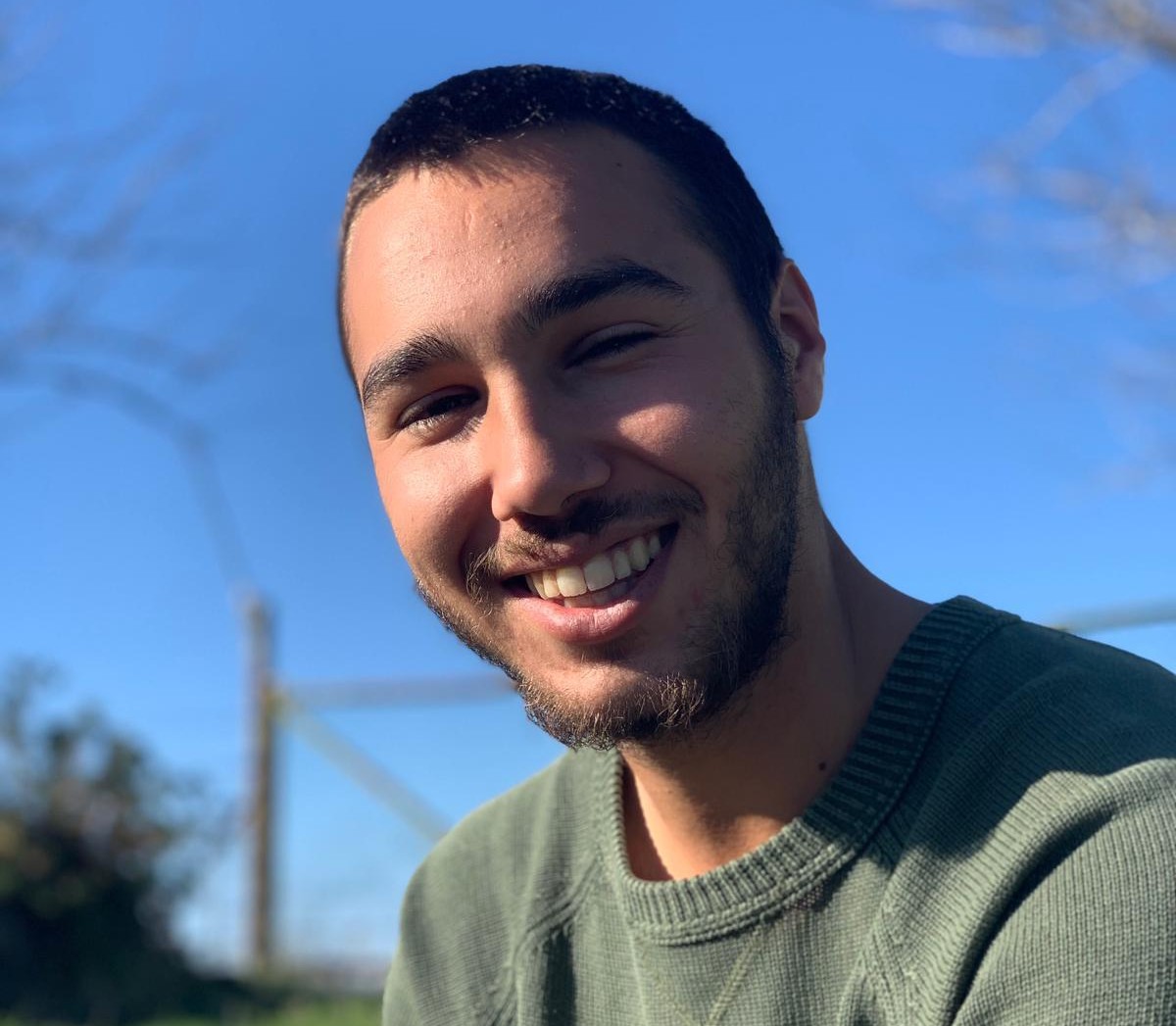
For South African olah Martine Ben Harush, every day is Yom Hazikaron. Her son, Shoam, 20, was shot by a Hamas terrorist on 7 October and later died as a result of his wounds.
Ben Harush, one of the speakers at the Yom Hazikaron ceremony on 21 April in their village, Hispin, in Israel, said the remembrance day is difficult because “on this day, the grief becomes very public”. At the same time, everyone else is mourning, too.
“This is the dichotomy I live with: I carry this sadness all the time, even as life goes on, and I try to keep moving forward,” she told the SA Jewish Report this week.
“It’s especially hard to feel genuinely happy on chaggim,” she said. “So, in a way, Yom Hazikaron feels like a moment when that gap finally closes, when what I’m feeling all the time is shared by everyone around me.”
Shoam had one more year left of compulsory military service in the Israel Defense Forces, and had planned a lengthy holiday with his friends upon completion. However, on 7 October, when Hamas terrorists infiltrated Kibbutz Kerem Shalom near the Gaza Strip, where he was stationed, he was shot in the jaw in an unprovoked attack. He died three weeks later in the Hadassah Ein Kerem Hospital in Jerusalem, from a fatal head wound.
“Today, as the siren’s cry fades across Israel, we stand in the space between silence and memory,” his mother said at the Yom Hazikaron ceremony. “Nine hundred and eight days ago, the clock stopped. Nine hundred and eight days have passed since Shoam’s life became part of the foundation of this nation. Since then, we have been living in the ‘after’.”
Shoam is buried in the cemetery in Hispin, rather than at the military cemetery Har Herzl, as his mother wanted him close to home. She said that in the 908 days since his passing, she has learned to live with the silence that the loss of him has left.
“As a bereaved mother living through the years that follow, that silence changes. It becomes a space where memory lives.”
In her speech, she said, “He moved through life with an open heart, acting as a bridge between people. But we see now, through the letter he left us, that his sight went even deeper. He didn’t just see the beauty; he saw the ‘twisted’, the ‘scary’, and the ‘wrong’, and he made the conscious, brave choice to embrace it all.
“A hero isn’t someone who is unafraid; a hero is someone who knows exactly how ‘unusual’ and “scary” the world is, and chooses to step forward into it for the sake of others. On 7 October, you stepped forward and defended your friends, the observers, every single one of us standing here, and the nation of Israel,” she said at the memorial.
Ben Harush explained that for the first year after her son’s death, she could do little more than cry.
“I don’t think it’s gotten easier over the past two and a half years, but there have been changes,” she said. “Everyone grieves differently, and a lot of it comes down to time. In the first year, I couldn’t speak at all; I would just wake up crying and keep crying. That silence is something I still carry with me.
“Now, it’s different. It’s not a question of whether I can speak; I want to. I feel a need to talk about him, to make sure people know who he was. That’s become deeply important to me. I’m still searching for the words, but now I’m actively seeking them out,” she said.
Over time, she has learned that she doesn’t have to pretend to be fine.
“I’m a high school teacher, so there were days that I learned that it’s okay to cry in front of the students that I teach. I don’t have to pretend all the time. Because that’s what happens. To get through the day, you’re basically pretending,” she said.
Ben Harush said her community has been supportive the entire journey.
“Especially in the first year, I was just, ‘Leave me alone. I need to be alone.’ Sometimes people would say to me, ‘This isn’t what Shoam would want from you.’ And the intention was good. I knew that. But it wasn’t helpful. Because you think I don’t know that. Of course, I know what Shoam would want for me. I don’t need someone to tell me that.
“There were days I couldn’t get up in the morning, and I just learned that that was okay.”
In a final letter he wrote to his family, before going into Jenin for a military operation months before 7 October, he said even though the world was scary and dysfunctional, he still saw it as something beautiful.
“He didn’t want a world where we pretend everything is fine,” said his mother. “He wanted a world where we are ‘different’ and ‘unusual’. He saw the best in us; now, we must be the ones to see the best in each other, even when it’s hard to see through the tears.”
She said that his words “give us a way to move through the silence. He knew that the world was scary and unclear, yet he filled his moments with gratitude. He didn’t ask for a perfect world; he asked for this one,” she said.
Shoam wrote about the possibility he might not return. “The world is strange … the world is wrong … but even with all its shortcomings, the world is beautiful … I don’t want to live in another world. I want to live in this world.”
He wrote how he saw the world’s flaws and the “messed up” parts of our reality and, instead of turning away he said, “Thank you for the challenges, thank you for my strength, thank you for my parents, my friends, my home, and my life.”