





National Jewish Dialogue
Broken policies, bleeding nation

There are times in the life of a nation when it must pause from its labours, quarrels, and illusions to look upon itself with unflinching honesty. South Africa now stands at just such a moment.
Though public discourse often laments the failures of government delivery, there remains a stubborn myth that despite administrative ineptitude, our policies are fundamentally sound. This illusion must be shattered. In truth, South Africa is burdened by some of the most economically destructive policies in the world, fortunately implemented by a government too dysfunctional to enforce them fully. But we cannot rely on incompetence as a safeguard. What South Africa needs isn’t only better leadership, but a fundamental reform of its policy architecture.
The policy of expropriation without compensation isn’t a remedy, it’s a malady. It strikes at the very heart of freedom, for there can be no liberty without property. If men and women are to build, toil, sacrifice, they must know that the fruits of their labour won’t be seized by the state. Expropriation without compensation ignores the progress already made: more than 1.8 million individuals have been compensated through a legitimate land-claims process, often with money or property in return for past injustices. We must protect property rights not merely for the sake of prosperity, but for the dignity of the citizen.
Equally pressing is the need to reaffirm our commitment to non-racialism, a core value enshrined in Section 1 of the Constitution. This shouldn’t be a rhetorical commitment but a legislative one: all race-based laws must be repealed. The South African Institute of Race Relations has already drafted a bill that would eliminate race-based statutes and policies.
Black Economic Empowerment (BEE), far from lifting the poor, has become a ladder only for the few, and a trapdoor for many. Contracts are handed not to the skilled, but to the connected; and where competence is punished, incompetence thrives. BEE often worsens conditions for the poor by awarding state tenders not to the most qualified or cost-effective service providers, but to party-linked contractors who frequently fail to deliver.
South Africa needs a race-neutral mechanism for redress, one that recognises the real individuals disadvantaged by apartheid rather than treating people as interchangeable proxies based on skin colour. Let’s abandon the fallacy that all black men are the same, and that all white men are guilty.
At the same time, a renewed social contract must include a clear moral stance against genuine hate speech. It’s unacceptable that politicians like Julius Malema are permitted to incite racial violence by singing, “Kill the Boer” before stadiums of 90 000 people.
When mobs chant, “From the river to the sea” or “We are Hamas”, they aren’t voicing a plea for peace, but a cry for annihilation. These aren’t slogans, they are battle-cries against civilisation itself. That such sentiments are tolerated, even echoed, within the African National Congress should alarm all South Africans.
Finally, South Africa must take decisive action to repair its relationship with the United States, a relationship that has been deeply strained in recent years. A good starting point would be to withdraw from the International Court of Justice litigation against Israel. That case isn’t about human rights, it’s a blood libel repackaged for the age of Twitter. It serves only to empower the ayatollahs of Iran and the butchers of Hamas. South Africa must withdraw with dignity, and repudiate the falsehood that Israel is a genocidal state.
It’s time for South Africa to mature as a democracy, to move beyond liberation-era rhetoric and face the practical realities of governance. That requires courage: to abandon harmful policies; to stand up against hatred in all its forms; and to reassert the core constitutional values that once gave this nation so much promise.
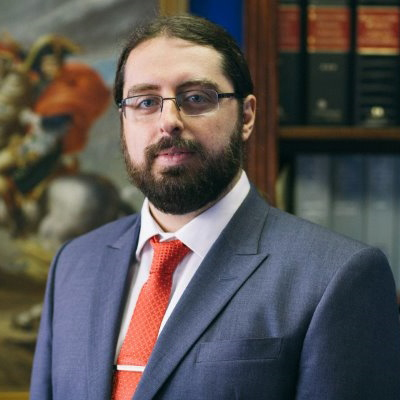
- Mark Oppenheimer is a leading human rights lawyer and president of the Institute of Race Relations. He is known for landmark free-speech cases and media commentary on hate speech.



