





Israel
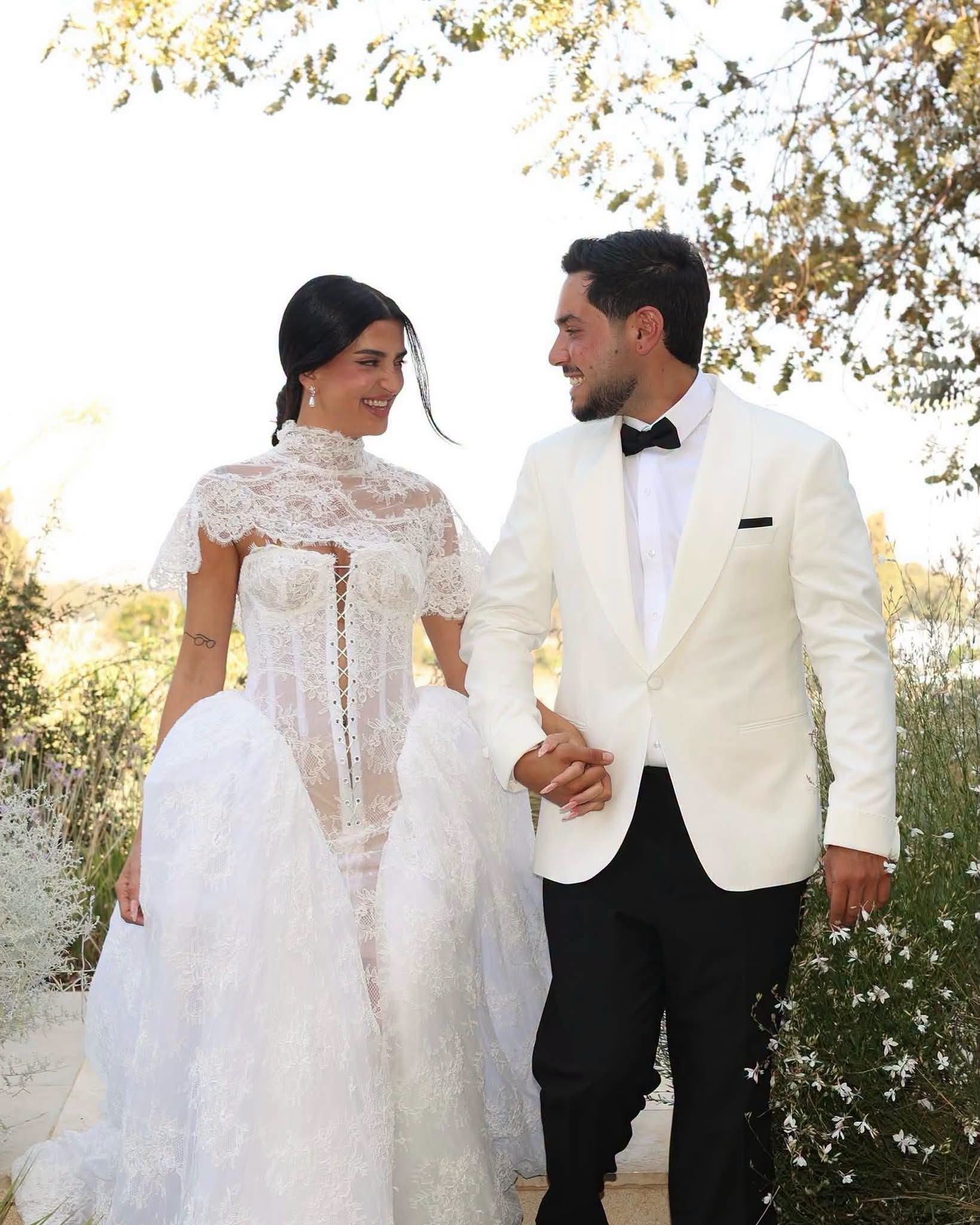
Eliya and Ziv celebrate life, love, and a miracle

For 505 days, getting married to his partner, Ziv Abud, was the dream that sustained Eliya Cohen in the rot of the Hamas tunnels. A future with her was uncertain. Even knowing whether the person you love was alive was a luxury neither of them had.
This week, they stood together beneath a chuppah.
It was a celebration of love, certainly. But surrounded by returned hostages, survivors, family, and friends, it was also an extraordinary celebration of life.
On 7 October, Eliya and Ziv were at the Nova festival. They fled the massacre and hid in what would become known as the “death shelter” near Re’im.
Eliya was shot and kidnapped into Gaza, where he would spend 505 days in captivity. Ziv survived by hiding beneath the bodies of those murdered around her. Among those killed were her 19-year-old nephew, Amit, and his girlfriend, Karin.
Eliya was dragged into Gaza not knowing whether Ziv was alive.
Ziv was left behind with the same uncertainty.
Somehow, they both survived.
That knowledge gave their wedding a different weight.
Perhaps one of the most moving decisions the couple made was to invite all the returned hostages to celebrate with them. Throughout the evening, people whose faces the world had come to know from hostage posters, television screens, and endless campaigns for their freedom embraced, laughed, and danced together.
For once, nobody was there to tell a story of captivity. Nobody was being asked to relive the worst moments of their lives. They were simply friends at a wedding.
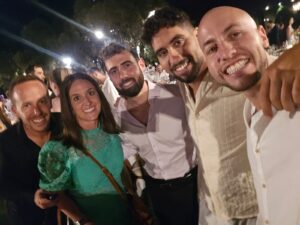
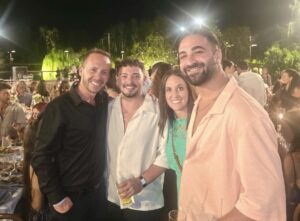
There was something almost surreal about watching it. People for whom freedom had once seemed desperately uncertain were forming circles around a bride and groom, singing and dancing.
They had gathered not to commemorate what had happened to them, but to celebrate what comes next.
For us, there was another deeply personal dimension to the evening.
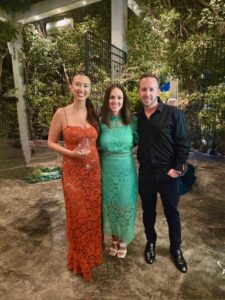
Through The Base community and the Jewish National Fund South Africa’s programme of bringing returned hostages and their families to South Africa for rest and healing, we’ve had the enormous privilege of getting to know a number of these remarkable people.
Many of them spoke in South Africa and their trips were made public, while many chose not to.
To find ourselves together again celebrating the wedding as friends felt like an extraordinary blessing.
Our friendship with Eliya began in South Africa barely a month after his release. The physical signs of what he had endured were impossible to miss. After 505 days without seeing the sun, his skin still had a yellowish pallor. He’d been free for only a few weeks, and was taking his first tentative steps, literally and figuratively, cane in hand, back into a world that had continued moving while his had been held underground.
Eliya had not planned to speak publicly in South Africa. Nor was there any expectation that he should. The purpose of his visit was to give him space to breathe, to experience the beauty of the country, and, most importantly, to feel the embrace of a community thousands of kilometres from Israel that had prayed for him without ever having met him.
But something changed while he was here. He felt that embrace. He felt the warmth and love of the South African Jewish community and the genuine desire of people to ask nothing of him other than for him to know that he was not alone.
And he changed his mind.
In South Africa, barely a month after his release, Eliya chose to share his story publicly for the first time.
It was an enormous act of trust.
But what remained with us long after that evening wasn’t only the testimony he gave. It was Eliya himself – his humour, warmth, determination, and, perhaps most strikingly, his faith.
Above Eliya and Ziv’s chuppah was the tallit of Ziv’s nephew, Amit, murdered on 7 October.
Their ketubah (marriage contract) carried another deeply moving connection. It was created by Moshe Shapira, the father of Aner Shapira, who was killed while defending the very shelter in which Eliya and Ziv had sought refuge, repeatedly throwing grenades back outside in an attempt to save those trapped inside.
Those they had lost were not forgotten.
But grief did not own the evening. Life did.
This time Eliya’s face was surrounded by light. Beside him was Ziv. Above them was Amit’s tallit. Around them were family, friends, survivors, and returned hostages.
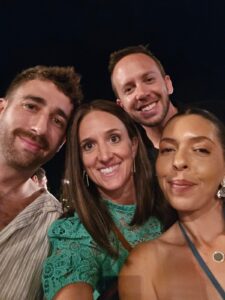
And then there was dancing, until long after sunrise.
Throughout it all, one aspect of Eliya’s story kept returning to me: his extraordinary faith.
From the first time we met, Eliya spoke about his belief in Hashem with a certainty that was difficult to comprehend precisely because of what he’d endured.
This was not an uncomplicated faith belonging to someone whose life had never tested it.
His faith was tested underground in Gaza. It was tested through hunger, violence, chains, darkness, and 505 days of not knowing whether the woman he loved was alive.
And that faith emerged with him.
Before his wedding, while undergoing surgery on the foot shattered when he was shot on 7 October, Eliya had spoken of his dream simply to be able to stand beneath his own chuppah and break the glass. He called that prospect “the greatest victory in the world”.
And now we were watching it happen.
A man who had once been chained underground was standing beneath his own chuppah.
A woman who had survived beneath the bodies of those murdered was standing opposite him in a wedding dress.
There was nothing abstract about the miracle.
It was standing in front of us.
October 7 will always be part of Eliya and Ziv’s story. Nothing can erase the people they lost, the trauma they endured, or the 505 days stolen from them.
But Hamas did not get to write the ending. Eliya and Ziv do.
They chose each other.
They chose to gather survivors and not to mourn what happened to them, but celebrate what lies ahead.
They chose to remember those they lost while refusing to allow grief to extinguish their joy.
They chose to build.
They chose a future.
For one unforgettable night, surrounded by some of the most extraordinary friends, that is exactly what Eliya and Ziv did.
Saul Jassinowsky is the vice-chairperson of the South African Zionist Federation, an executive committee member of JNF SA, and a member of The Base community.






MICHAEL WESTON MITCHELL
August 21, 2026 at 1:24 pm
Beautiful story! Absolutely amazing