Israel
Israel needs military tactics in narrative war

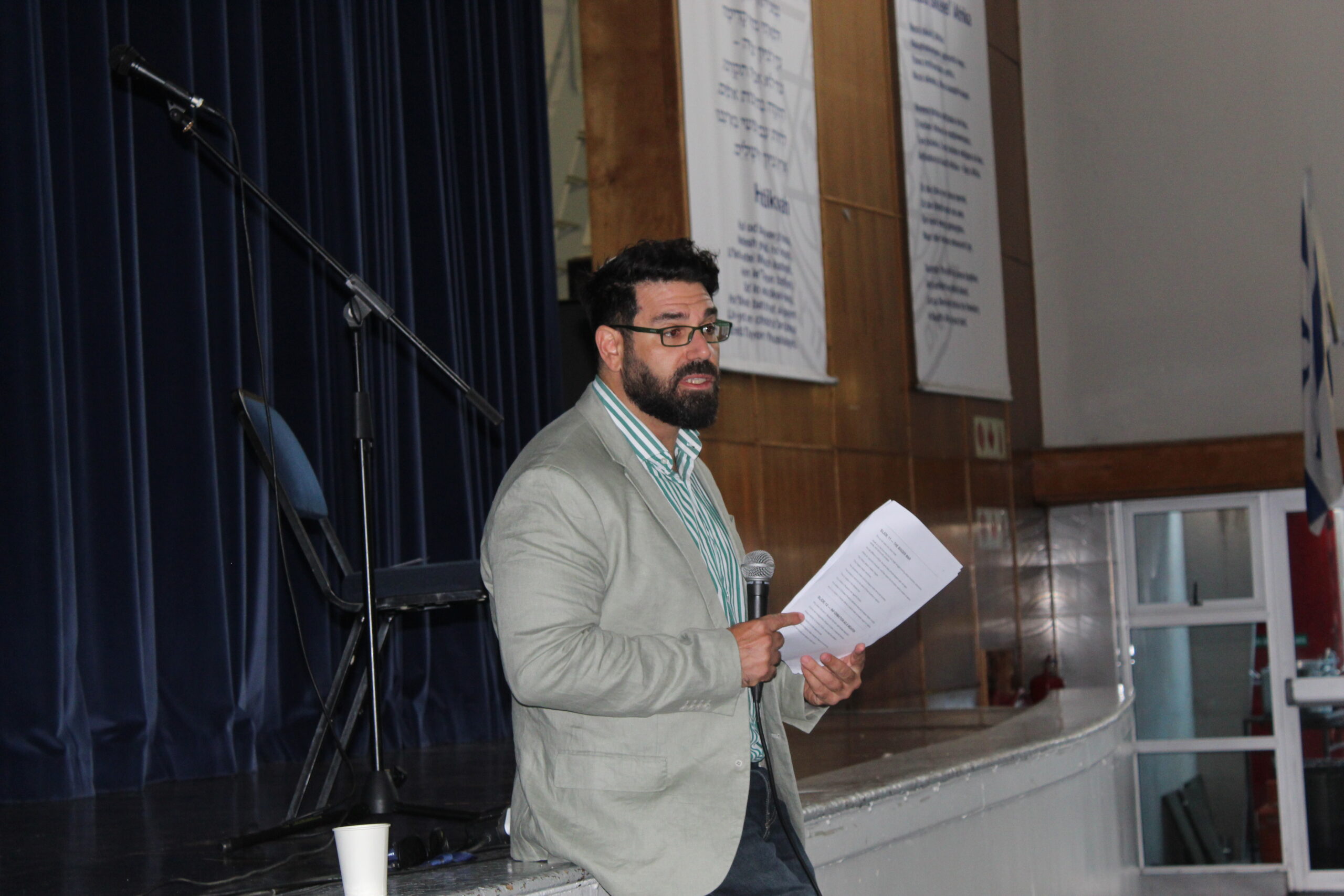
For Israel, the battle is no longer only a military one. Dan Feferman told Limmud Cape Town that the information space is as strategic a battlefield, capable of shaping public opinion, political decisions, and physical violence.
Feferman, an Israel-based media entrepreneur focusing on the Middle East and an expert on military, intelligence, and diplomatic affairs, said the problem is bigger than poor Israeli public relations.
“What we’re facing is not a better PR campaign or a better spokesperson,” he said. “We’re facing something much more organised, something much more insidious. We’re facing a properly strategised and crafted information ecosystem.”
Speaking at a session titled “The Narrative War on Israel and the West: How We Win”, Feferman said Israel and its supporters are confronting networks that understand information as a weapon.
According to Feferman, Israel entered the 7 October war without the information infrastructure needed to respond at the same speed. He contrasted this with Israel’s military preparedness. “I live 10 minutes away from one of Israel’s biggest air force bases. There are pilots training and flying overhead ready to defend Israel at a moment’s notice.
“But when it comes to the information space, the so-called pilots and the mechanics and the engineers of the information warfare were nowhere to be found.”
He said Microsoft had tracked nine Iranian cyber-influence groups targeting Israel in the first week after 7 October, rising to 14 by day 15. And Iranian cyber-enabled influence operations increased from about one every two months in 2021 to 11 during October 2023.
Feferman said the effectiveness of such campaigns comes partly from their ability to move faster than verification. He cited claims circulated after 7 October about Israel targeting a hospital, deliberately starving Gaza, targeting aid workers, and blocking humanitarian assistance.
“The point is not that every criticism of Israel is false,” he said. “The point is the speed at which the most disgusting interpretation of Israel’s actions and intentions hits the media and spreads like wildfire, and then becomes the accepted narrative.”
Feferman described social media amplification as a key part of this process. Repeated messages can create the impression that a particular view is universally accepted, even when fake accounts or coordinated networks are involved.
He warned that artificial intelligence (AI) is making the information environment even more difficult to navigate. AI-generated images and videos can increasingly appear authentic, allowing emotionally powerful material to spread before it can be verified.
For Feferman, the consequences extend beyond online arguments. Narratives can contribute to political pressure, boycotts, sanctions, diplomatic decisions, and hostility towards Jewish communities.
He described Israel as an “omnicause”, meaning a symbol through which wider political and ideological struggles are expressed. The conflict with Palestinians has been connected to broader anti-Western and anti-colonial narratives for decades, he said.
The roots of modern information warfare could be traced to Soviet “active measures” during the Cold War. These included disinformation, forged documents, front organisations, planted stories, and the amplification of divisions within societies.
Feferman said the response therefore could not simply be better public relations. “This is not bad PR, this is not a PR crisis,” he said. “What we need is to think in military terms.”
He called for fully operational capabilities dedicated to understanding and responding to information warfare around the clock. This would include mapping who is involved, how networks are funded, and how they operate. “We have to change our mindset,” he said. “This is not more hasbara and it’s not another activist advocacy organisation.”
Feferman acknowledged that democratic societies cannot approach information warfare in the same way as authoritarian regimes or terrorist organisations. They need specialists capable of understanding the methods being used against them.
But he pointed out that the narrative battle cannot be treated as an afterthought. “We’re fighting over the ninth storey while they’re taking out the foundations of the building.”
- Hear him at Limmud JHB this weekend limmud.org.za