World
From Kristallnacht flames to community revival in Krefeld

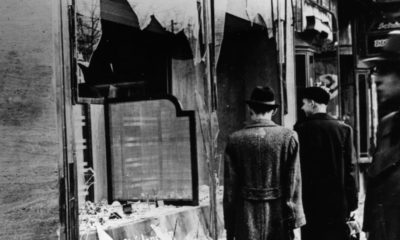
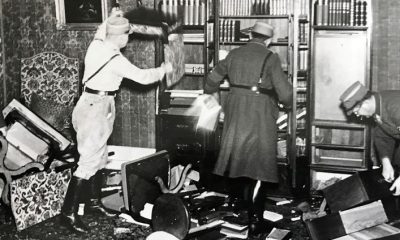
It was Rabbi Yitzchak Wagner’s shul in Krefeld, Germany, that was one of the first buildings to be torched on Kristallnacht – the Nazi government-sponsored pogrom on 9 November 1938. Now, 87 years later, that same shul stands as a symbol of Jewish resistance, according to Wagner, who is the first Krefeld-born rabbi serving that community in the past 70 years.
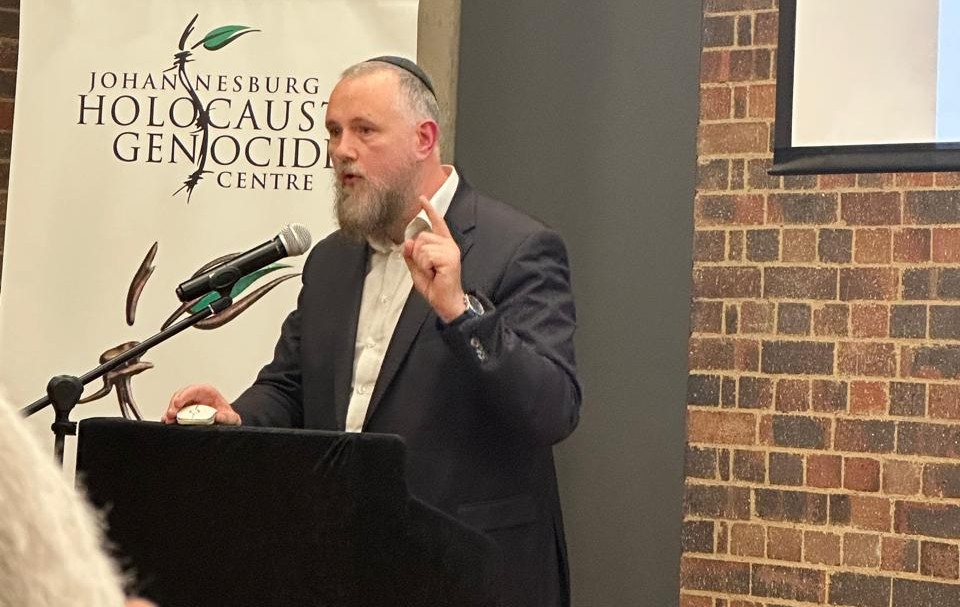
Wagner, one of the first German‑born rabbis ordained in Germany after the Holocaust, spoke at the Johannesburg Holocaust & Genocide Centre on 6 November to commemorate Kristallnacht. He said that on the day the old synagogue burned down, a businessman was walking past the shul with his son and told his son to “open his eyes because this is history. Never forget what you see tonight. They burned down the Jewish community.”
That same son many years later helped the Krefeld community raise 15 million euros to buy and renovate the shul as a community centre, which opened on 14 September 2008. He had heard that the Jewish community in Krefeld was going through a process of rebuilding from a non-existent community to one that needed the shul renovated to accommodate everyone.
“When he gave the money, he had two conditions,” said Wagner. “The walls of the synagogue must be metal so that they would never burn again. And there shouldn’t be any space below the synagogue so that nobody could, G-d forbid, plant a bomb there. So, just imagine, at the moment the old synagogue was burning, the seed was laid which grew into everything we have today.”
After the war, Wagner said, there were no Jews left in Krefeld. By 1981, there were only 130 Jews in Krefeld, and they decided to open a new shul. But even though more than 100 Jewish people were living in the city, only 30 people came to services, and that number continued to diminish so that one year, only nine people attended Yom Kippur services.
The community decided to keep the shul going even when logic said otherwise. “One board member said that if Jews and the laws of logic went together, we wouldn’t be here,” Rabbi Wagner recalled. “There wouldn’t be a state of Israel. By the laws of nature, it’s impossible to survive the Holocaust and then emerge stronger, building a Jewish state. But that’s Jewish history: after every catastrophe comes renewal. When Jews behind the Iron Curtain were freed, many went to Israel, but many also came to Germany. Suddenly, our tiny community of nine on Yom Kippur grew by more than a thousand. We needed a bigger building.”
Wagner said that the date 9 November 1938, now known as Kristallnacht, was a holiday in Germany. It was St Martins Day, similar to Halloween, when children roam the streets and the city is packed with people, but Nazis, not dressed in Nazi uniform, broke open the gates to the Jewish community in Krefeld, and started to burn down the old synagogue.
“They called the fire department and the police. The fire department came. They entered the Jewish community, but didn’t bother to put out the flames. They were looking for the wine cellar. They broke open the door and stole the wine. Then they had a party together with the police on the other side of the street, seeing the whole synagogue go up in flames,” he said.
“For the Nazis, 9 November 1938 was a test. They wanted to see how the world would react if they burned down a thousand synagogues and destroyed so many Jewish shops. Would there be a protest in America? Would there be pressure from Russia? What would the king say? What would the pope say? And they saw the response. On 9, 10, and 11 November, the world was quiet.
“The world is quiet. We can burn Jewish books in the city centre downtown. The world is quiet. We can burn all the shuls. The world is quiet. We can burn the Jews.
“Yes, in the end, the Allies came and stopped the war, but they came because they were pulled into the war against Nazi Germany. Nobody sent even one aeroplane to drop one bomb on the train tracks going to the concentration camps, which might have made a difference. Nobody was interested. In the end, when they had to fight Hitler, Nazi Germany, they liberated the concentration camps, but this wasn’t the main task. It was to fight Hitler. This was part of it. And the Nazis understood this very well.”
Wagner said that as the shul was burning, a priest from across the road saw the flames and ran in to save the Torah, which was a dangerous thing for him to do as if he was caught with it, he would immediately have been sent to his death. However, he managed to keep it safe, and when Jews started to return to Krefeld after the war, the priest returned the Torah to the shul, where it is on display as it cannot be used as it is no longer kosher due to being damaged.
“We made the decision not to bury it, but to tell the story that even in the worst times of the Jewish people, there were always good non-Jews who stood up and tried to make a difference. This Torah isn’t kosher anymore, but it’s very holy because it’s still a Torah and somebody risked his life in order to save it,” he said.
Eighty-seven years after the events of Kristallnacht, although the original location of the old synagogue is a memorial with six stones symbolising the six million Jews killed, Wagner regularly hosts services in the synagogue in Krefeld with more than 200 people coming every week.
Every year on 9 November, the city of Krefeld gathers to remember one of its darkest nights, when its synagogue was among the first in Germany burned during Kristallnacht. “Hundreds come – the mayor, politicians, schoolchildren – to speak out against racism and antisemitism, to remember what happened here,” said Wagner.