Israel
Israel confronts addiction crisis in shadow of war

When South African-born Israeli reservist Eyal* returned home after weeks of fighting in Gaza, the war refused to leave him. His body was back in Modi‘in, but his mind remained on the battlefield. Sleep was elusive, his heightened alertness never switching off.
Eventually, ketamine became the only thing that quietened the noise. “Nobody joins the army thinking they’ll end up doing ketamine,” he says. “It happens because people are exhausted. You come home after weeks in combat, and your brain refuses to slow down.”
Nearly three years after 7 October, mental health professionals, addiction specialists, and government officials are warning that Israel is confronting another consequence of the war. Alongside the physical destruction and emotional trauma is a sharp increase in the use of alcohol, prescription medications, and illicit drugs as thousands of Israelis struggle to cope.
The warning comes as Israel’s Defence Ministry reports an unprecedented increase in psychological injuries among soldiers. About 85 000 soldiers are now receiving treatment for psychological disorders, up from about 62 000 before the attacks. Officials estimate that one in three soldiers experiences psychological difficulties linked to the events of 7 October and the war that followed.
The scale of the challenge has placed pressure on the mental health system. According to Defence Ministry officials, some therapists are responsible for as many as 750 patients, making timely treatment increasingly difficult.
The problem extends well beyond soldiers.
The Israel Center on Addiction (ICA) says symptoms of trauma and substance use have risen simultaneously since October 2023. ICA Chief Executive Inbal Dor Kerbel warns that substance use has risen dramatically. “One in four Israelis is at risk of increased use. Trauma and addiction are not separate phenomena. They feed each other. They go hand in hand,” she said.
Officials fear that without intervention, today’s coping mechanism could become tomorrow’s addiction.
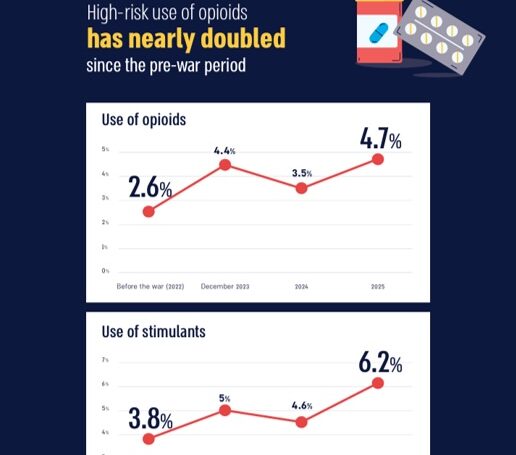
A separate ICA epidemiological study found that although post-traumatic stress symptoms have eased somewhat since the immediate aftermath of the attacks, substance use has remained stubbornly high. Some forms of drug use have continued to increase. The study found that opioid use almost doubled between 2022 and 2025, while the use of tranquillisers and sleeping medication rose to 10%. Stimulant use nearly tripled during the same period.
Researchers say younger adults are particularly vulnerable. Almost 30% of Israelis aged 18 to 34 now report risky substance use. Among people experiencing symptoms of post-traumatic stress disorder, the proportion rises to more than half. The increase often reflects months of accumulated fear, grief, repeated reserve duty, missile attacks, bereavement, and uncertainty.
Talia*, a 28-year-old software engineer from Tel Aviv whose parents made aliya from Cape Town, says she has watched social norms change rapidly. “My parents always told me South Africans were resilient. Israelis are too. Sometimes I think we’re resilient to a fault.”
She says ketamine use has become increasingly common among young professionals. “Before the war, we’d open a bottle of wine. Now someone brings ketamine and nobody reacts. It’s become part of social life in a way that would’ve shocked us a few years ago.”
She worries that growing awareness of ketamine’s legitimate medical use has created dangerous misunderstandings. “People hear that it’s used medically for depression and convince themselves what they’re buying online is basically the same thing. It isn’t.”
She says many people who appear successful are struggling privately. “Everyone’s still going to work, getting promotions, and posting holiday photos. You don’t see the panic attacks or the drugs that some people rely on to get through the week.”
Research conducted among survivors of the Nova music festival found that excessive drinking rather than prior psychedelic drug use was associated with severe post-traumatic stress symptoms after the attack. Researchers concluded that people who turned to alcohol after the massacre experienced greater psychological distress, reinforcing concern that self-medicating trauma can ultimately make recovery more difficult.
The ICA encourages people to use healthy coping mechanisms such as maintaining routines, exercising, limiting exposure to distressing news, staying connected to loved ones, and seeking professional help instead of consuming alcohol or drugs.
For 23-year-old Shira*, whose Johannesburg-born parents made aliya before she was born, professional help proved to be the turning point. After completing her military service during the war, she returned to university expecting life to resume.
“I thought once I took off the uniform, I’d leave everything behind. Instead, it came home with me. I’d sit in lectures thinking about missile alerts instead of what the professor was saying.” Friends introduced her to ketamine at a party. “For the first hour, I finally felt calm. Afterwards, I realised I’d started looking for chemical relief instead of learning how to cope.”
She has since begun therapy and joined a 12-step programme. “The hardest part isn’t admitting that you need help. It’s admitting that the thing you’ve been using to survive might actually be making everything worse.”
Israeli health officials say preparation for the eventual end of the war began almost immediately after fighting started. The Health Ministry has expanded mental health services, while all four health funds now operate clinics that treat people for addiction and mental illnesses. Officials expect another wave of patients to seek help after reserve soldiers complete their service.
Mental health professionals report that more soldiers are now willing to seek help than during previous conflicts.
Michael*, a Cape Town-born emergency paramedic in Jerusalem, believes that shift is essential. “I’ve spent my career helping other people through trauma. I wasn’t prepared for how much of it I’d carry home myself.”
He’s watched psychological injuries accumulate among colleagues who continue reporting for duty every day. “People imagine that burnout looks dramatic. Usually, it looks like someone still showing up to work every day while quietly falling apart.”
Although he has never used illicit drugs himself, he says he understands why people do. “Some people reach for alcohol. Others get prescription medication. Some end up experimenting with ketamine because someone tells them it helps them forget for a few hours.”
For Eyal, the lessons have come at a personal cost. And although he is now receiving psychological treatment, he believes many reservists are still suffering in silence. “We’re trained to keep functioning. That mindset helps in battle, but afterwards it stops people from asking for help.”
Michael fears that the country’s greatest challenge may still lie ahead. “The missiles eventually stop,” he says. “The trauma doesn’t. That’s the part we’ll still be dealing with years from now.”
*Interviewees have requested anonymity for security and privacy reasons