Israel
Israeli doctor keeps life-saving promise in Rwanda

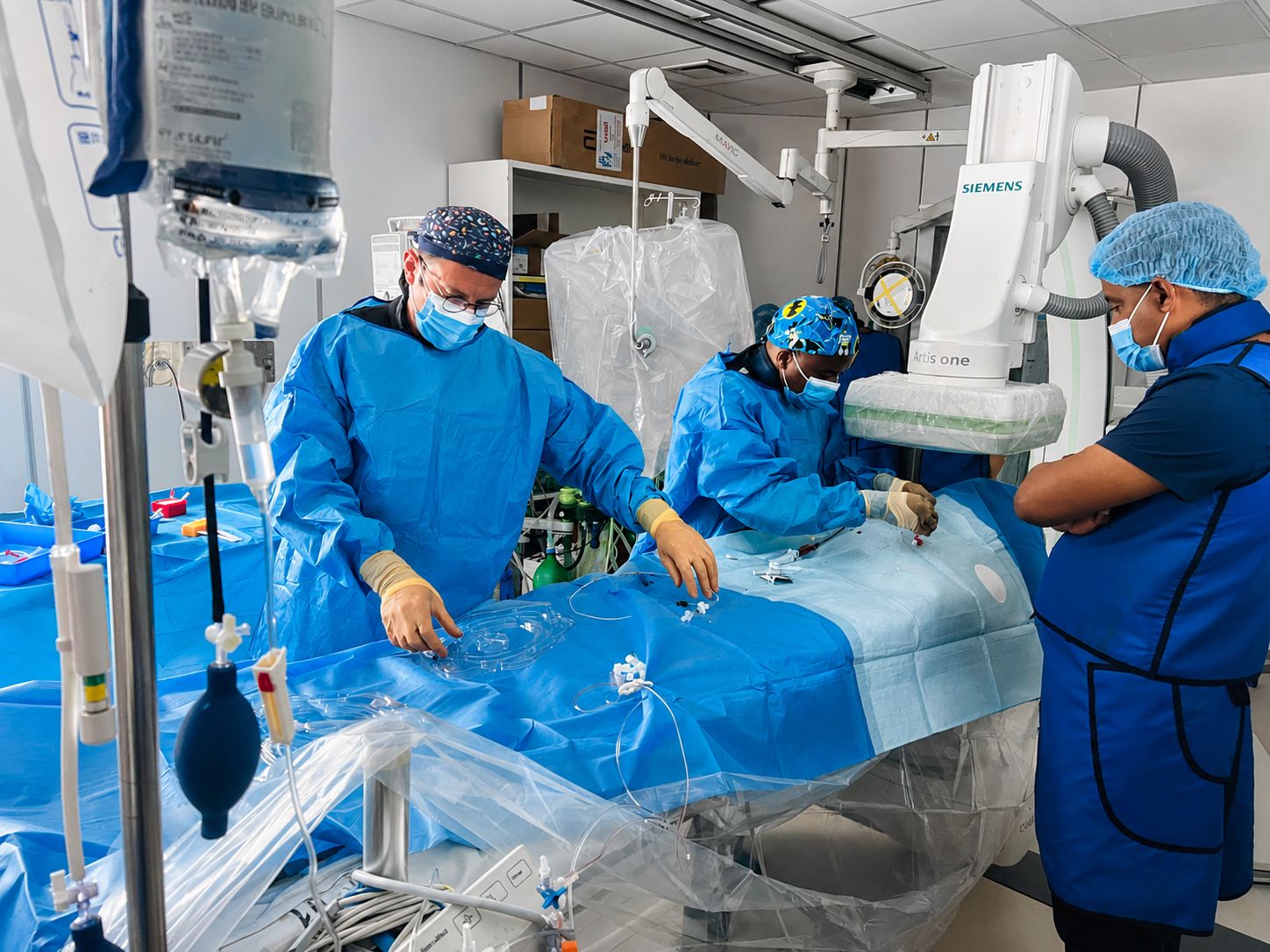
When 11-day-old Angel needed an urgent heart procedure, an Israeli doctor kept a promise to a Rwandan cardiologist he had trained. Dr Sagi Assa flew more than 4 000km to Kigali to help Dr Gerard Misago perform a procedure never before carried out on a newborn in Rwanda.
The operation successfully opened Angel’s severely narrowed pulmonary valve. It also marked a significant step towards Rwanda developing the expertise to treat children with complex heart conditions at home.
Angel was born with critical pulmonary valve stenosis, a congenital heart defect that restricts blood flow from the heart to the lungs. The baby was taken through several hospitals before reaching King Faisal Hospital in Kigali. There, doctors determined that an urgent catheter-based procedure was needed.
Known as balloon pulmonary valvuloplasty, the procedure uses a catheter to widen the narrowed valve without open-heart surgery. With Angel, the procedure was particularly challenging because of her age and size.
Assa, head of the Interventional Paediatric Cardiology Unit at Wolfson Medical Center in Israel, had trained Misago during his three years in Israel through Save a Child’s Heart, an Israeli humanitarian organisation that treats children from developing countries while training medical professionals to establish sustainable cardiac services in their own countries.
Misago and his team presented Assa with Angel’s case four days before he travelled to Rwanda.
The doctors considered the available treatment options and decided that a minimally invasive procedure was the best option.
“When Gerard was training in Israel at Wolfson Medical Center, I promised him that I and the Save a Child’s Heart team would continue to support and mentor him after his return to Rwanda,” Assa said. “Since this procedure had never been done in Rwanda before, I told Gerard I would come and assist him, since promises you make you have to keep.”
The procedure required the medical team to work with extremely small blood vessels and navigate a catheter into the baby’s heart. Assa said procedures on newborns are always challenging, high risk, and delicate. This was particularly true because it was the first time the procedure was being performed at the centre. “I wanted to ensure the safety of the baby while helping empower Dr Gerard as a future interventional cardiologist,” Assa said.
Misago said he had trained with experienced mentors in Israel, gaining skills through hands-on experience. “I performed those procedures under direct supervision in Israel, so the time I spent there prepared me to lead and do that kind of procedure.”
He led the operation in Rwanda, with Assa supporting him and Dr Christine Niyibogora providing paediatric cardiac anaesthesia.
Niyibogora also trained in Israel through Save a Child’s Heart and said she gained both specialist clinical skills and the confidence to work as part of a multidisciplinary cardiac team.
“It taught me how to anticipate challenges, make critical decisions under pressure, and care for some of the most vulnerable patients,” Niyibogora said. “Most importantly, it gave me skills that I brought back home to Rwanda and use to help build local capacity and improve access to life-saving cardiac care for children.”
As the anaesthesiologist, Niyibogora had to keep Angel stable throughout the procedure. She explained that newborns have little physiological reserve. Small changes in oxygen saturation, blood pressure, heart rate, or body temperature can therefore become significant very quickly.
“The main challenge was maintaining the baby’s stability throughout the procedure while the heart was being treated,” she said. “It required meticulous preparation, continuous monitoring, and close communication with the interventional cardiology and intensive care teams.”
For Misago, having Assa present provided reassurance during a procedure that carried significant risks. “Dr Sagi is a very special doctor, humble and known by everyone in our team,” he said. “Having him on our side, we were confident that the procedure would be successful.”
The successful operation strengthened his belief in Rwanda’s ability to manage similar cases. “From that first procedure, we are confident that we will be able to manage similar cases.”
For Assa, seeing Misago lead the team was particularly meaningful after watching his development during training.
“Gerard is the first and only paediatric interventional cardiology specialist in Rwanda,” he said. “For the past three years, we’ve seen his growth, professionally and personally. Seeing him manage a team and successfully completing a complicated procedure was heartwarming and what we all wished for.”
Save a Child’s Heart was established to provide paediatric cardiac care for children in countries where specialist treatment is limited. Its work also focuses on training local medical professionals. The organisation’s Rwanda programme has included missions at King Faisal Hospital and fellowships for Rwandan medical professionals in Israel.
“Local teams need to be able to treat children in their own countries,” Assa said, pointing out that it wasn’t possible to send every child needing specialist care to Israel. “That is why one of our main goals is to train local doctors so they can return to their countries, treat as many children as possible, spread their knowledge, and make it accessible.”
Assa described the procedure in Rwanda as the first of many steps towards that goal.
He said children who previously had no treatment option or who had to travel abroad to receive care could increasingly be treated in Rwanda.
Niyibogora said the same principle was important from an anaesthesia perspective. “The success of this procedure is an encouraging step for the future of paediatric cardiac care in Rwanda,” she said. “It shows that, with the right training, expertise, teamwork, and resources, we can safely manage increasingly complex heart conditions in children here at home.”
The most important outcome was not simply that one baby had been treated successfully, she said. “We are building local capacity so that more children can receive high-quality, life-saving cardiac care closer to their families.”
For Misago, the experience has also strengthened his confidence in continuing to develop Rwanda’s cardiac services. “A successful procedure for a novice increases self-esteem and confidence, and it pushes you forward,” he said.
“I was pleased to have Dr Sagi by my side. I trust him very much, so if he believes in me, I can do many similar procedures.”
Niyibogora said the story should ultimately be seen as one of hope. “A diagnosis of serious congenital heart disease doesn’t have to mean that there is no solution,” she said. “With continued investment in training, infrastructure, and multidisciplinary collaboration, Rwanda can continue to strengthen its ability to care for children with complex heart conditions.”
But for Assa, the most memorable thing about the mission was not the technical achievement.
It was seeing Angel’s mother after the procedure. “The grateful eyes of Angel’s mom,” he said.
The operation gave one newborn access to treatment that might previously have required travelling outside Rwanda. It also demonstrated what years of training, mentorship, and co-operation can achieve.
For the doctors involved, the procedure was not the end of the journey. It was evidence that Rwanda’s own specialists are increasingly equipped to continue it.