


SA
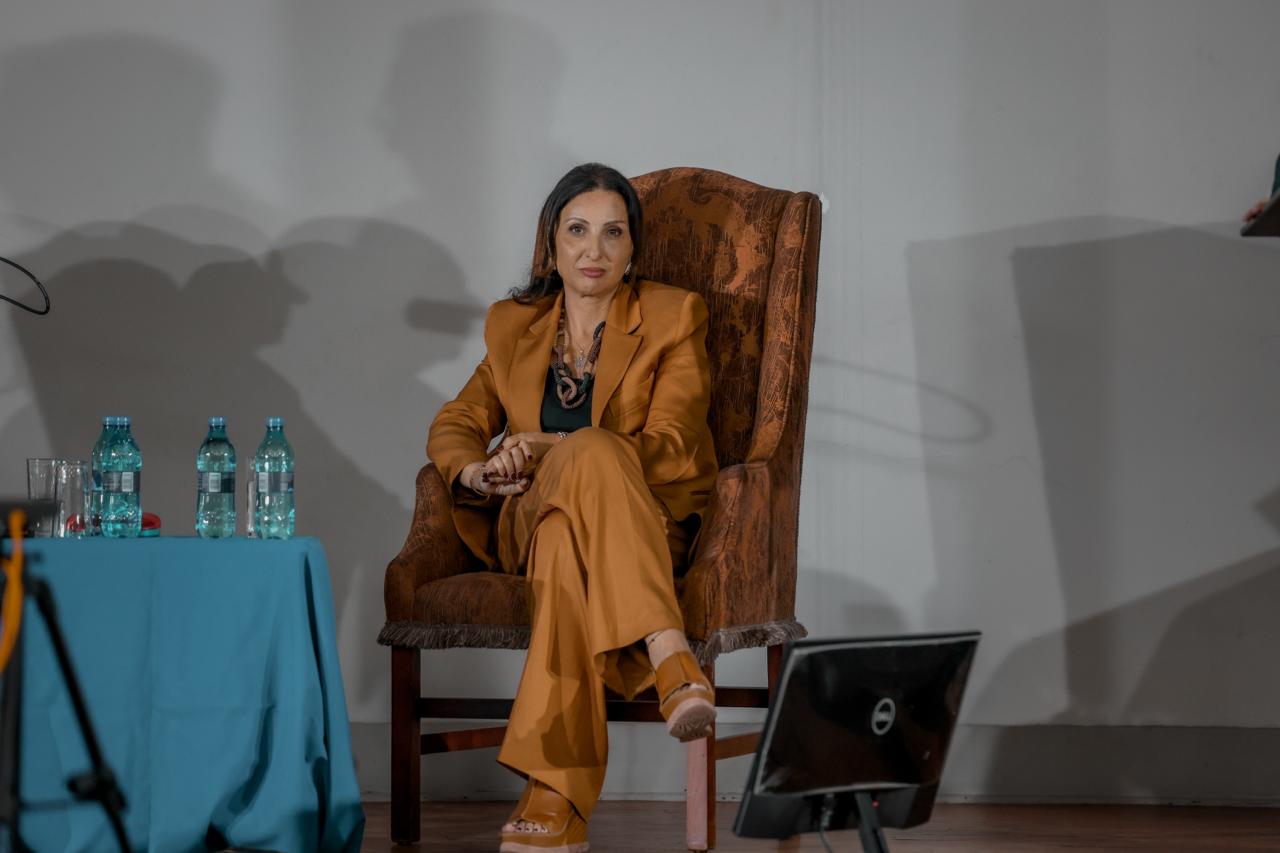
Hassan-Nahoum – an Israeli force to be reckoned with

If former Jerusalem deputy mayor Fleur Hassan-Nahoum had had the opportunity to speak to President Cyril Ramaphosa while in South Africa this week, she would have said, “Your people are hungry, they don’t have water, they don’t have jobs. So, mind your own business when it comes to Israel.”
This is what this no-nonsense former barrister turned politician, who recently ran for the Knesset with the Amcha Yisrael party, told the SA Jewish Report in an interview this week. She was in South Africa as a guest of the Jewish National Fund of South Africa (JNF-SA).
“South Africa has basically become the mouthpiece of the IRGC [Islamic Revolutionary Guard Corps] in Africa. The South African government took Israel to the ICJ [International Court of Justice] because it’s the Islamic Republic of Iran’s useful pawn,” she said. “Hopefully, we can get rid of this poisonous regime, and when South Africa doesn’t have an Islamic backer, it may decide to join the real world. Then, hopefully, it will take care of its own people instead of worrying about a conflict that has nothing to do with it.”
Hassan-Nahoum – now Israel’s special envoy for trade and innovation – was the very first Israeli official to set foot on United Arab Emirates soil at the time of the signing of the Abraham Accords in 2020. “Prime Minister Netanyahu had given an order that nobody from the government was to go there before him, but I wasn’t in national government, I was the deputy mayor of Jerusalem,” she said.
It was then that she created the Gulf-Israel Women’s Forum with Emirati and Jewish women. “We discovered that there’s so much more that unites us than divides us. That is why I believe so much in female leadership. We bonded quickly and got to the real issues without any arrogance.”
This powerful woman has worked in nongovernmental organisations and had legal and political roles, and many believe she has the potential to become prime minister one day.
If that were to happen, the first thing she would deal with is government efficiencies and deregulation. “I would create a new diplomatic vision for the country. And I would focus on the narrative lesson we have learnt in the last three years.”
She believes “Israel needs a fighting unit of online warriors” to be able to put up a fair fight in the war against terrorism and antisemitism.
“We’re living in a world where warfare is both military and narrative. Our enemies know they can’t beat us militarily, so instead they are delegitimising us, isolating us systematically, and making our existence in the world difficult. And Israel is doing nothing about this.
“We are the country with the highest concentration of AI and cyber talent in the world, but we haven’t just lost the narrative war; we haven’t even shown up for the battle.”
By contrast, she said, Qatar is training tens of thousands of journalists a year for free, paying influencers to put across the antizionist message, and buying favours in the world’s social and traditional media.
“I would also create an AI council that is really looking into the future, ascertaining Israel’s unique role in creating that future, and how we become a necessary global economy. That way, countries can’t afford or won’t even think about boycotting us.”
She would, without question, ensure more women in power. “I’m a strong believer that decisions are better when there are both men and women in the room because we see things differently,” she said. “I’m a proud feminist, and believe that diversity around a decision-making table is essential.
“As women, we strive for consensus. We know how to listen. We are very practical thinkers. Even if the decision is still the same decision, the ‘how’ is sometimes different when women are involved.”
Hassan-Nahoum was born just before the Yom Kippur war and was asked on its 50th anniversary, in September 2023, to write an article for the Jerusalem Post magazine on how far Israel has come since that war.
“On 1 October, there was this big article with photographs of me and all the ladies from the Gulf in our shmattes talking about all our wonderful diplomacy, the Abraham Accords, and how much this world and the region have changed and improved in 50 years,” she said.
On 7 October, the world changed. “The sirens went off repeatedly in Jerusalem, which was rare.” She had a bad feeling. Eventually, despite keeping Shabbat, she switched on her phone and received many messages from her journalist friends in the Gulf, asking about what they were seeing on television.
With one month left as deputy mayor of Jerusalem, Hassan-Nahoum – at home with her four children – switched on the television to see what was happening down south.
Then the BBC contacted her. “They were calling because nobody else was answering the phones,” she said. She realised her purpose then and there was to tell the world what was happening in Israel. “From that moment, I became an unofficial and later official spokesperson for the country. I was doing at some point 15 to 20 interviews a day.”
She said she had known on 7 October that it would be just days before the world turned on Israel. “We were already accused of committing genocide before we went into Gaza.”
But there was no spokesperson in the Israeli prime minister’s office on 7 October and there still isn’t, according to Hassan-Nahoum.
“Nobody was getting proper messaging. And when someone like Eylon Levy happened to be a fantastic spokesperson but got too famous, he lost his job,” she said. “It was pure arrogance on the government’s part. Arrogance that it doesn’t matter what the rest of the world thinks or says, just what Israel does.
“Only we are now living in a world where warfare isn’t just kinetic, but hybrid, and it’s a narrative and military war.”
She began putting her interviews up on social media and started a women-only podcast.
In terms of the situation in Israel that led to 7 October, Hassan-Nahoum said, “Firstly, we for some reason stupidly believed that you could pay the Jihadi fundamentalist terror group not to attack you, not to kill you, and to abandon their entire ideology for money. Really? It was such naivete to think that people who are willing to commit suicide for their cause would be deterred by money.”
The second factor, she said, was the arrogance of the military leadership who believed so much in their own strategy that they ignored clear warning signs. Then add to that a little misogyny, in that it was women who warned there was a problem, and they ignored it.
“Today, Hamas is still in power in Gaza and getting stronger,” she said. The way to deal with this, she believes, is to separate Hamas from the civilian population, who should be housed in a humanitarian safe space with humanitarian and food supplies but no guns allowed. “That’s how you smoke Hamas out,” she said.
Hassan-Nahoum is deeply upset by the young Israelis attacking Palestinians in the West Bank, saying “anybody who is attacking innocent people should be jailed and punished”. However, she added, “nobody in the international media will tell you that it’s a very small minority of the settler community doing this, and for every hundred attacks on Palestinians, there are a thousand attacks on settlers that never make the news. That is the disproportionate and double standard of reporting.
“I was attacked a few weeks ago when someone threw a large rock into the car I was driving,” she said.
Again, it’s Israel’s failure to counter the narrative about the violence in foreign media.
Perhaps with more women leaders, communication might be improved, but Hassan-Nahoum said, “I am not seeing women coming through the political pipeline at the moment.”
It is about good role models for young women. “When I was deputy mayor, I looked on the walls of schools and saw pictures of male leaders, which left me recognising that my daughter is getting a message that only men become leaders,” she recalled. At the time, the governor of the Bank of Israel and the chief justice of the supreme court were women, so she made a plan to get their photographs up on the walls of 350 schools. This despite the education ministry making excuses not to do it.
“If I am the only woman in the room, I haven’t done my job. I am always pushing women in with me,” she said. “My friends joke that I empower women to lead me because I always employ talented women and help them get their next big opportunity.”