


Lifestyle/Community
Kosher wine promoter becomes a whisky Master

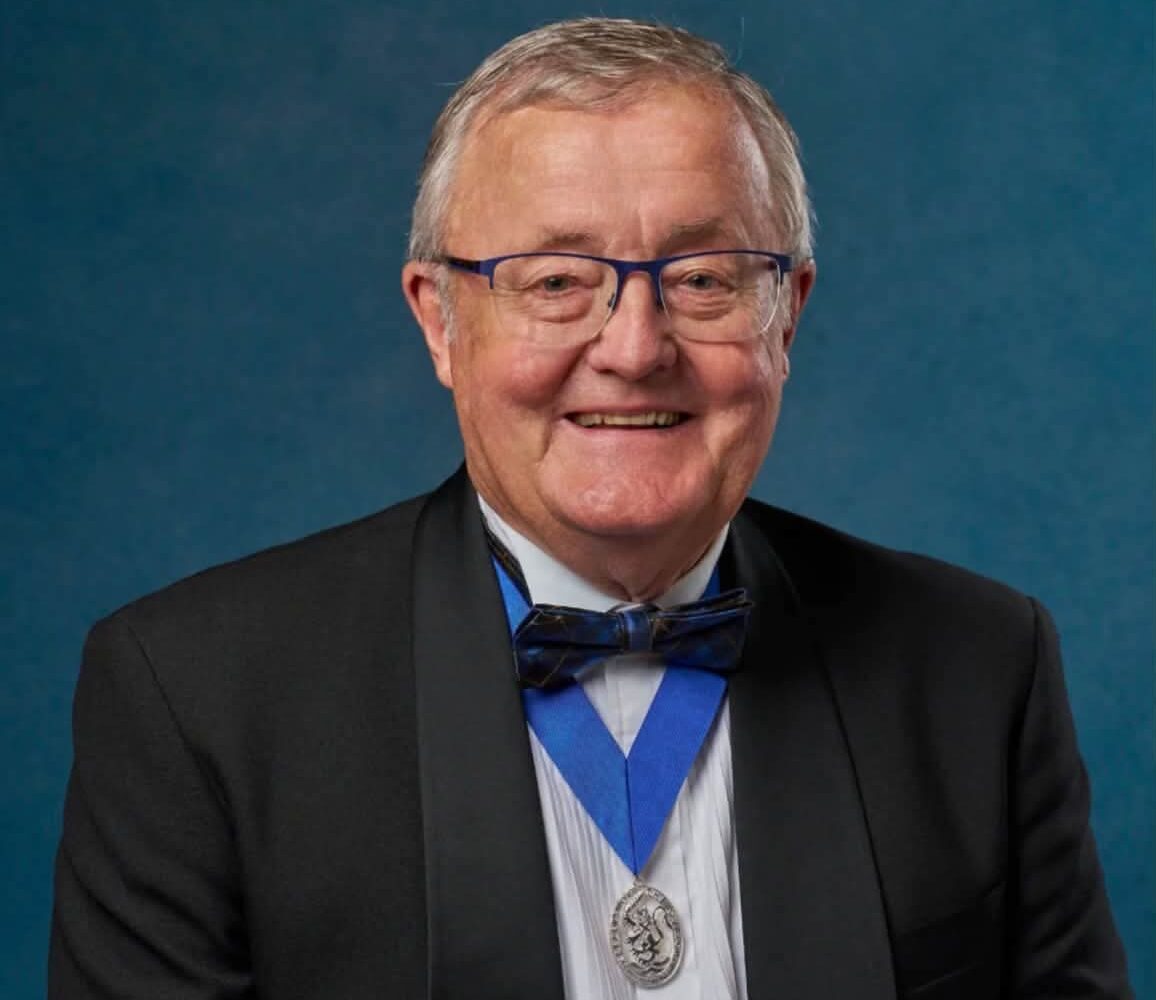
Tim Hutchinson, the executive chairperson and chief executive of South Africa’s largest independent wine and spirits producer and distributor, DGB, won’t let one of the whisky industry’s highest honours go to his head.
The Durban-born businessman, who has spent nearly four decades building some of the world’s best-known whisky brands in South Africa and is now producing and importing a substantial percentage of local kosher wine, was recently named a Master of the Quaich.
“I’m an under-the-radar, low-key guy who grew up in Durban. I’ve never had illusions of grandeur. Money’s not my G-d,” he says. “It’s flattering, but the show goes on. Put it in the drawer and move on. My grandkids might talk about it in 20 years, but for me, it’s a very nice honour. Business as usual.”
A quaich is a traditional Scottish drinking vessel symbolising friendship and hospitality. “If I welcomed you to my home, or in the old days to my clan, I would get a quaich out, pour whisky into it, and share it with you. It would be a cup of friendship,” says Hutchinson. “A Master of the Quaich is, I suppose, in military terms, a five-star general.”
In August 2021, Hutchinson entered the kosher wine market when DGB acquired a majority shareholding in Backsberg Family Wine. This landmark acquisition included Backsberg’s portfolio of kosher wines under the “Unorthodox” trademark.
Hutchinson has close ties with South Africa’s Jewish community. He describes Solly Kramer as his best friend of 40 years and recalls his relationship with the late Graham Beck, from whom he bought a business and alongside whom he worked for many years. “I was like a son to Graham, and we were very close. His charity work was legendary. He never talked about it, but he was an amazing guy.”
Beck’s approach to philanthropy continues to influence Hutchinson, who has been involved in charitable initiatives, including raising funds and sending containers of supplies to Ukraine. “One thing I did inherit from Graham Beck is all the charity work we do; we don’t talk about. We certainly as a company give a hell of a lot back, and we’re proud of what we do.”
However, it was for his whisky that Hutchinson received the distinction at the Keepers of the Quaich Autumn Ceremony at Blair Castle in Scotland on 5 October. He was one of just two people awarded the title of Master, recognising his contribution to the Scotch whisky industry over almost 40 years.
“It was a very special honour considering the fact that I was first inducted as a Keeper of the Quaich 32 years ago,” he says. “It is very special to be acknowledged for your contribution by your own peers. When your peers and competitors recognise your contribution to the industry, then I guess it does make it a little more special,” he says.
The Keepers of the Quaich was established by leading whisky producers to promote Scotch whisky internationally. “There was Irish whiskey, Japanese whisky, whiskies from around the world lifting their heads, and they wanted to get together as a collective and work together for the betterment of Scotch whisky,” Hutchinson says.
The title of Master is reserved for individuals who have made an exceptional contribution over an extended period. “After many years, they say, ‘Well, you’re at another level. You really have made a huge contribution over an extended period of time.’ There are a couple every year from around the world who become Masters. It’s very rare, but I guess that’s the ultimate accolade.”
Since joining Douglas Green in 1986, Hutchinson has helped develop the South African market for Scotch whisky, working with brands including Bell’s, Dewar’s, Glenfiddich, The Balvenie, Laphroaig, The Macallan, and Highland Park. His official award citation recognises his role in building brands, educating consumers, and strengthening Scotch whisky’s presence in South Africa.
However, Hutchinson believes the recognition belongs as much to his colleagues as to him. “I have a lot of colleagues who’ve done probably more work than me who should share it with me. We have 100 sales reps throughout South Africa, 12 depots, and about 20 sales managers. They’re the guys at the coalface who’ve done all the work. I get all the plaudits,” he says.
“We’ve been consistent players. We understand brands, we understand how to get people with money to sample our products. Most whiskies are struggling. Our Macallan whisky is growing at 30-odd percent, which tells you we’re doing something right.”
Having appointed a managing director and begun stepping back from the business’s daily operations, he says, “The team’s far more important than me. It was certainly a left-field surprise, but I have my feet firmly on the ground.”
His wife, Lesley, accompanied him to Scotland. “My wife probably enjoyed it more than I did because her parents were Scottish. Going to an old castle and being inducted, all the pomp and ceremony was very nice,” he says.
Hutchinson is now focused on achieving greater international recognition for South African wine. “My goal at the moment is selling more and more South African wine globally. Whisky’s achieved its global recognition. South African wines aren’t getting the recognition they want, and I’m leading the charge,” he says.
“I’m an optimist, and I’m very proud of what South Africa is producing at the top end of wine. What’s been achieved by the whisky guys is a huge lesson for us in wine: that we can be global.” Pointing to Boschendal’s international expansion, he says, “When I bought it from Anglo American, they were in eight markets around the world. We’re now in 72. We’re doing a job, but we’ve got a lot more to do.”