Lifestyle/Community
Tackling human rights issues one step at a time

From period poverty to health and human rights crises, to water scarcity and much more, South Africa’s problems can seem overwhelming. Yet, as Human Rights Day approaches, we look at how members of the community are proving that even small actions can make a real impact in tackling such challenges.
“It’s the power in the little things that add up and make a massive difference,” says Melissa Zackon, who grew up in a home where giving back was second nature. “It’s asking what small thing I can do every day to make the world a slightly better place. If everybody had that idea, it would make such a huge difference.”
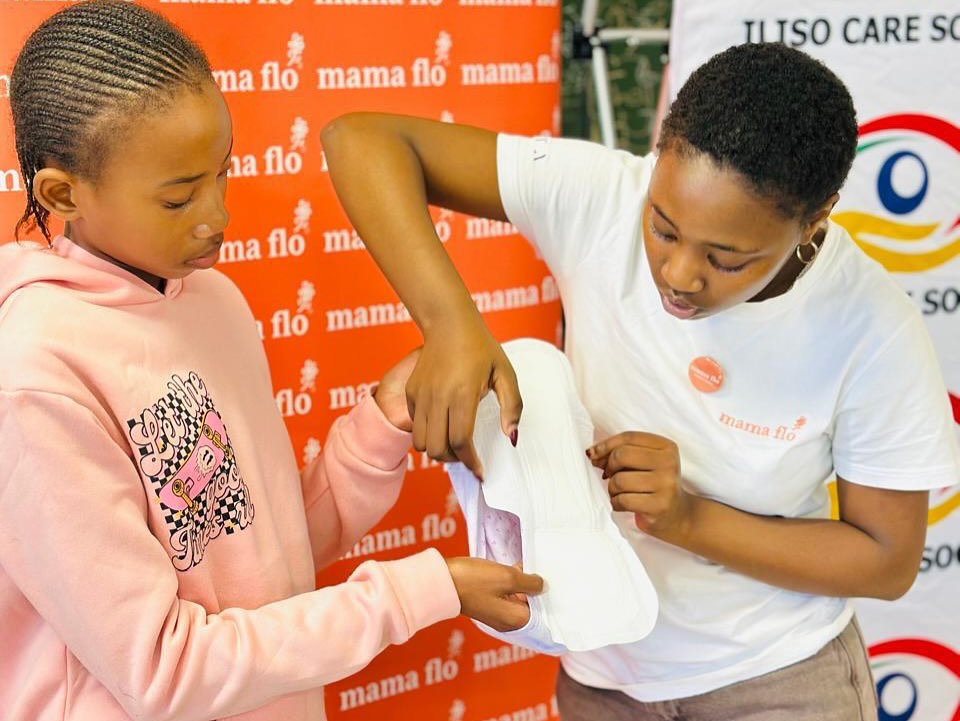
Now the co-founder of Mama Flo, an organisation that addresses period poverty, Zackon has built on this innate desire to help those less fortunate. She founded Mama Flo with Laurie Shone and Isabella Bisogno, her friends since Grade 1 at Herzlia.
When, during the COVID-19 pandemic, Shone’s mother received a call from a contact in Khayelitsha seeking sanitary pads, the three friends banded together to make it happen. Putting out a call on social media, they were astounded by people’s generosity. “We were inundated,” Zack recalls.
Armed with a mountain of sanitary pads, the women were safely escorted by a police convoy into Khayelitsha.
“To see the gratitude on people’s faces after giving them just a small packet was remarkable,” Zackon recalls. “We thought we had too many pads, but they were gone so quickly, and there were still so many more people that we couldn’t help.”
After confronting the magnitude of this reality, the friends formed Mama Flo, and over the past five and a half years have managed to help thousands of girls.
Zackon and her co-founders were determined not to go into communities with a “white saviour complex”, so they teamed up with young women in Khayelitsha. “They asked to be involved and so we created an ambassador programme with them. You hear all these awful stories, that girls are using newspaper and missing school, but hearing it directly from them, and seeing how far it goes was beyond shocking.”
Distribution of pads is complicated by the fact that teaching staff often steal donated pads and sell them to girls to make a profit, Zackon adds. “Those kinds of stories don’t make the news. It’s made me realise how deep this runs and how important this is, just to give women basic dignity.”
Madeleine Hicklin, the Democratic Alliance (DA) spokesperson on Health and Finance in the Gauteng Provincial Legislature, has been a human rights and health activist since the early 1980s. She became politically active while studying drama at the University of the Witwatersrand (Wits).
“South Africa was not a place where you could sit on a fence. I became very vocal in the early 1980s. I was part of the AIDS consortium at Wits and got involved in any way possible in AIDS education.” She wrote the first AIDS awareness brochures in South Africa in 1984.
“I was always just an activist on the ground, but I never formalised it until I later became a ward councillor.” Hicklin says that while she ultimately found her political home in the DA, it has never limited her capacity to help people, irrespective of what political party they are affiliated to.
“My human rights and health fights have always been extremely broad and diverse.” Advocating for the LGBTQ+ community, the Jewish community, survivors of human trafficking, and generally helping others fulfils her need to uplift people who are adversely affected by life.
She is also a passionate advocate for regulation of the mortuary and funeral industries. “There is so much injustice there,” she says. “Across the country, there are people who have been waiting 10 years for a post-mortem report.”
Hicklin says she draws strength from her family and her faith in difficult times.
In the broader fight for human rights, she urges everyone to register to vote. “Do it for you, yes, but also do it for our children, because South Africa doesn’t have the time. We must fight for the right to fight for others.”
Andrew Chin, the founding director of Swim for Rivers, a nonprofit highlighting South Africa’s water crisis, grew up on a Free State farm and consequently always understood the value of water. “We relied on rain as we didn’t have access to water for irrigation,” he says. “I later studied economics at Rhodes University, and did my honours in economics, with a slant towards rural economies.”
After graduating, he travelled and spent time working on a moshav in Israel. “When I came back, I wanted to help others,” he says. “I joined a nonprofit in KwaZulu-Natal where the simplicity of turning a tap on or off really struck me. We had to pipe water down from a spring about three kilometres away to a compound where we lived.”
Later becoming an extreme swimmer, Chin came across communities in areas surrounding the rivers he swam in. “The river is often their only source of water,” he says, “and generally it falls on women to collect 20-litre buckets and walk anywhere from a couple of metres to many kilometres to collect water.” This is extremely dangerous for women, who on these long journeys have an increased risk of sexual violence, abduction, and femicide. Children also often help and therefore don’t go to school.
Working with rural communities mainly in the Eastern Cape, Swim for Rivers identifies critical water supply challenges, raising funds and delivering solutions such as mobile 90-litre water-carrying Hippo Rollers and boreholes. “Simultaneously, we help protect the environment by extracting pollution choking our rivers and by supporting recycling initiatives,” he says.
Chin says he helps because he can. “My passion is to help others and to achieve that I rely on the donations of others. Some people are givers, others are doers, but we can all make a difference by focusing on our strengths.”