


SA
Remembering SA’s Jewish WWII heroes

More than 10 000 South African Jews volunteered to fight in World War II. Many never returned, while others came home carrying experiences they rarely discussed. Decades later, their remarkable stories are still emerging, thanks to the work of one researcher.
Dr Naomi Rapeport, a retired physician from Johannesburg now living in Israel, has spent years documenting the contributions of South African Jews who served during the war. Her research has uncovered thousands of names, acts of bravery, and family histories that might otherwise have disappeared.
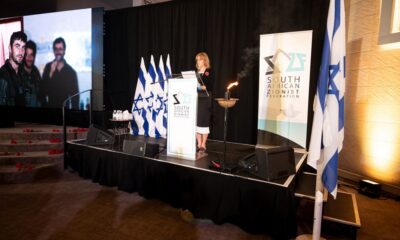
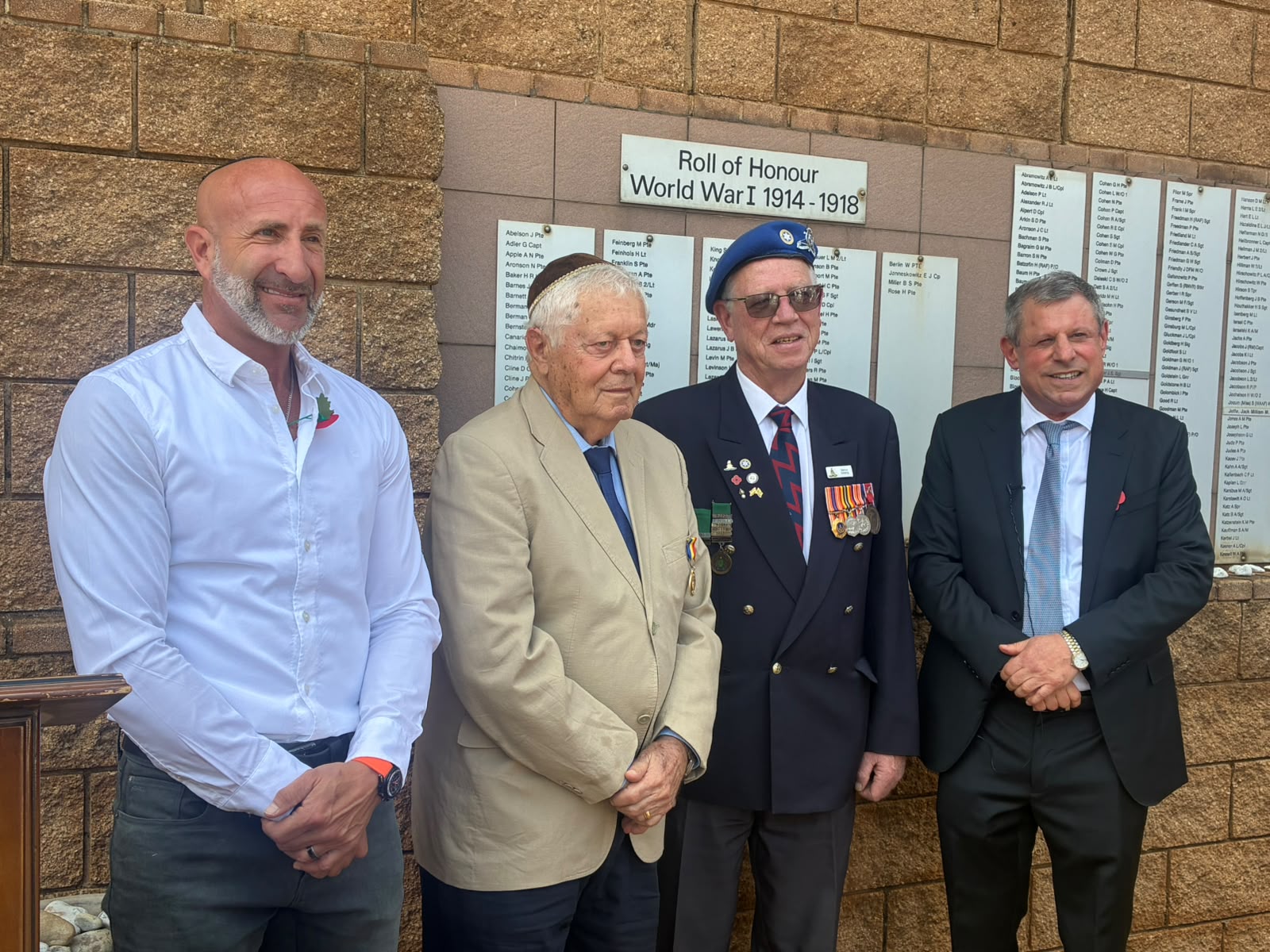
She attended the South African Jewish Ex-Service League’s memorial ceremony on Sunday, 1 November, organised in partnership with the South African Zionist Federation (SAZF). Titled “Hope and Heroism”, the event honoured Jewish men and women who served during the war.
Rapeport’s involvement began through her interest in genealogy and family history. She previously worked with the South African Jewish Museum on its Jewish Digital Archive Project, which collected historical photographs and family records.
She was struck by the number of photographs depicting soldiers. “Ten thousand volunteered. That was 10% of our Jewish population. They weren’t conscripted, they weren’t drafted, they volunteered,” she said. Rapeport believes this contribution deserves far greater recognition.
Her research gathered momentum after she obtained letters written by a relative while he was a prisoner of war. She arranged them chronologically and published a book titled Letters in a Shoebox.
The letters documented his journey from military service to captivity in Britain, Italy, and eventually Dresden, Germany. The project also revealed how little his family knew about his wartime experiences. “His children weren’t aware of a lot of things that he did in the war because he didn’t talk about them,” she said.
Many veterans remained silent about what they had experienced. Their stories emerged years later, when relatives began examining photographs, letters, and military records.
Rapeport’s work eventually attracted the attention of organisers establishing a museum in Israel dedicated to Jewish participation in World War II. They wanted to document the contribution of Jewish soldiers from Allied countries, including South Africa.
She agreed to help trace these histories and has since documented more than 4 000 South African Jewish servicemen and women. There is no official list of every Jewish South African who served, making the research particularly challenging.
The wider international contribution is equally significant. According to Rapeport, approximately 1.5 million Jews from Allied countries served during the conflict, with about 250 000 losing their lives. “World War II, we always think of it being the story of the Shoah,” she said. “Here you had 1.5 million Jewish men and women from around the world who actually went and fought to get the Nazis defeated.”
The research also highlights how veterans helped establish Israel’s military capabilities following independence in 1948. Their wartime experience provided valuable knowledge to the emerging military forces. South Africans were among those who contributed. Some served in the Jewish Brigade, while others later volunteered through Machal, the programme for overseas volunteers.
Rapeport highlighted the contribution of South African doctor Lionel Melzer. During the Battle of Sidi Rezegh in North Africa, Melzer operated a medical station amid intense fighting. He encouraged medical personnel and stretcher bearers to continue treating wounded soldiers despite the danger.
He later received military honours for his service. After moving to Israel, he helped establish field hospitals and contributed his wartime medical experience to the developing medical corps.
The decision to volunteer was particularly significant given the antisemitism present in South Africa during the 1930s. The country experienced the rise of the Greyshirts, an antisemitic organisation promoting Nazi ideology, alongside immigration restrictions affecting Jewish refugees.
Rapeport also highlighted the political climate. Oswald Pirow, who served as minister of defence before the war, had expressed admiration for Adolf Hitler. Jewish South Africans were increasingly aware of the danger facing their communities. Many understood the threat Nazi Germany posed to Jewish survival.
Rapeport has uncovered remarkable stories of women who served, including Rose Vandecar, a nursing sister who received the Florence Nightingale Award. She eventually traced Vandecar’s family and obtained a book documenting her wartime service.
Another discovery involved Bernard Friedlander, who helped rescue approximately 1 800 South African prisoners of war from a sinking ship. His bravery earned him a military award, yet his descendants, too, knew little about his actions.
“People are really surprised at times to discover they had a family member who fought in the war. He was a hero, and they didn’t know about it at all,” Rapeport said.
The memorial ceremony also highlighted the personal connections that make this history relevant to younger generations. SAZF national chairperson Craig Pantanowitz told the gathering about his grandfather Sunny Kuper, who trained as a pilot with the South African Air Force before joining the Royal Air Force.
Kuper served in North Africa and flew photographic reconnaissance missions over Europe, photographing Nazi installations and identifying targets for Allied bombing operations. During one mission, his Spitfire was shot down. He managed to crash-land and was rescued.
“Because he was rescued, he returned home. He built a family. And I am able to stand before you today and tell his story,” Pantanowitz said.
He also remembered black soldiers who served alongside Jewish servicemen. These included 644 Sotho, Tswana, and Swazi members of the African Auxiliary Pioneer Corps who died aboard the SS Erinpura alongside 140 Jewish soldiers from British Mandatory Palestine.
SAZF president Avrom Krengel reflected on South African soldiers’ contributions to the establishment and defence of Israel. He urged visitors to Israel to remember those buried at Mount Herzl and other military cemeteries.
For Rapeport, documenting these histories remains an ongoing responsibility. The museum in Israel provides a permanent home for the research, with exhibitions covering the war, Allied contributions, Jewish resistance, and the establishment of Israel.
She believes these stories deserve recognition beyond the battlefield. Many survivors carried the psychological consequences of war for decades without discussing their experiences. “You do not have any victory at the end of the day because of what people endure,” she said. Through her research, Rapeport hopes to ensure that the sacrifices of these servicemen and women are recognised, and that future generations understand the role they played in Jewish history.