News
SA olah narrowly escapes bus attack

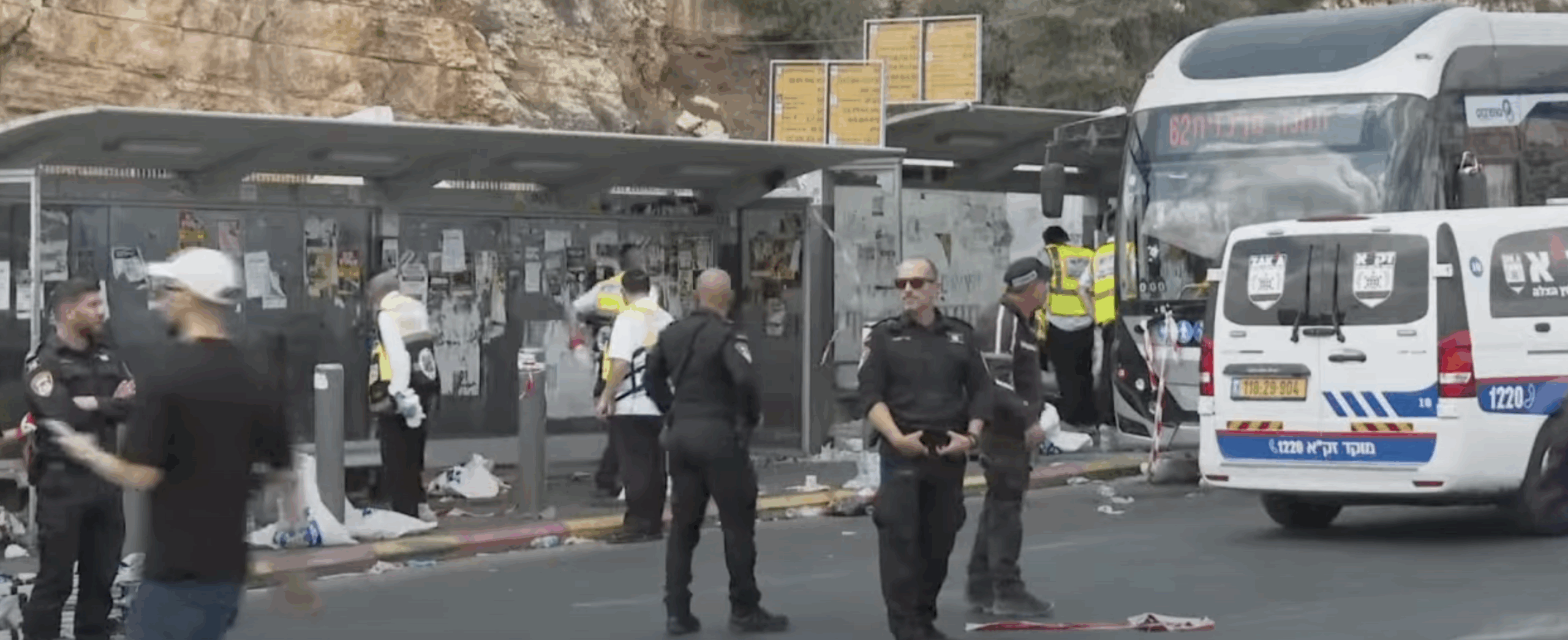
Former King David Primary School Linksfield teacher, Dina Barnett, found herself at the centre of the horror at Jerusalem’s Ramot Junction on Monday, 8 September, when two terrorists opened fire from a bus shortly after 10:00, killing six and wounding many.
A snap decision saved Barnett’s life at this fateful junction on the northern outskirts of Jerusalem which intersects a major road that leads to the city centre and Tel Aviv as well as local neighbourhoods. It’s a busy thoroughfare, filled with ordinary Israelis going about their daily business.
That morning, Barnett left home in Ramot, taking a bus to the Ramot Junction, where she boarded Bus 62, not her usual bus. Her regular bus hadn’t arrived on time, and she needed to reach Jerusalem for a shiur. Though she normally avoids the crowded junction and packed buses, mindful of past terrorist attacks on both sides of the road, she braved the trip.
She took her seat on the bus, which was still stationary. The driver, she understood, had stepped out for a bit. Speaking to a group of seminary girls on board, she realised the driver wasn’t coming back soon enough. So she decided to get off and try another bus.
Seconds later, reports suggest that two Palestinian gunmen in their early 20s, later identified as Mohammed Bassam Taha, 21, from Qatanna, and Mutuanna Naji Omar, 20, from al-Qoubeiba, climbed aboard the same bus Dina had just left. Armed with makeshift Carlo-style submachine guns, they opened fire at close range.
The ordinary Monday morning post rush hour dissolved into mayhem and terror.
Dina dropped flat on the pavement, pressing her face to the rough stone as a barrage of bullets cracked through the air above and around her. People screamed, scattering in panic. Some dived behind barriers and stationary cars. Others ran blindly into traffic, desperate to escape.
“It’s an open miracle I wasn’t hit,” she told the SA Jewish Report on Tuesday, 9 September, still trembling as she recalled what happened. “The bullets must have flown right over my head.
“My first instinct was to call my husband, but my hands were shaking so much, I couldn’t even find his number. Then I thought, why would I tell him? He would get such a fright. What could he do? I just lay there, face down, frozen, waiting for it to end. I didn’t dare look up.”
When the gunfire finally stopped, the devastation at this junction was laid bare.
Injured victims lay sprawled across the street. To her left, a victim lay in pain. To her right, another lay bleeding. Behind her, two more wounded. One woman lay motionless. Another, inconsolable, ran across the street in hysteria, and was nearly run down by traffic.
Barnett, a mother of six whose husband, Rafi, also once taught at King David Linksfield, instinctively moved to help. “One woman told me she’d been shot. I said, ‘Let me check.’ When she lifted her skirt, I could see she had been shot in the thigh. By then paramedics were arriving. Together with a medic, we lifted her into an ambulance.”
Among the six killed were Rabbi Levi Yitzhak Pash, 57; Rabbi Yosef David, 43; Yisrael Matzner, 28; Rabbi Mordechai Steintzeg, 79; and 25-year-old Yaakov Pinto, a new immigrant from Spain. Sixty-year-old Sarah Mendelsohn was also killed. More than 20 others were wounded, some critically. First responders described desperate scenes of shattered glass, pools of blood, and panicked cries.
The attack ended when an off-duty squad commander from the Israel Defense Forces’ new Hasmonean Brigade, an ultra-Orthodox unit, together with a nearby armed civilian, shot and killed both attackers before they could inflict more carnage. Israeli forces later arrested a suspected accomplice in East Jerusalem, and carried out raids in the terrorists’ home villages.
Hamas praised the deadly attack, calling it a “heroic operation”.
For Barnett, the images remain seared into her memory: the shouts, the bullets, the stillness of the wounded. Yet she cannot shake her sense of divine providence. “Afterwards you realise how easily you could have been among the dead. It’s an open miracle.”
For the residents of Ramot, the attack cut way too close.
Roy Scher, the chairperson of Telfed Jerusalem’s regional committee, has lived in Ramot for more than three decades. He made aliya from South Africa in 1979, and raised his family in the sprawling neighbourhood. On Monday, Scher knew it could just as easily have been him or his loved ones on that bus.
“My 93-year-old mother uses that bus to go to the shuk. My son was supposed to be on it that morning, but turned back because the traffic was too heavy and decided to work from home instead. It could have been any of us. The people killed could easily have been people I daven next to in shul.”
Ramot is Jerusalem’s largest neighbourhood, home to about 60 000 residents. Its population is predominantly religious, with a majority Haredi community, and its families come from across the globe – South Africa, France, the United States, the United Kingdom, Russia, and dozens of other countries.
“Everyone here uses Bus 62. At peak hour, the junction is packed – schoolchildren, the elderly, people running errands,” Scher said. “It could have been anyone.”
Yet even in grief, he points out Israel’s resilience.
“The past two years have been tough, but Israelis get on with life. Restaurants are full, businesses are open, innovation continues, and the economy is strong. Incidents like this shock us, we do not forget, but we move on. And in heart breaking moments like this, all divisions fade away. There’s unity, solidarity, and a real sense of caring for one another. That’s what’s so special about Israel.”
In the immediate aftermath of the attack, messages of concern poured in from around the world. Scher recalls being at his desk when the first call came from a friend in Ra’anana, asking if he and his family were safe. Within minutes, WhatsApp messages began streaming in. “News travels fast, but so does the care. Israelis pull together. That’s our strength,” he said.
Israeli leaders condemned the attack in the strongest terms. Emergency services described the attack as one of the most devastating incidents since 7 October 2023.
“Tomorrow, buses will once again stop at Ramot Junction. Children will climb aboard with schoolbags, pensioners will head to the market, workers will squeeze into crowded seats. Life will continue, as it always does in Jerusalem. The grief of loss won’t disappear, but alongside it runs an unyielding determination: to live, endure, and to hope,” Scher said.