





OpEds
Time to pack your bags, Roelf

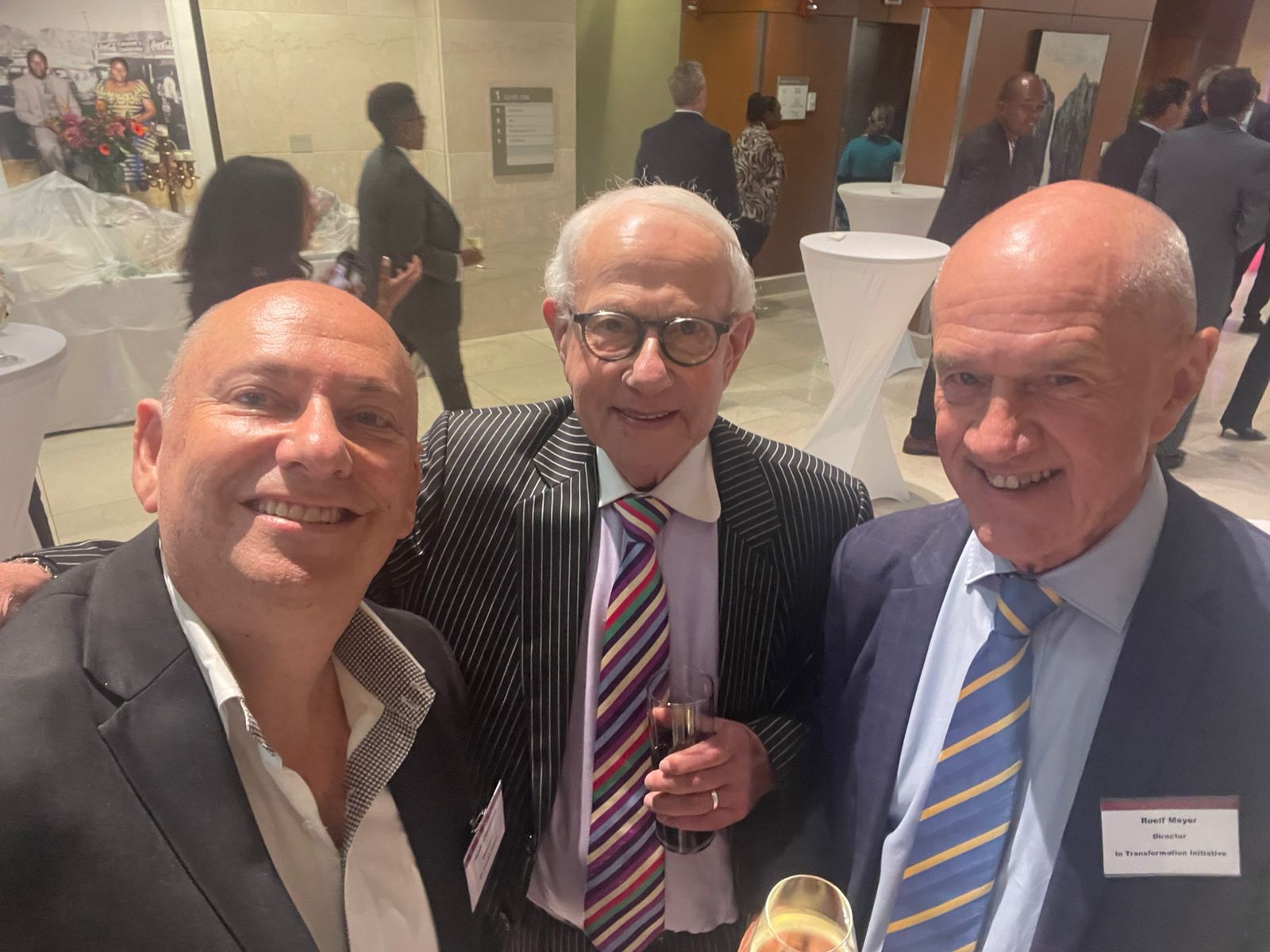
A few weeks ago, I bumped into former Minister of Constitutional Affairs and chief negotiator for the former National Party (NP), Roelf Meyer, at a US Embassy event. There was no indication at the time that President Cyril Ramaphosa would soon tap Meyer, a trusted confidant, as South Africa’s new ambassador to the United States.
The former ambassador to Washington, Ebrahim Rasool, was declared persona non grata and expelled by the Trump administration in March 2025 after calling the American president a “supremacist”. A month later, Brigadier General Richard Maponyane, the South African military attaché in Washington, was given the boot, followed by Thandile Sunduza, South Africa’s Consul-General in Los Angeles, whose accreditation was revoked by the US State Department. By mid-2025, South Africa had no senior diplomats left in the United States.
Knowing that a hostile White House would be reluctant to accede to the appointment of a politically aligned ambassador through an “agrément”, Ramaphosa believed he could circumvent the process by appointing a special envoy, which would not require US approval. But the American government refused to grant the presidential appointee, MTN Chairperson Mcebisi Jonas, a visa.
Ramaphosa arrived for what was widely seen as a humiliating meeting with President Donald Trump at the White House, with no senior diplomats in place and a counterpart angered by South Africa’s posture on its white minority and a foreign policy increasingly seen as sympathetic to Iran, driven by its proxies within the Department of International Relations and Cooperation (Dirco).
Relations between the two countries deteriorated rapidly. The United States refused to participate in the G20 Summit in Johannesburg and effectively sidelined South Africa from the 2026 G20 Summit in Miami, Florida.
The arrival of Bozell in South Africa has also been fraught with difficulties. The new ambassador publicly criticised the South African judiciary for failing to classify the chant “Kill the Boer, kill the farmer” as hate speech, prompting a Dirco démarche, or reprimand, of Bozell. African National Congress (ANC) Secretary-General Fikile Mbalula added fuel to the fire by claiming “Bozell arrived drunk and was démarched”. At times, the relationship between the two countries has resembled little more than children quarrelling in a schoolyard.
Finding a replacement for Rasool was no easy task. Ramaphosa needed someone comfortable with and capable of defending the ANC’s positions on Iran, Russia, Israel, farm murders, Black Economic Empowerment, Afrikaner refugees, and land expropriation, while still being acceptable to Washington, and without the baggage of having publicly criticised Trump in the past.
Prior to this week’s appointment of Meyer, several names were floated for the Washington post, including former NP leader Marthinus van Schalkwyk; Justice Deputy Minister and South African Communist Party member Andries Nel; Gerhard Koornhof, son of the late NP Minister Piet Koornhof; and Ayanda Dlodlo, the former Minister of State Security who was sidelined after the 2021 KwaZulu-Natal riots and later exiled to the World Bank.
Meyer, now 78, represents a safe pair of hands, intelligent, measured, and politically seasoned, with a long-standing and trusted relationship with Ramaphosa.
At a dinner in Sandton, Meyer once told me how, as a youngster, he had seen his parents reading a newspaper report about David Pratt’s failed attempt to assassinate architect of apartheid and then Prime Minister Hendrik Verwoerd. Meyer had announced to his family that he intended to become prime minister of South Africa one day. With a glint in his eye, he leaned forward and said, “Let’s face it, if South Africa hadn’t changed, I would have been.”
The remark was only partly in jest. Meyer was a rising star in the NP, considered a “verligte Nat”, part of the party’s more enlightened, reformist wing. In 1986, the lawyer from Humansdorp and Ficksburg was appointed Deputy Minister of Law and Order by Prime Minister PW Botha, before his successor, FW de Klerk, elevated him to the position of Minister of Defence. Meyer struggled to win the support of the verkrampte (hardline conservative) generals, and, in May 1992, De Klerk appointed him Minister of Constitutional Affairs, placing him centre stage in negotiations with Nelson Mandela to end apartheid and shape a democratic constitution.
Meyer and Ramaphosa developed a close relationship, often meeting at businessman Sidney Frankel’s trout farm for fly-fishing and negotiations. Meyer once recounted how, on one occasion, he, an inexperienced fisherman, pierced his hand with a fishing hook. Ramaphosa took a pair of pliers, handed him a glass of whisky, and removed it himself. Legend has it Ramaphosa turned to Meyer and said that he had always wanted to hurt the Nats, but perhaps not quite that much. Moments like that cemented the relationship between the two men. Meyer became one of the very few people Ramaphosa truly trusted.
Throughout the Codesa (Convention for a Democratic South Africa) negotiations that horse-traded South Africa’s transition to democracy, Ramaphosa and Meyer maintained a crucial back channel to keep the momentum of talks alive. Meyer later described the process as “one of the most successful examples of political negotiation in the world since World War II”.
After retiring from politics, Meyer advised on peace processes in places like Northern Ireland, Sri Lanka, Burundi, Kosovo, South Sudan, and Zimbabwe. He and Ramaphosa travelled to Belfast in 1996 to assist in the Irish peace negotiations, sharing lessons from South Africa’s transition with Northern Irish leaders.
I once asked Meyer about the prospects for peace between Israelis and Palestinians. He told me peace would be possible only if both sides believed their lives would improve, not deteriorate, after a settlement. At that time, he felt the level of animosity and distrust between the two sides made that belief impossible. People make concessions for the better future of their children, never to place them at risk.
Having helped architect a new future for South Africa, Meyer now takes on the task of rebuilding its fractured relationship with the United States. There may be no one in South African better positioned to take on that arduous challenge.
- Howard Sackstein is chairperson of the SA Jewish Report, but writes in his personal capacity. He has a Bachelor of Arts in Law and International Relations and a Master’s in political advocacy and international conflict resolution. He was executive director of the Independent Electoral Commission. Catch him regularly doing political analysis on PowerFM.





Albertus Breytenbach
April 17, 2026 at 4:48 pm
I am afraid you are gravely mistaken Mr Sackstein, Roelf Meyer may try to defend that which is indefensible but I doubt whether Washington will fall for that. What is more his standing amongst Afrikaners cannot be lower. He won’t succeed in stopoing the stream of criticism from Solidarity and Afriforum.