





OpEds
South Africa needs its own ‘Never again’

Born after South Africa’s 1994 democratic breakthrough, many were thrust into a world alive with the fragrance of liberty. A world many of our fallen heroes had only dreamt of.
The dawn of democracy promised renewal, the right to vote, equal opportunity, and the dignity of belonging to a nation no longer defined by race. It felt like possibility itself had been legislated into existence.
Three decades later, that early optimism has dulled into a quiet and aching disenchantment. The rainbow nation metaphor now feels like an old marketing slogan; with a beautiful phenotype but hollowed out by inequality and fatigue. Freedom, once vivid and aspirational, has become blurry and conditional.
And so we must ask: what does it truly mean to be free in a country still haunted by injustice?
Decades later, freedom has been reduced to its most performative elements: the right to vote, to travel, to speak and to choose, among other legal rights. These are indeed sacred but when detached from material and emotional well-being, they risk becoming little more than symbols.
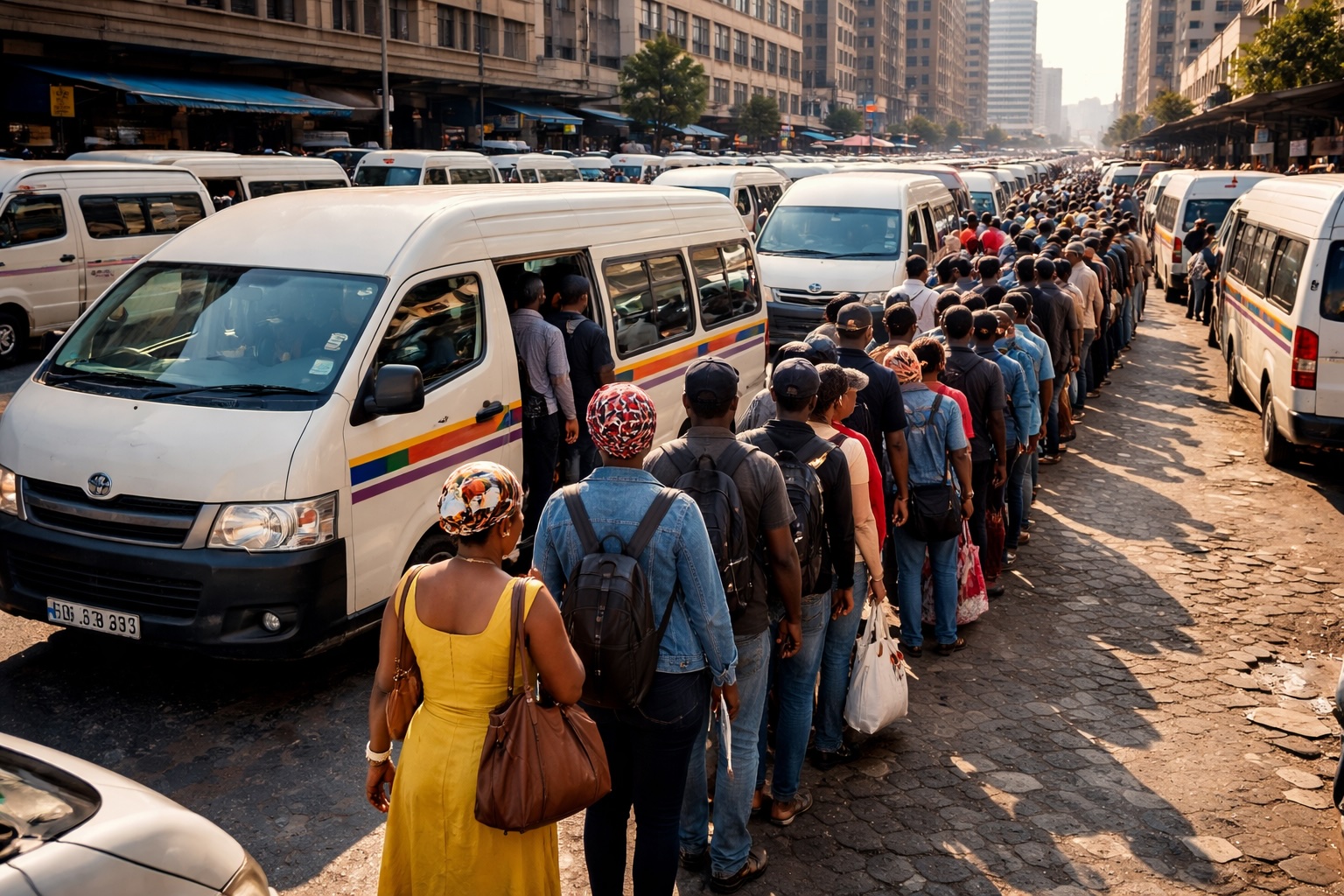
What meaning does “freedom of movement” have for someone trapped in a township where public transport is unreliable and job prospects are non-existent?
What comfort does “freedom of expression” provide when one’s voice carries no power in spaces of decision-making?
Freedom, it seems, has been bureaucratised and is measured only by what the Constitution guarantees rather than by what citizens experience. In this subtle disconnect lies the source of our societal amnesia. We remember the drama of liberation, but we forget its moral demand. Which, inter alia, included the need to restore justice, dignity, and equality in practical and lived terms.
Our democratic transition, often celebrated globally as a model of reconciliation, was also a masterclass in political compromise. The negotiated settlement, while essential to avoid civil conflict, entrenched old economic hierarchies under new political management. In many ways, it delivered political freedom without economic agency.
This is the uncomfortable truth that dogmatic patriotism avoids.
The persistence of inequality, unemployment, and elite capture has made freedom conditional. Something only available to those who can afford it and aspirational for those who cannot. The legacy of apartheid’s spatial design still divides cities into zones of privilege and despair. And as the middle-class retreats behind high walls, the poor remain exposed to the daily violence of hunger and insecurity.
Our leaders often speak of freedom as a destination achieved, not a project in constant renewal. But if opportunity, safety, and dignity depend on one’s postal code, our freedom is promise half-kept.
To reimagine freedom, we must first reclaim our moral imagination.
The next chapter of South Africa’s story should not be about repairing what is broken.
It should be about rethinking what is possible. True freedom is not the absence of law or restraint, it is the presence of justice, solidarity, and belonging.
It is measured not by individual success stories but by the collective well-being of society’s most marginalised.
We can draw inspiration from societies around the world that treat equality as a moral foundation, not a policy option. Nordic countries, for instance, measure progress through social trust and welfare, not just Gross Domestic Product. In Latin America, new movements blend indigenous knowledge and democratic participation to build inclusive economies. South Africa, too, can forge its own unique version of justice. One grounded in ubuntu rather than neoliberal individualism.
If we want to understand what it means to treat freedom as something more than a marketing slogan, we should pay attention to a people who have, for millennia, refused to forget what oppression did to them: the Jews.
The Jewish story is, among other things, a long argument against amnesia. From the Babylonian exile in 586 BCE, through the destruction of the Second Temple in 70 CE, to expulsions and pogroms across Europe, the Jewish people were scattered again and again.
Their response was not to romanticise suffering, but to turn memory into a political and moral resource. Exile became the lens through which freedom was imagined, narrated, and demanded.
When the modern State of Israel was founded after the Holocaust, it was framed by many Jews as a new liberation drama. A people moving from homelessness to self-determination. One can critique, and must critique, the way this project has impacted Palestinians. But on one crucial point the Jewish political imagination was uncompromising. Freedom could not be reduced to symbolic recognition; it required concrete power, institutional protection, and the ability to shape one’s own destiny.
Jewish communities, both in Israel and in the diaspora, have built dense networks of schools, synagogues, community organisations, and advocacy structures that anchor their identity and secure their interests.
The lesson here is not that South Africa needs to copy Jewish nationalism. It is that a people serious about freedom does not outsource its future to goodwill and vague slogans. It organises relentlessly around memory, power, and survival.
South Africa, by contrast, has cultivated a culture of forgetting. We are encouraged to “move on”, to avoid “dwelling on the past”, as if memory itself is the problem. The Truth and Reconciliation Commission was framed as the closing of a chapter, not the beginning of an uncompromising struggle to remake the country’s economic and spatial foundations.
We forget that apartheid wasn’t only about pass laws and separate benches. It was about who owned the land, who inherited capital, who had access to quality education and healthcare, who felt safe in public space.
Those patterns, as the data makes painfully clear, still largely map along racial lines today.
Our amnesia isn’t accidental. It’s politically convenient. It allows elites, in business and in government, to celebrate the symbolism of freedom while quietly normalising the persistence of apartheid-era inequalities under a democratic flag.
Furthermore, the amnesia of freedom has made us forget that liberation was never meant to end with the right to vote.
It was meant to usher in a society where no child goes to bed hungry, where work pays fairly, where gender and race no longer define access to opportunity. Freedom, in the truest sense, should make life liveable and not merely lawful.
Our challenge now is to resist the seductive myth that democracy automatically delivers justice. It does not. Justice must be fought for, repeatedly, by citizens unwilling to mistake stability for progress.
Freedom cannot be reduced to an entry in the Constitution. It must breathe in schools, in clinics, in public spaces, and in the ordinary lives of people who wish not simply to survive but to thrive. Until then, we will continue to celebrate a freedom whose memory outpaces its meaning. A freedom whose name we know but whose essence we have forgotten.
Here is where the Jewish example presses us the hardest. Jewish memory – in its best moments – refuses to let suffering become background noise. The refrain “Never again” isn’t only about Jews. It has often been invoked as a universal warning about what happens when hatred and inequality are allowed to fester. The emphasis on education, communal responsibility, and global solidarity flows from a conviction that security and dignity must be actively defended, not passively assumed.
In South Africa, we need our own version of “Never again”. Not as a slogan, but as a policy standard. “Never again” should mean never again a generation condemned to structural unemployment; never again children growing up stunted by hunger; never again communities terrorised by preventable violence while the wealthy insulate themselves with private security.
The work of our generation is precisely that: to remember again and reaffirm their “Never again”.
- Nkateko Muloiwa is a political researcher with an interest in international and local affairs. He recently completed his Master’s in Political Studies and an MSc in Science Communication at the University of the Witwatersrand. He also has interests in the geopolitical significance of Israel in the Middle East.





Bhekumusa Ngcobo
April 19, 2026 at 9:59 am
Nkateko you nailed it, political freedom must translate into economic freedom and prosperity but all of these depend on the value of trust. How much do we trust each other to look over each other’s backs? I feel there is more room to maneuver in this space.