World
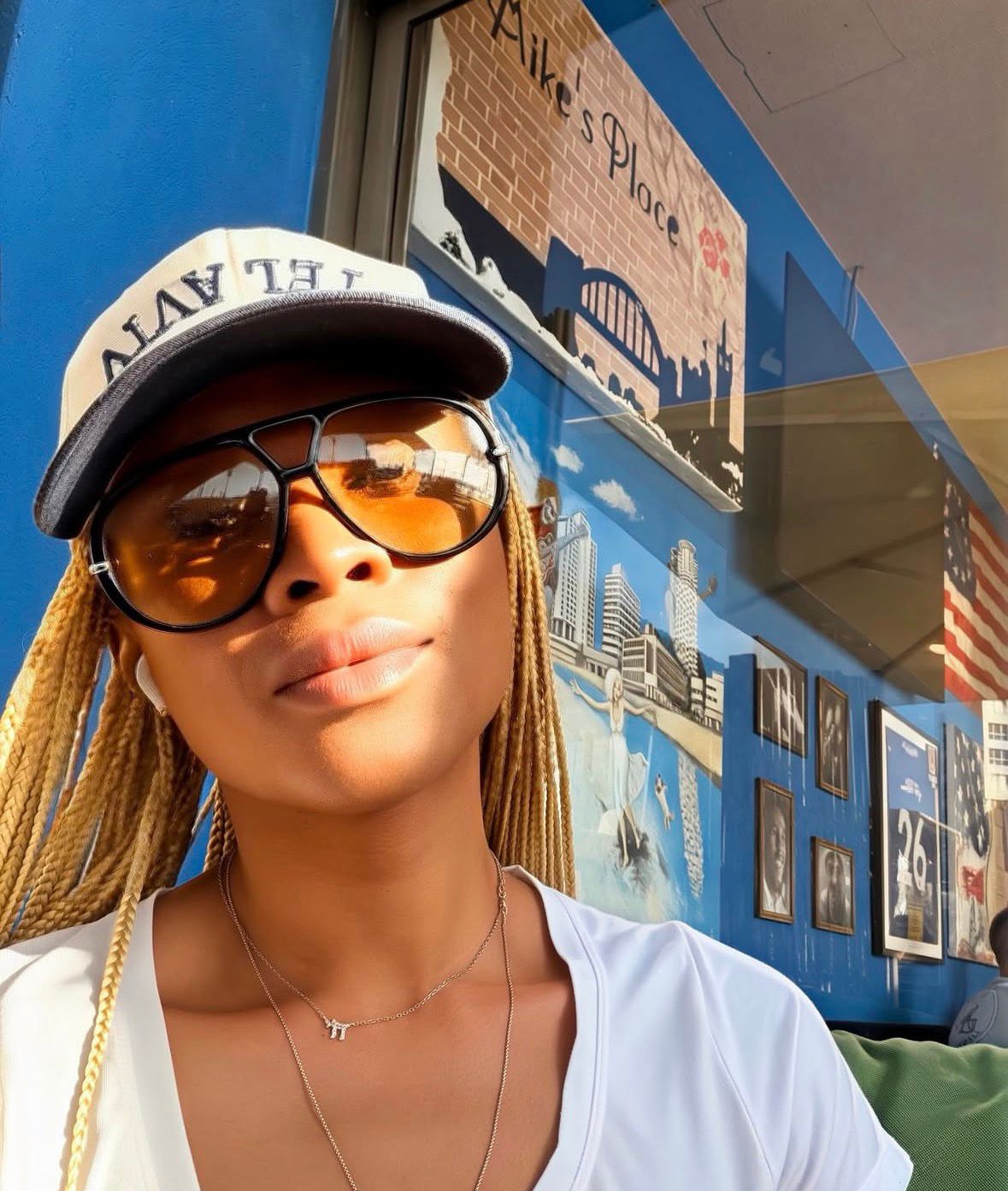
Social media activist Bellucci is unapologetically Jewish

Despite growing up in a Christian family, and being told to beware of Jews, Bellamy Bellucci has become one of the most prominent South African Jewish voices on social media, promoting Zionism and Judaism
“STOP THE LIES! Israel isn’t at fault for the @unitednations having failed to bring in the Aid for Gazan Civilians! I saw it with my own eyes … in Gaza #amisraelchai #bringthemhomenow #idf #Israel” is an example of her posts.
In another, she says, “How is it in this day and age that you can go into someone’s house. Not just threaten their lives. Take their lives in such a barbaric way. And then take a step back and say I am the victim. You pushed Jews to go back home. Now that they are home, you are trying to eradicate Jews.”
Bellucci doesn’t mince words. No matter what the response. She has more than 122 000 followers on Instagram and 16 500 on TikTok. She is also a dancer and model.
She had long been active on social media, sharing her daily life, never intending to become outspoken about antisemitism. But her Jewish identity naturally became more visible, whether she was preparing for Shabbat or a Jewish holiday, learning customs, or documenting her conversion. As her connection to Judaism became a larger part of her public presence, conversations around antisemitism increasingly followed.
“It became very revealing. People hated the fact that I was a black South African who identifies as a Jew and was going through the whole conversion process and posting about the fact that I just left the mikvah and I’m having a bagel. They said, ‘You’re really trying to be white’, which is something I’ve heard my whole life,” she says.
She explained that this accusation was levelled at her because she went to a private school and did ballet throughout her youth.
Bellucci’s activism intensified in 2023.
“After 7 October, literally the following day, I said everything that was on my mind. My agent said, ‘No one’s going to book you. You’re not going to get anywhere.’ And I remember it was New Year’s Eve. I made a post, thinking ‘I’ve already lost everything. I’ve already lost work. I’ve already been cancelled. So I don’t care anymore. If you want to hate me for being a Jew, go ahead. That’s just who I am. And I’m a very proud Zionist. And I love Israel.’ And I just went off. I said everything I felt.”
Bellucci says social media has taught her that Jews are damned if we do, and damned if we don’t. Instead, we should be concentrating on Judaism.
“We should be focusing more on what it means to be Jewish. Whether you’re outside of Israel or in Israel, it’s very important to take a step back from assimilation and realise that you can assimilate as much as you want, but they will always remind you that you’re a Jew. So why not just be a proud Jew?
“What I want to make clear, both within the Jewish world and outside it, is that the Jewish people are not going anywhere,” she says. “After centuries of persecution, exile, and suffering, Jewish survival is itself a story of resilience. Instead of hatred, that resilience should inspire admiration. More people should learn not only Jewish history, but also the ways Jewish communities support one another, build connections, and preserve continuity. For generations, Jews have had to rely on each other for protection and survival, and there is something powerful in that sense of community that other cultures and communities could learn from.”
Bellucci found her way to Judaism through ballet. It was at a boarding school in Randburg, Johannesburg that she discovered her love for dance. This led to her attending the National School of the Arts. Through her plethora of Jewish dancing friends, she experienced and fell in love with the religion.
“It was around that time that I really began connecting with Judaism. Something ignited within my neshama. I came from a deeply Christian Methodist family, heavily involved in the church, but something never fully clicked for me,” she says.
Bellucci began questioning why her religious practice felt more like duty than meaning and eventually distanced herself from her birth religion altogether. All the while, she was increasingly drawn to Judaism. It felt strangely familiar and deeply resonant.
What particularly attracted her was the sense of community and ritual.
“The sense of community that I had from my community didn’t feel real. It didn’t feel grounded. It didn’t feel steeped in the tradition and culture of what people truly wanted to adhere to and be a part of. It was just ‘We’re family because we’re blood.’”
Through ballet, Bellucci was able to move to the United States in 2008, but it wasn’t until she visited Israel for the first time in 2011 that she decided to convert to Judaism. Sitting at the Kotel in Jerusalem sobbing, she had the overwhelming feeling that she was destined to be Jewish.
“It was very spiritual, and it sounds very silly to people who don’t understand it, but I was just crying so much. There’s a very intense feeling that I have of belonging, and I feel like myself. And then I remembered I was questioning Judaism when I was a kid. I guess it wasn’t really something that was going to go away, but it was the right time,” she says.
She spent the next two and a half years converting to conservative Judaism with Rabbi Charles Simon. Once her family knew that her conversion was not, in fact, a phase, they ended their relationship with her.
“I swam against the current. My parents used to say to me, ‘How can you be like this?’ And I said, ‘You’re the ones who sent me to school. If you didn’t send me to school so I can think for myself then what was the point of it? You don’t get to dictate to me who I am. I will tell you who I am. You don’t get to impose your views, your religion, or anything else on me.’”
She says it became intolerable that she had to defend herself. “I had to start defending my choices as a Jew, but also as a human being. That’s what it really came down to, and saying, ‘How dare you dehumanise me just because you hate Jews?’”