





OpEds
Stop hijacking Madiba’s legacy, Mamdani

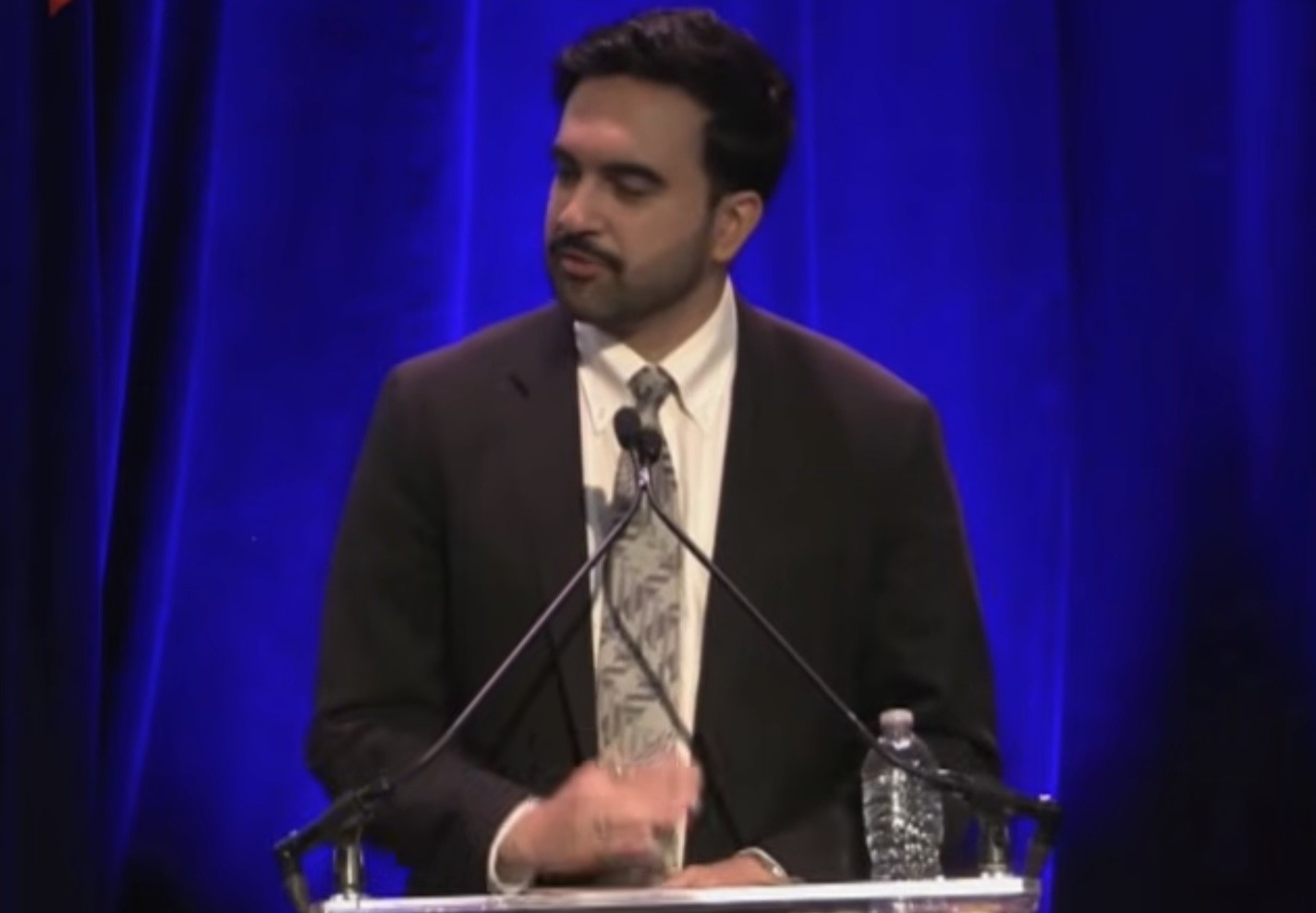
The beauty of Mandela Day is that it gives every generation the opportunity to claim Nelson Mandela. However, New York Mayor Zohran Mamdani’s keynote address at the Nelson Mandela Foundation’s inaugural Global Leadership Forum on 15 July did something altogether different. It sought to remake Mandela in Mamdani’s own ideological image.
Mamdani recast Mandela as the patron saint of 21st century activist politics, a man whose defining legacy was uncompromising solidarity with fashionable causes, particularly the Palestinians. He transformed Mandela into a moral mascot for today’s politics of absolutism. The word “solidarity” echoes throughout Mamdani’s speech, culminating in his declaration that “solidarity is not just a value, it is a strategy”. According to Mamdani, Mandela’s enduring lesson is to stand defiantly with those deemed oppressed, reject compromise, and remain steadfast against political pressure especially when Jews are involved.
That is not the Madiba the South African Jewish community knew. Nor is it the Madiba the world came to admire.
Mandela didn’t become a global icon because he excelled at identifying victims and oppressors. He became one because he achieved what almost everyone thought impossible, persuading bitter enemies to build a future together. He believed that justice required engagement with those you disagreed with, recognising their humanity and finding sufficient common ground to build peace. While Madiba valued solidarity, engagement was his true strategy.
For Mamdani, Mandela’s famous 1990 Ted Koppel town hall interview, held shortly after Mandela’s release from prison, represents the defining expression of Mandela’s politics of universal solidarity ‒ or rather, standing up to Jews and the West. Yet he fundamentally distorts the exchange. When challenged about his friendship with Palestinian leader Yasser Arafat, Mandela did refuse to abandon him but did not respond with defiance or denunciation. Nor did he dismiss the concerns of the Jewish community.
Instead, he said, “If a Jewish leader has any doubts about our stand, I am prepared to address them, and to allay their concern. They are a very important community both in South Africa and the United States. I’m prepared to iron out any differences that might exist. But they must know what our stand is: Arafat is a comrade-in-arms, and we treat him as such.”
Mandela didn’t choose between principle and dialogue. He insisted on both.
True to his word, later that year he spent more than two hours meeting a delegation of American Jewish leaders in Geneva. As one participant recalled, Mandela told them, “If the test of my friendship with you is that I have to be an enemy of your enemy, then I cannot be your friend.”
Mamdani presents Mandela almost exclusively through the prism of Palestinian solidarity. But Mandela’s position was far more balanced ‒ and far more courageous. He never abandoned his support for the Palestinians, yet neither did he abandon Israel or the South African Jewish community.
Speaking to South African Jews in 1993, Mandela declared, “We recognise the legitimacy of Zionism as a Jewish nationalism just as we recognise the legitimacy of Palestinian nationalism. We insist on the right of the State of Israel to exist within secure borders, but with equal vigour support the Palestinian right to national self-determination.”
Nor was this an isolated sentiment. Mandela was never imprisoned by ideology. One of his defining strengths was his willingness to learn from anyone who had something to teach him. In Long Walk to Freedom, Mandela credited right-wing Zionist leader Menachem Begin’s The Revolt with helping him think through how a small movement without mountains or forests could wage an effective guerrilla campaign. One of his key advisers in building Umkhonto weSizwe (MK) was Arthur Goldreich, a veteran of the pre-state Israeli underground strike force, the Palmach, whose experience helped shape MK’s command structure. That structure borrowed its very terminology from Begin’s Irgun paramilitary organisation. At the very moment Mandela was creating the movement that would end apartheid, he was learning from Israelis.
That same pragmatism shaped his international relationships. Despite his close friendship with Arafat, Mandela maintained ties with Israel, met successive Israeli leaders, and visited Israel in 1999.
Contrast this with Mamdani’s approach. This year he became the first New York mayor in six decades to boycott the Israel Day Parade, a march that draws tens of thousands of Jewish New Yorkers and has always been attended by mayors of every political persuasion as an expression of solidarity with the city’s Jewish community. And this week, he confirmed he is exploring whether to have Benjamin Netanyahu arrested should the Israeli prime minister attend the UN General Assembly in New York in September. Mamdani practises the politics of confrontation. Mandela practised the politics of engagement.
His relationship with South Africa’s Jewish community reflected exactly the same philosophy. He recognised the extraordinary contribution Jewish South Africans made to the struggle against apartheid and to the building of our democracy.
As chairperson of the Jewish National Fund South Africa (JNF SA), I remain especially proud that President Mandela partnered with JNF to establish the first park in Mamelodi, recognising Israel’s internationally renowned expertise in forestry and environmental rehabilitation. That project captured the essence of Mandela’s leadership. He brought communities together around shared purpose because he instinctively looked for partners rather than ideological allies. He measured people by what they could contribute, not by which political tribe they belonged to.
Mandela understood something that Mamdani and his fellow activists still struggle to grasp. Peace is not achieved by shouting “genocide” or draping yourself in a keffiyeh to prove your own moral purity. Mandela didn’t ask, “Which side are you on?” He asked, “How do we build a future together?” That question is almost entirely absent from Mamdani’s speech.
The tragedy is that the Middle East doesn’t need more speeches celebrating solidarity with one side or the other. It needs leaders with Mandela’s rare willingness to engage across ideological divides, recognise the legitimate aspirations of both peoples, and make the painful compromises that peace actually demands.
Mandela’s legacy was never about choosing sides. It was about bringing sides together. One is the politics of protest. The other is the politics of peace. One wins applause. The other changes the world.
- Michael Kransdorff is the chairperson of the JNF SA.





Ryan
July 23, 2026 at 1:37 pm
Just Like the recent article the Jewish Report had to pull because they falsely claimed a Palestinian journalist said he felt safer in Gaza than in Cape Town, which he clearly never said, this article should be pulled as well.
To start with you claim Mamdani tried to Make Mandela out to be the patron saint of 21st century activist politics, while Mamdani starts off his speech making it clear we should not try make Madiba out to be some kind of saint but rather remember him for the man that he was. Your statement is contrary to what he said.
The main and glaring issue with this article is your imagining of things Mamdani did not say that you assert he did. Mamdani gave no suggestion that Jews need to be opposed in any way. He gave no suggestion that the west needs to be opposed. You either did not listen to his speech, or more likely, you listened to it with a view to twist his words into a narrative that fits your views of the man.
You can disagree with Mamdani’s stance on Israel, that is fine, but to outright try and claim his speech focused on Jews at all is defamatory. In fact, he praised the New York Jewish community for their support of Mandela and their opposition to apartheid.
I find it laughable that you accuse him of distorting the Ted Kopple interview while this whole article is a distortion of what he said. As the chairperson of the JNF you need to do better.