OpEds
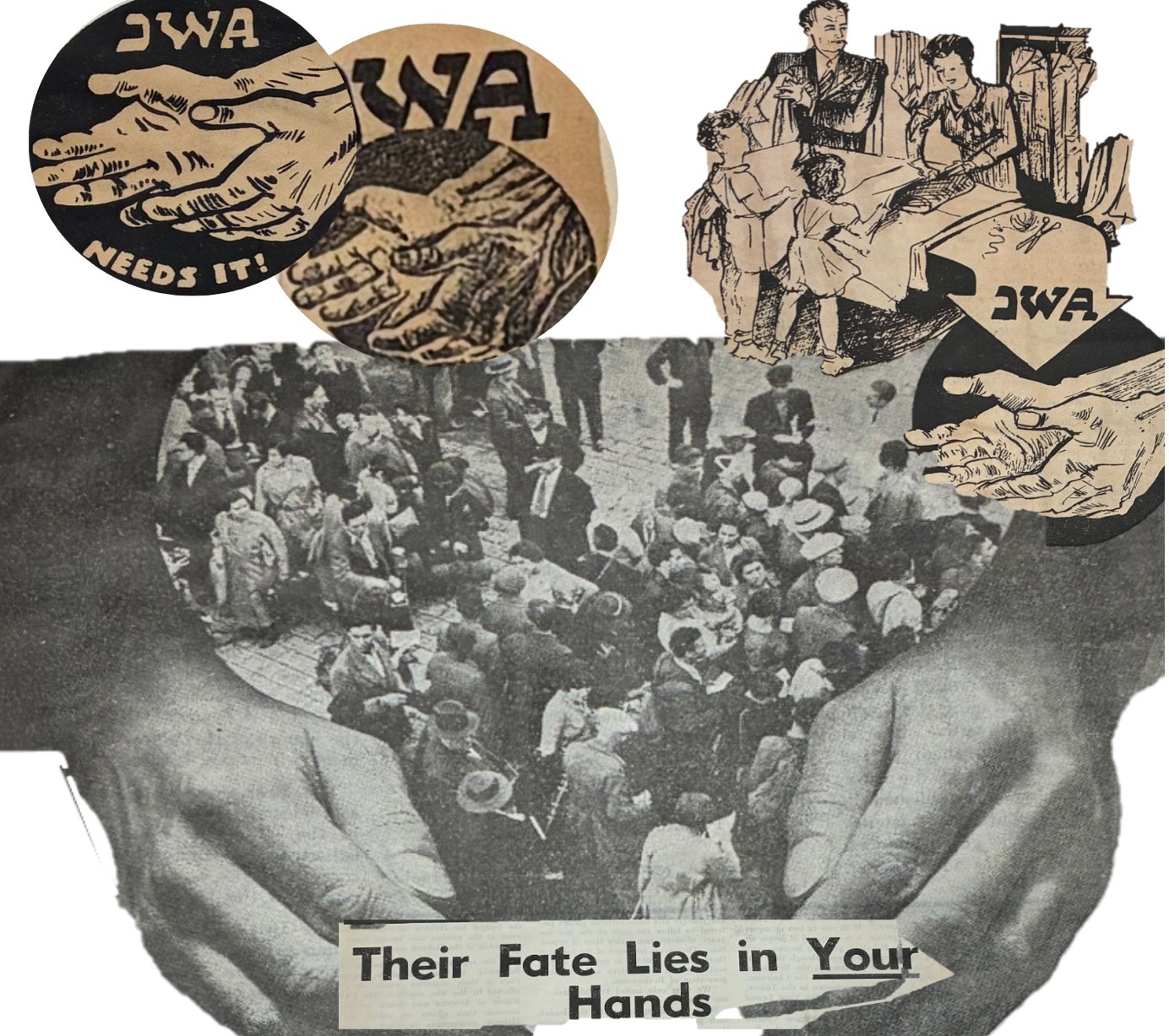
1941 South African Jewish War Appeal adverts resonates today

For a people long accustomed to persecution, patience had worn thin by 1940. The South African Jewish Board of Deputies had grown increasingly frustrated with the steady refrain of “hope” and “confidence” that the war would soon be resolved, and the Nazi threat contained. Such assurances, it had become clear, had done little to halt the rise of fascism or to prevent the deepening crisis facing European Jewry.
In a New Year’s resolution published in the South African Jewish Chronicle at the beginning of 1941, the Board called upon normal civilians for nothing less than a “supreme effort for the liberation of the world from the Nazi purge”. The resolution demanded South Africans acknowledge their “Jewish obligation” to aid victims both locally and abroad, to rescue refugees, to lay the groundwork for reconstruction, and to strengthen Jewish collective contribution in a time of unprecedented crisis.
At the centre of these efforts stood the South African Jewish War Appeal, the Board’s fundraising arm, which coordinated relief and rescue in partnership with international organisations across Europe, North Africa, and the Middle East. However, for the ordinary South African Jew, nearly 9 000km kilometres from the epicentre of the conflict, fundraising and support for the Appeal didn’t always come easily. In turn, the Appeal recognised – as we ourselves can today in the attention economy that governs our lives online – that before people give, they must come face to face with reality, and be made to feel that distant suffering is their own personal concern.
Thus, the South African Jewish War Appeal turned to the Jewish press with striking intent, launching sustained publicity campaigns designed, in its own words, to “influence the community to the fullest possible extent” to donate. These campaigns, which artistically rendered atrocity, mobilised strategies of empathy, and propelled action, are preserved in the archives of the South African Jewish Board of Deputies and are now brought into view here.
Children feature most prominently in the advertisements. While the Appeal could not have predicted that 1.5 million children would ultimately perish in the Holocaust, it was ever aware that the plight of displaced and vulnerable children in Nazi-occupied Europe should be at the forefront of South African minds. As South African mothers recognised their own children in these images, the women’s section of the Appeal urged them in pamphlets to remember the suffering of their European counterparts. These mothers were depicted as gaunt, emaciated figures, hollowed by hunger and grief.
It’s not hard to understand how these advertisements placed the viewer directly in the shoes of the victims their donations would aid. For those unable to relate to the maternal imagery, the Appeal campaigns called on South Africans to appease the suffering of their “brothers, sisters, and relatives in enemy occupied Europe”. Several campaigns used actual images of the refugees to draw on the intrinsic Jewish sense of shared peoplehood and mutual responsibility. For many South African Jews, they were reminded literally of their own families, with parents, siblings, or extended relatives still in Europe. As South Africans were faced with the ongoing suffering of their fellow Jew in far off places, the campaign refused to allow them to succumb to desensitisation or feelings of helplessness.
The Jewish War Appeal logo urged the necessity of donations and the shared obligation of the Jewish community to protect and help one another. In the 17 January 1941 edition of the SA Jewish Chronicle, the Appeal reminded viewers that the fate of their kinsmen rested in their hands. Just as the hands sanctify the everyday through ritual, so too were they called upon to act, to give, and in doing so, to bind the individual to the collective good.
The accompanying words of the above advertisement still resonate deeply in this country nearly 84 years since they were first published. As we witness a troubling rise in violent antisemitic attacks globally and watch with anxious anticipation for an end to the war in the Middle East, we must recognise that our exclusion and isolation is nothing new, nor does it impede us from acting. Across continents and generations, Jewish communities have always turned towards one another in moments of crisis. It is this collective resilience, built from countless individual acts of care and solidarity, that has sustained Jewish communities through their most difficult hours. And it is this same principle that confronts us now: not only to witness, but to stand with one another, to recognise that no part of the community is ever truly alone.
- Alexa Shneier is an historian specialising in the Jewish history and literature of the Greco-Roman world, and a researcher on the Yad Vashem project at the South African Jewish Board of Deputies.