





OpEds
The G20 circus leaves town, but clowns remain

The South African government is basking in the glory of what it considers a successful G20 Summit in Johannesburg, having managed to forge consensus in a fractured world. This was despite the shenanigans of the United States. The meeting did manage to agree on a joint communiqué, albeit a rather parev one, dubbed the “Leaders’ Statement”. Much was made of this being the first G20 hosted on African soil. But what did all this talking accomplish?
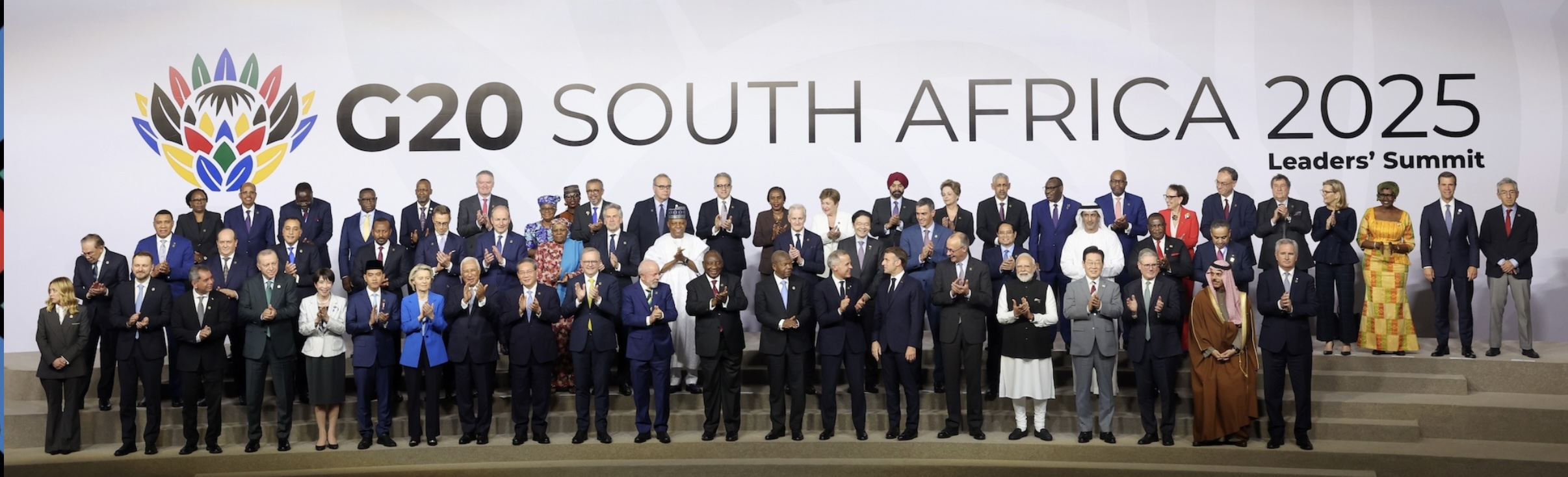
Although the presidents of Argentina, China, Indonesia, and Mexico sent their proxies, and the US boycotted and then changed its mind too late, other heads of state and government were out in full force for the family photos. President Cyril Ramaphosa was praised for his statesmanship and deft handling of this unwieldy multilateral gathering at a time of great geopolitical and geoeconomic uncertainty, a world of tariffs, conflicts, and climate emergency.
A unique and informal collection of most of the world’s leading economies from both the Global North and Global South, the G20 first met at heads of state and government level in 2008. This was in Pittsburgh, under the first Barack Obama administration, to iron out problems engendered by that year’s global economic crisis. Since then, its remit has expanded to tackle issues like tax, the cost of capital, and climate financing. Many see it as a fairer division of global power than the moribund and paralysed United Nations.
The G20 has spawned offspring like the Business20; the Think20 (for think tanks); the Youth20; the Women20; and even the Oceans20 – not a heist movie sequel starring George Clooney. This year, the Y20 in pique didn’t issue a communiqué, noting that of some 350 policy recommendations made over the years, not a single one was adopted by the G20. That’s some indictment.
So, the 130-something meetings hosted in South Africa translate into a lot of frequent flier miles, and a not inconsiderable amount of your taxes and mine. So many discussions – more like a whole “talk mall” rather than a “talk shop”. G20 promises and pledges aren’t measured from year to year, with limited oversight and follow through. The lives of ordinary people don’t change. The G20 is a club and not a treaty; it has no enforcement mechanisms.
I’ll admit that South Africa’s G20 theme of “Solidarity, Equality, Sustainability” had me concerned that Pretoria would use the G20 as a soapbox to criticise Israel. In fact, the conflict got only a short, rather anodyne mention in the Leaders’ declaration: “We concur that, guided by the purposes and principles of the UN Charter in its entirety, we will work for a just, comprehensive, and lasting peace in Sudan, the Democratic Republic of the Congo, the Occupied Palestinian Territory, Ukraine, as well as ending other conflicts and wars around the globe.” To be fair, war isn’t a major focus of the G20.
Then there was the drama with Washington. Early in 2025, US President Donald Trump made it clear that he wouldn’t attend the G20, in opposition to his baseless claims of “white genocide” in South Africa and some of Pretoria’s foreign-relations choices, including closeness to China, Iran, Russia, and Hamas. This further strained a bilateral relationship on the skids. Trump first said he would send his “veep” JD Vance. Then about two weeks ago, Trump banned all US officials from attending. With mere days to go, he did an about-face and requested the US embassy be accredited to the summit. With South Africa due to hand over the G20 to the US as the next host in 2026, Ramaphosa refused to engage in this manner with US embassy staff. A low-key handover was due this week.
Trump mocked South Africa’s inviting non-G20 leaders to Johannesburg, saying it was like “a G100”. Ramaphosa retorted that he’d be happy with a “G-million”. One of the reasons that Ramaphosa unusually released the Leaders’ Statement on the first day rather than the second day was to avoid the delegations making last-ditch changes to it. Countries like Argentina, Saudi Arabia, and the US, when it attended meetings, had endless quibbles over language, including terms related to gender, climate change, and the UN’s Sustainable Development Goals. In the end, the communiqué was considerably watered down, vague, and “lacked ambition”, as critics charge.
Questions linger over whether South Africa will be invited to preparatory meetings in the US in 2026 or even the summit itself, given the strains in relations. The G20 operates a troika of the past, present, and future presidencies, which in this case would be SA, the US and the United Kingdom. In some quarters, there’s a sense that the G20 needs to just hold its breath for the next year until the UK takes the helm. Trump is expected to hamstring the club considerably on the issues he doesn’t like. Only time will tell. Trump wants to hold the 2026 summit at one of his properties in Florida. Why not make a quick million or two?
On the bright side, I guess, at least Jozi got a minor facelift, with potholes and broken streetlights on major routes repaired quick sticks. On other roads not likely to be used by visiting delegations, not so much. The municipality even resumed building the Rea Vaya bus station outside Sandton City, a project that’s gathered cobwebs for years. It felt like we were building a Potemkin village for our foreign guests, masking our broken, derelict city that has long gone to seed. Petrified of the traffic disruptions, I couldn’t verify if the spanking new streetlights also operated at night. It’s like putting lipstick on a pig – it remains a pig.
- Steven Gruzd is an analyst based in Johannesburg. He writes in his personal capacity.





Karyn Veffer
November 28, 2025 at 10:28 am
This article needs to be published in every newspaper and online for all South African people to read