



World
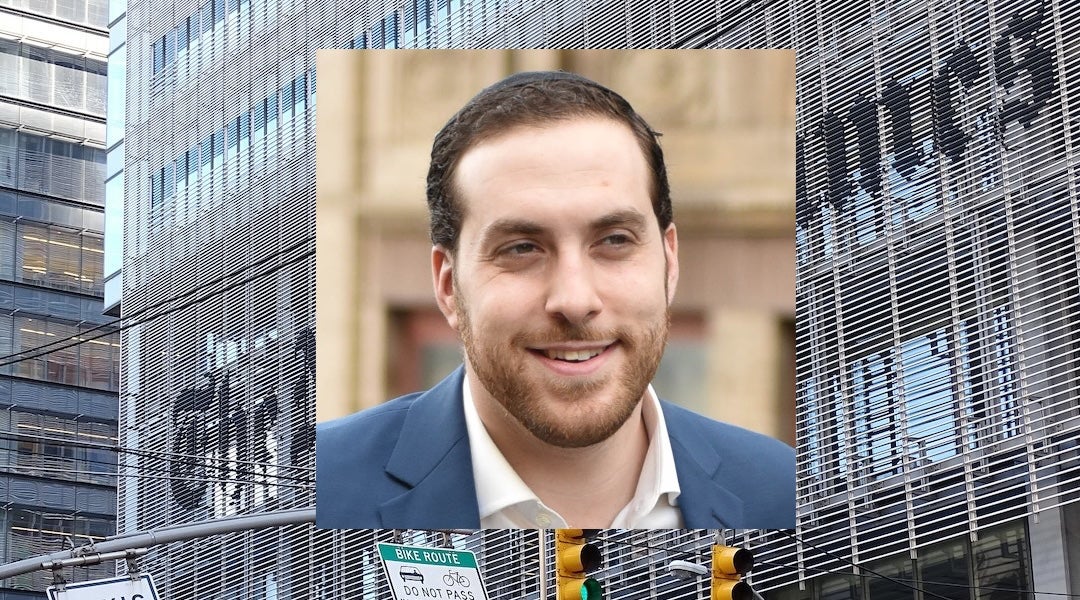
The New York Times hires The Atlantic’s Yair Rosenberg to cover Jewish American life

JTA – The New York Times has hired The Atlantic staff writer Yair Rosenberg to launch a national beat covering Jewish American life, bringing a widely known journalist on antisemitism and Jewish affairs to a newspaper whose coverage of Israel and the Jewish community has been under unusually intense scrutiny since the 7 October Hamas attack.
The appointment, announced on Monday by national editor Nestor Ramos, creates a dedicated beat focused on American Jews at a moment when questions of antisemitism, Israel, religious identity, and political polarisation have moved to the centre of public debate.
It is the first time that the newspaper, published in the city with the world’s largest Jewish population, has a beat dedicated to Jews.
“Over the course of 15 years chronicling Jewish life in America and abroad, Yair has taken on the biggest, thorniest stories on the beat,” Ramos wrote in a memo to staff. “Now, Yair will bring that boundless energy and deep expertise to a new religion beat on [the] National [desk] focused on Jewish American life, chronicling a period of extraordinary tension but also possibility and reinvention.”
The move brings Rosenberg to a publication that he has occasionally criticised for its coverage of Jewish affairs, but without echoing some critics’ charges of institutional bias.
For the past five years Rosenberg has written The Atlantic’s “Deep Shtetl” newsletter, blending coverage of antisemitism, American politics, and Jewish culture with essays on history, religion, and popular culture. Before joining The Atlantic in 2021, he spent nearly a decade at Tablet, a magazine of Jewish affairs.
Over the years, Rosenberg has broken or advanced reporting on online extremism and antisemitism while also becoming known for explaining Jewish issues to a broad audience. His work has ranged from investigations into antisemitic disinformation networks to historical features. He has written about antisemitism on the far left and on the Republican right.
During the 2016 presidential campaign, an Anti-Defamation League study found Rosenberg was among the Jewish journalists most frequently targeted with antisemitic abuse on Twitter. Rosenberg became known for responding publicly to trolls and for developing technological tools ‒ including an “Impostor Buster” bot ‒ designed to expose white supremacists posing online as minorities in order to inflame social tensions. The effort drew widespread attention before Twitter eventually suspended the tool.
He later described those experiences in a The New York Times guest essay titled “Confessions of a digital Nazi hunter” and has remained a frequent public speaker on combatting online hate while preserving free expression.
Ramos’s announcement emphasised that Rosenberg’s beat would extend beyond antisemitism.
“Yair knows better than most that these fraught moments are not all that define Jewish life today ‒not even close,” Ramos wrote, citing stories on Chanukah traditions, Jewish representation in popular culture, and other facets of American Jewish life.
The Times’s editorial director of newsletters, Jodi Rudoren, who returned to The Times after serving as editor in chief of the Jewish newspaper The Forward, praised Rosenberg in the announcement.
“There is no reporter with sharper insights about what animates American Jews,” Rudoren said. “I was jealous of everything he filed. Every. Single. Thing.”
The Times, through a spokesman, declined to comment beyond Monday’s announcement. Rosenberg did not respond to a request for an interview by the time of going to press.
The hire comes as The New York Times continues to navigate a complicated relationship with many Jewish readers.
For decades the newspaper has occupied an outsized place in American Jewish public life, employing prominent Jewish reporters and editors while producing influential coverage of religion, Israel, and antisemitism. Yet the newspaper has also faced sustained criticism from parts of the Jewish community over its Israel coverage, criticism that intensified after 7 October and the subsequent war in Gaza.
Media watchdog organisations, some Jewish communal leaders, and a number of current and former journalists have accused The Times of factual errors, headline framing, and insufficient scepticism towards claims made by Hamas officials in some early coverage of the conflict.
A May 2026 column by Nicholas Kristof, alleging systemic sexual violence by Israeli authorities against Palestinian detainees, was widely criticised for amplifying unverified claims and platforming biased sources. The Times stood by Kristof’s column in an editorial note.
Defenders of the publication argue that accusations of institutional anti-Israel bias often conflate disagreement over editorial judgements with evidence of systemic prejudice.
At Tablet and The Atlantic, Rosenberg occasionally criticised aspects of The Times’s reporting on both Israel and antisemitism. In a 2018 Tablet article he criticised The New York Times Book Review for offering a platform for the novelist Alice Walker to recommend a book by the English author David Icke that was heavily saturated in antisemitic conspiracy theories.
The next year he called out the publication for a profile of former CIA officer and would-be congressional candidate Valerie Plame that failed to mention her history of tweets sharing antisemitic theories. He has also regretted that The Times in 1937 dropped its subscription to the Jewish Telegraphic Agency (JTA) syndication service because of the perception at the time that JTA’s coverage of Nazi Europe was alarmist.
Unlike some Jewish media watchdog groups, however, Rosenberg has not argued that The Times is institutionally or inherently biased against Israel or Jews. Against that backdrop, Rosenberg’s hiring is likely to be watched closely by Jewish readers across the political spectrum.
According to Ramos, Rosenberg will begin work on 20 July and will be based in New York while travelling nationally for the beat.