


Israel
Trio show Israel is not simply black or white

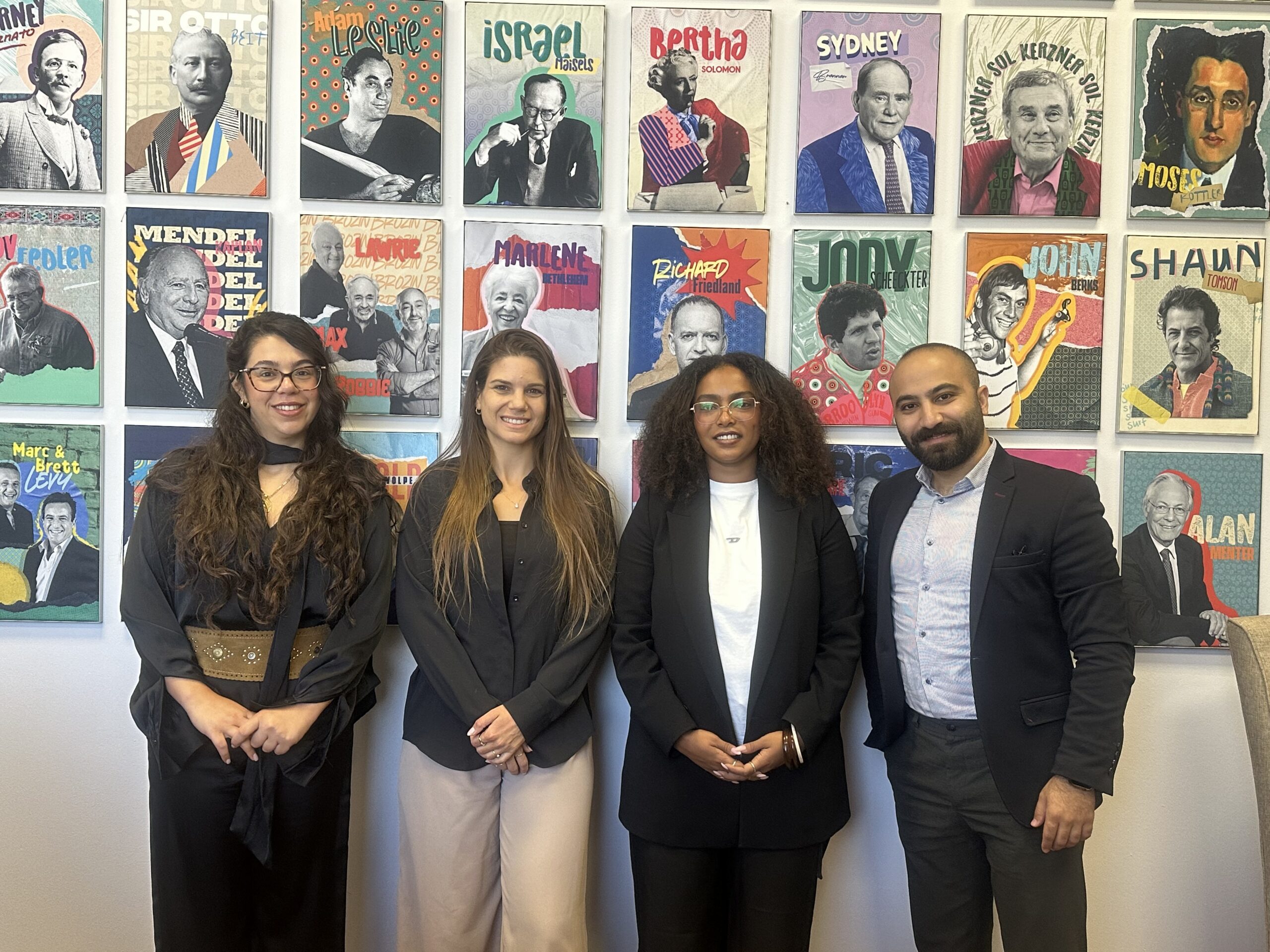
What do a Christian Lebanese-Israeli activist, an Arab-Israeli public diplomacy advocate, and a Jewish Ethiopian content creator have in common?
They happen to be in South Africa this week to offer perspectives of Israel that they say are often overlooked.
Maryam Younnes, who grew up in southern Lebanon; Fuad Ahmad, the Arab Israeli; and Havtam Layo, otherwise known as @blacknjewish on Instagram, are in South Africa with the organisation Israel-Is as guests of South African Friends of Israel.
Their mission is to engage audiences in conversations about identity, coexistence, and the many voices that make up Israeli society. The three are shaped by their different backgrounds, communities, experiences, and how they go about their activism.
“Our purpose is to show the Middle East as this complex place that isn’t black or white,” said Younnes. “Moderate voices are coming forward and asking for solutions, for peace agreements. We’re asking to eradicate extremism and terrorist organisations, and just showing that every one of us, within our diversity, lives in Israel, and that it’s possible.”
Younnes’s father was a commander in the South Lebanon Army (SLA), which fought alongside Israel. After Israel withdrew from Lebanon in 2000, her family moved to Israel with thousands of other SLA families. Today, she is known for her Arabic-language social media videos, which showcase Israeli society, culture, and coexistence to audiences across the Arab world.
She says that through her activism, she shows people that extremism isn’t the lay of the land in the Arab world and that there are many moderate voices that want peace.
Younnes’s videos about Lebanon and Israel have reached Lebanese media, making her the first Lebanese Israeli to appear on Lebanese television to discuss these issues.
“For me, that showed my videos were having a real impact, not just reaching people, but helping shape conversations and encouraging dialogue about peace. Even when Arab media covered my videos critically, I saw it as significant because it meant my message and opinions were reaching audiences across the region,” she said.
Ahmad, a Muslim Arab-Israeli communications professional and public diplomacy advocate, currently serves as the spokesperson for Israel’s Ministry of National Security. He is known for engaging Arabic-speaking audiences on regional issues, Israeli society, and security matters, through interviews, media appearances, and social media.
He explained that, over the years, in the Ministry of National Security and the Office of the President, he has assisted many people get their voices heard in international and Arab media in the aftermath of 7 October. He tries to combat the misconception that people like him aren’t part of Israeli society.
“Before the social media era, there was no connection between the Arab world and the Arabs of Israel. There were no diplomatic relations, and they couldn’t come to Israel to see the reality, and we couldn’t go there,” he said. “So, when people started sharing on social media about their lives in Israel and everything, a lot of people didn’t accept the reality that there are Arabs in the Israeli State and that they’re part of the fabric of the country, in the Israel Defense Forces, police, government, everywhere.
“Also, some of them are fed a lot of fake news about Israel. So, it was very hard for them to accept our reality or positive stories about us. When we share anything about Israel, they take it like we’re sharing fake news and that we’re just making PR for Israelis, and they think that most Arabs in Israel are suffering in Israel, just like in East Jerusalem or the West Bank,” he said.
Since 8 October 2023, when Hezbollah attacked Israel, Younnes said she has seen more encouragement than ever from Lebanese people.
“People were saying, ‘We’re so tired of this, and you’re our voice. We can’t speak out from Lebanon.’ Since then, many of the taboos in Lebanon have begun to break down. More people are no longer afraid to say they want peace. They kept telling me, ‘Please keep going.’ They saw me as someone who wasn’t afraid to speak up on behalf of Lebanese people because I was living in Israel. The response was overwhelmingly positive. While there was some criticism, the positive comments increased dramatically, and the exposure was incredible,” she said.
Similarly, what Layo does on her Instagram page is challenge the view of Israel. Part of her mission, especially as an Ethiopian Jewish woman, is to show that life in Israel is not what the haters believe it to be.
“Although I’m Jewish, I was still born in Ethiopia. And when you see that they’re using words like ‘slavery’ and ‘apartheid’ to describe Israel, it’s not only offensive towards Jews and Israelis, but it is very offensive towards people whose family went through apartheid and slavery, and undermines their history and their trauma to justify hate and antisemitism,” she said.
One of the most shocking things she heard was an African American woman on a podcast claiming that Israel is a segregated country and that black people are treated as slaves there. “I found that especially surprising given the history of slavery. She made those claims publicly, despite not speaking Hebrew or Arabic or having first-hand knowledge of what is happening in the Middle East. To me, it’s concerning when people hear statements like that and believe them. There are still people being enslaved in different parts of the world today and Israel is certainly not one of those places. In my view, Israel is an example of a country that works to balance many different cultures and identities.”
Ahmad sees peace as a possibility when the Arab world connects more with Israeli society.
“It is a difficult mission, but we continue because we believe that if people stop engaging on these important issues then hate and extremist groups will prevail. Over the past five years, we’ve seen that remarkable changes are possible. Before 2020, there were no formal relations between Israel and the Gulf states, and now the region looks very different. We’ve also seen significant developments in Syria, with new negotiations taking place, something many of us never imagined would happen. That gives us hope that, over the next few years, we could see even more positive relationships develop across the region,” he said.