


SA
Years of US warnings end in trade blow

South Africa’s exclusion from a major United States trade programme was years in the making, repeatedly warned about, and, according to critics, entirely avoidable. Now, as Pretoria faces the consequences of its deteriorating relationship with Washington, analysts warn that the loss of preferential trade benefits may be only the beginning.
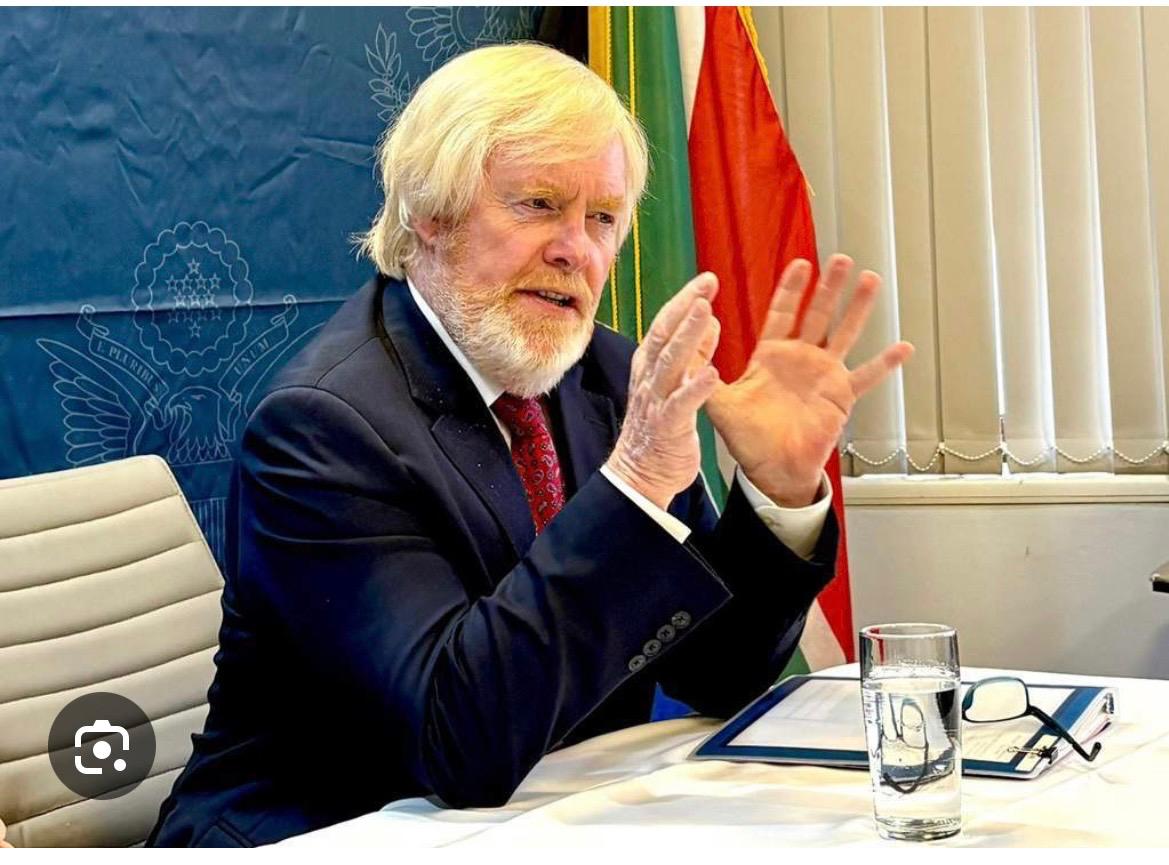
“The White House is ramping up its negativity towards South Africa,” Democratic Alliance founder Tony Leon told the SA Jewish Report. “The US has a lot of bullets to fire if it chooses to fire them.”
On Monday, 2 November, US President Donald Trump gave South Africa 60 days’ notice of his intention to terminate its benefits under the African Growth and Opportunity Act (AGOA) from 1 January 2027.
The move follows mounting US concerns about South Africa’s trade and investment barriers, domestic economic policies, and foreign-policy alliances, particularly its ties with Iran. The relationship has been further strained by Pretoria’s “genocide” case against Israel at the International Court of Justice (ICJ).
AGOA allows eligible African countries to export certain goods to the US duty-free. Losing these benefits threatens the competitiveness of South African exports, particularly in agriculture and manufacturing.
US Ambassador to South Africa Leo Brent Bozell III was unequivocal. “It is regrettable that South African policies led to the termination of AGOA for South Africa. This was a predictable and preventable outcome resulting from the rejection by South Africa’s government of real concerns raised by the US government.
“I remain hopeful that we can find a path forward to address our larger bilateral concerns, but the South African government must understand the gravity of the situation,” he said.
Washington’s five demands centred on stronger action against farm murders, condemnation of the “Kill the Boer” chant, protection of property rights, reform of race-based empowerment policies affecting American investors, and a shift in South Africa’s foreign-policy alignment, including its ties with Iran.
Leon described these demands as “not extraordinarily difficult to meet. The fact that the government couldn’t bring itself to meet them, is problematic.”
For him, the diplomatic implications are more alarming than the immediate economic fallout. “In a quantitative sense, the net effect will be marginal, not huge. There will be losses, but there won’t be a huge disruption,” he said. “What it signals is very bleak.”
Leon warned that Washington had further punitive options, including sanctions against individuals.
He questioned Pretoria’s priorities, contrasting South Africa’s trade deficit with China against its trade surplus with the US. “South Africa is forming alignments with countries that are hostile not only to America, but to the West in general and democratic freedoms.”
Political economy analyst Daniel Silke cautioned against confusing the loss of preferential access with losing the American market altogether. “We haven’t lost the US as a market,” he said.
Instead, many South African products would become less competitive. “Wine, citrus, and jewellery exports could become more expensive for American buyers, while automotive manufacturing is particularly vulnerable.” Even modest losses of market share could translate into job losses in an economy already battling exceptionally high unemployment, he warned.
But, Silke said, the US decision was more significant politically than economically, sending another damaging signal to international investors concerned about South Africa’s regulatory environment, including Black Economic Empowerment (BEE) requirements.
Analysts agree that a swing toward the Democratic Party in the US midterms would not, in the short term, bring major change to Washington’s approach to South Africa.
The executive director of the Middle East Africa Research Institute, Benji Shulman, said South Africa’s AGOA troubles began long before President Trump returned to the White House.
“South Africa was always a marginal case for AGOA because we were considered a little too wealthy for it. But the Americans were happy to go along because it was a signal of a partnership they wanted to have with Africa, and particularly South Africa.”
Concerns intensified during the Russia-Ukraine war, when Pretoria’s foreign-policy positions began troubling American policymakers.
“This predates the ICJ, but I think the ICJ and the Israel issues really started to put things on the agenda alongside all these other aspects,” Shulman said.
It’s not so much that Pretoria underestimated the warnings, but “the ANC doesn’t want to shift its focus on these core issues, especially international relations”, he said.
He warned that the consequences would cross political boundaries, affecting citrus and canned-fruit producers for example in the DA-governed Western Cape and automotive manufacturing in the ANC’s Eastern Cape heartland.
Sara Gon, a fellow at the Institute of Race Relations, described the AGOA exclusion as “definitely a consequence of poor foreign policy by the ANC”.
“Also, the policies that stifle our economic growth must change, and everyone knows it. Even the ANC knows it, but the ANC just won’t get rid of red tape, scrap BEE, and remove the provisions for expropriation without compensation.”
She was particularly critical of the ANC retaining control of international relations within the government of national unity. “It’s been a disaster.”
The South African Zionist Federation (SAZF) accused the ANC of sacrificing economic interests for ideological allegiances. “This isn’t a misfortune that befell South Africa. It’s the predictable result of a deliberate choice,” the organisation said.
SAZF national spokesperson Rolene Marks said, “The ANC has run South Africa’s foreign policy like a party branch meeting, and South Africans are paying the bill.
“It chose Hamas over hostages, Tehran over trade, and slogans over jobs. Blaming Washington will not restore a single export order. Taking responsibility might.”
Trade, Industry and Competition Minister Parks Tau defended Pretoria’s efforts to preserve the trade relationship. “This decision doesn’t define the broader relationship between South Africa and the United States, however, a solution depends on the willingness of both parties to find solutions.”
Tau maintained that Pretoria had offered concessions but accused Washington of introducing additional issues outside the scope of negotiations.
“As a sovereign constitutional democracy, South Africa will uphold its constitutional responsibilities, transformation objectives, and international obligations, while seeking practical solutions to expand trade and investment.”
Government figures indicate that AGOA exports accounted for approximately 10% of South African exports to the US in 2025, worth nearly $1.7 billion, compared with $4 billion the previous year.
Bilateral trade nevertheless reached $28.8 billion in 2025, with more than 600 American companies operating in South Africa and supporting approximately 134 600 jobs.