





SA
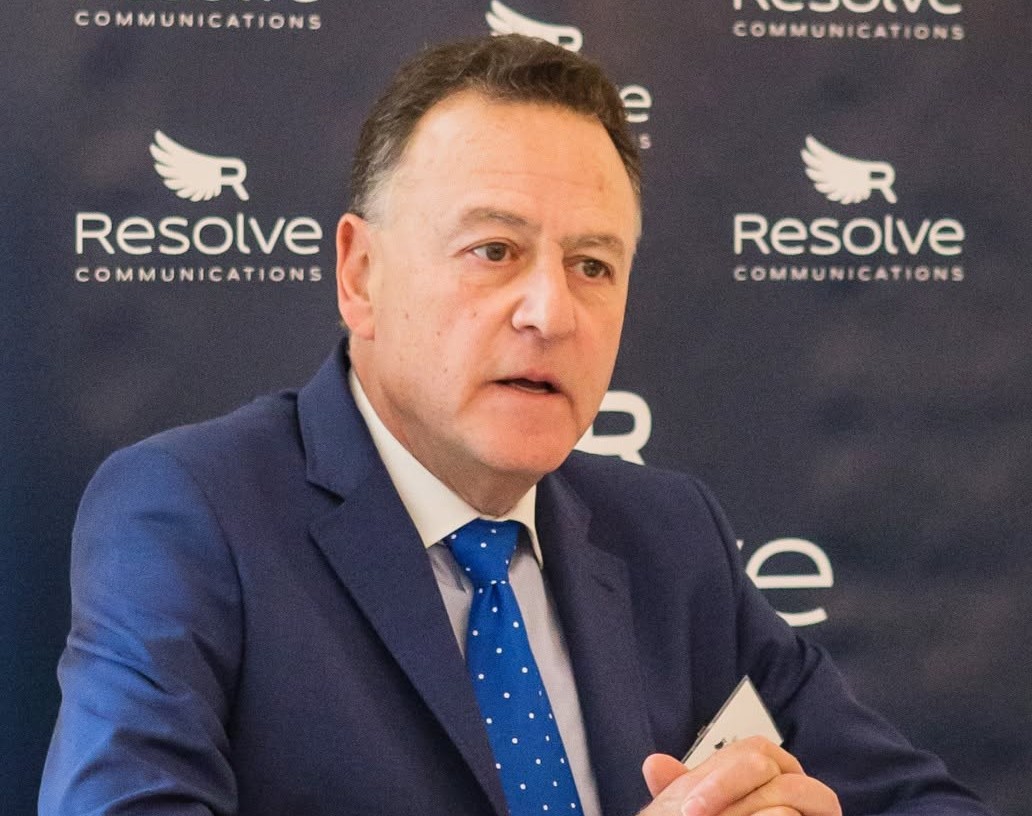
Leon critics confuse PR and corrupt influence

The attack by former Democratic Alliance (DA) leader John Steenhuisen on Tony Leon, executive chairperson of Resolve Communications, has highlighted the vast differences between the business of public relations, political lobbying, and attempted state capture.
Allegations that Leon used his political connections to influence government leaders have sparked questions about lobbying, transparency, and the ethical boundaries between politics and business.
“The Resolve allegations are about arranging meetings and advocating for clients, which is lawful representation, not deception,” says Tim Flack, a public relations expert. “You can question disclosure or conflicts and still see that the two are not the same species of conduct.”
Flack says many people incorrectly refer to lobbying, advocacy, public relations, and influence peddling interchangeably. “Public relations is managing an organisation’s relationships with government. Lobbying is directly making a client’s case to decision-makers, a legitimate activity that unions, churches, charities, and businesses all use. Advocacy is doing that publicly through campaigns and coalitions.
“Influence peddling is the corrupt one. It’s trading on connections for an improper benefit, usually in secret.” He says the distinction lies in transparency. “The first three persuade on the merits and are open about whom they represent. The last buys an outcome and hides it.”
The controversy emerged when Steenhuisen, after being removed as Minister of Agriculture, alleged that Resolve Communications, which is chaired by Leon and led by former DA chief executive Paul Boughey, had played a role in campaigns surrounding his handling of the foot-and-mouth disease outbreak.
ActionSA and other former DA office-bearers have since also accused Leon of using political relationships to advance clients’ interests, allegations that Leon and Resolve deny.
Resolve has issued a series of detailed public statements rejecting accusations of improper conduct, maintaining that its work falls squarely within accepted public relations practice. Leon has argued that helping businesses and organisations engage with government is both lawful and necessary in a constitutional democracy.
Communications and public relations professionals say the broader debate is really about understanding what lobbying is, and what it is not. Flack says comparisons between Resolve and Bell Pottinger, the British public relations firm disgraced for its work during the state capture era, fundamentally misunderstand both cases.
“Bell Pottinger ran a covert disinformation campaign for the Guptas, manufacturing the ‘white monopoly capital’ narrative, with fake blogs and sock-puppet accounts to inflame racial division,” Flack told the SA Jewish Report.
Michelle Blumenau, director of Turquoise PR, agrees that it’s an inappropriate comparison. “Bell Pottinger’s South African work involved a covert, purpose-built campaign that used fake social media accounts, bot commentators, and an invented white monopoly capital narrative designed to disguise whose interests were being served.
“Resolve is a firm representing named clients and seeking to arrange meetings with government decision-makers. There is no suggestion of fake accounts, invented narratives, or concealment of who the clients are.”
Blumenau says transparency remains the defining ethical principle. “Best practice means clearly identifying who you represent, being transparent about the outcomes you are seeking, and supporting your position with credible evidence rather than personal influence.”
She believes there’s room for improvement in the current regulatory framework. “There is no statutory lobbying register requiring firms or individuals to disclose who they are lobbying, on whose behalf, and on what issue, the kind of register that exists in the United States and European Union. A mandatory lobbying register would increase public trust.”
Political analyst Frans Cronje questions whether there is any evidence of misconduct by Leon. “What are the allegations actually, if you distil them? He has a firm that advised clients on dealing with the government and vice versa? That seems routine, normal.”
Cronje says genuine improper influence would involve criminal conduct rather than ordinary engagement between businesses and government. He argues that South Africa has sufficient criminal laws to prosecute corruption where it occurs. “The problem in the country is not Tony Leon and his firm. It’s people who bribe politicians. Their actions are clearly criminal. Prosecute them, and the country will be a better place.”
For Leon, the controversy has become about defending not only his own reputation but the legitimacy of the public relations profession. In public statements and media interviews, he has argued that businesses, trade unions, farmers, professional bodies, and civil society organisations have a legitimate right to present their views to government before policy decisions are made.
Resolve has denied every allegation made against it and insists that its work has always been lawful, transparent, and conducted within accepted ethical standards. Whether the current furore ultimately changes public perceptions of lobbying remains to be seen.







CJB
July 9, 2026 at 1:29 pm
Whatever Resolve/Leon may or may not have done, there is still no suggestion that DA (or other) ministers took or requested “gratification” in order to “achieve an unjustified result”. [The quotes are from the Corrupt Activites Act.
Meanwhile…
“Matthew Parks serves as the Parliamentary Coordinator for the Congress of South African Trade Unions …. He actively represents the federation’s interests in Cape Town. Parks frequently presents union stances on national budgets, public service legislation, and government appointments to Parliament”
This brazen lobbying passes without an eyebrow being raised or even twitched.
Chutzpah!