


OpEds
Behind the scenes at Limmud

Every time I find myself on a Ben Yehuda street in Israel, I think of how Eliezer Ben-Yehuda recreated the Hebrew language, a story I first heard at Limmud, from his great-grandson Gil Hovav, a popular food critic and TV personality. It was also at Limmud that I met Israeli journalist Haviv Rettig Gur, now a household name in the Jewish world, and spoken-word poet Vanessa Hidary, the “Hebrew Mamita” whose sharp wit and commentary on Jewish identity I still follow online.
These three luminaries all have Limmud in common. It’s the platform where Jews explore their Judaism in whatever form it takes and grow their own Jewish journey along the way. A broad tent, it’s where Jews of every denomination, political conviction, and level of observance can discuss and robustly debate their views, in good faith.
This past weekend, as Limmud celebrated its 20th anniversary in South Africa, I found myself thinking about just how many of these orators and thought leaders I’ve heard speak over the years, as well as my involvement with the organisation.
In the early years, I was asked to help with publicity. I specifically remember Joshua Neuman, the Los Angeles-based filmmaker, who at that time was editor-in-chief and publisher of Heeb magazine, a satirical Jewish cultural publication. I loved his brand of Jewish satire.
My recent involvement has been moderating discussions on Israeli politics, where commentators from Israel, representing vastly different political opinions, heatedly debate their views of what Israel should be doing.
This year, though, I was invited onto the executive. It gave me a new perspective. Obviously, a huge amount of work goes into a weekend conference. What I hadn’t grasped was the extent of devising a programme where each session includes as many of Limmud’s key tracks as possible: Israel, Jewish community, Torah, politics and current affairs, history, arts and culture, music, education, philosophy, and well-being and spirituality. It is a truism that the hardest part of Limmud is deciding which lecture to attend at any given time.
The committee does whatever it takes to ensure a diversity of speakers and views, including those of the “internationals”, whose own logistics are staggering to organise. There is also a programme specially tailored for children, from babies to young adults and everyone in between. All of this done in the confines of Shabbat. The marketing team is constantly in tow, as is the security team.
Should problems arise, as they invariably do, the committee and room monitors are able to trouble-shoot. They deal with everything from no-show presenters to too few chairs in a venue, to providing water for speakers, to sorting out technical problems.
The night before the conference, the venue is transformed into a Limmud space. Time passed so quickly that it seemed no sooner had the posters gone up than they had to be taken down, sorted, and put away for next year.
Most phenomenally, all of this is done purely by volunteers, whose commitment, passion, and vision in making the event special and meaningful is inspirational.
Then there’s the catering. I took a peek inside the industrial kitchen, kashered for the weekend, where Gary Friedman and G&T Caterers kept a continuous flow of delicious meals, snacks, and treats coming. There were moments I thought Limmud was worth attending for the food alone. There’s good reason Limmud has become the highlight of my Jewish calendar.
By becoming involved, I’ve realised that every volunteer has contributed as much as the speakers in making Limmud the success it is. I heard Ben-Yehuda’s story, met Rettig Gur, followed Hidary’s wit. Twenty years on, having played a small role in Limmud, I look forward to the next part of its journey.
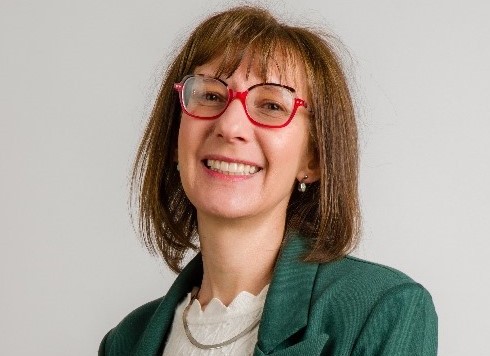
- Charisse Zeifert is the deputy director of the South African Jewish Board of Deputies.