


OpEds
Israel’s fateful election: A nation at war, a government in doubt

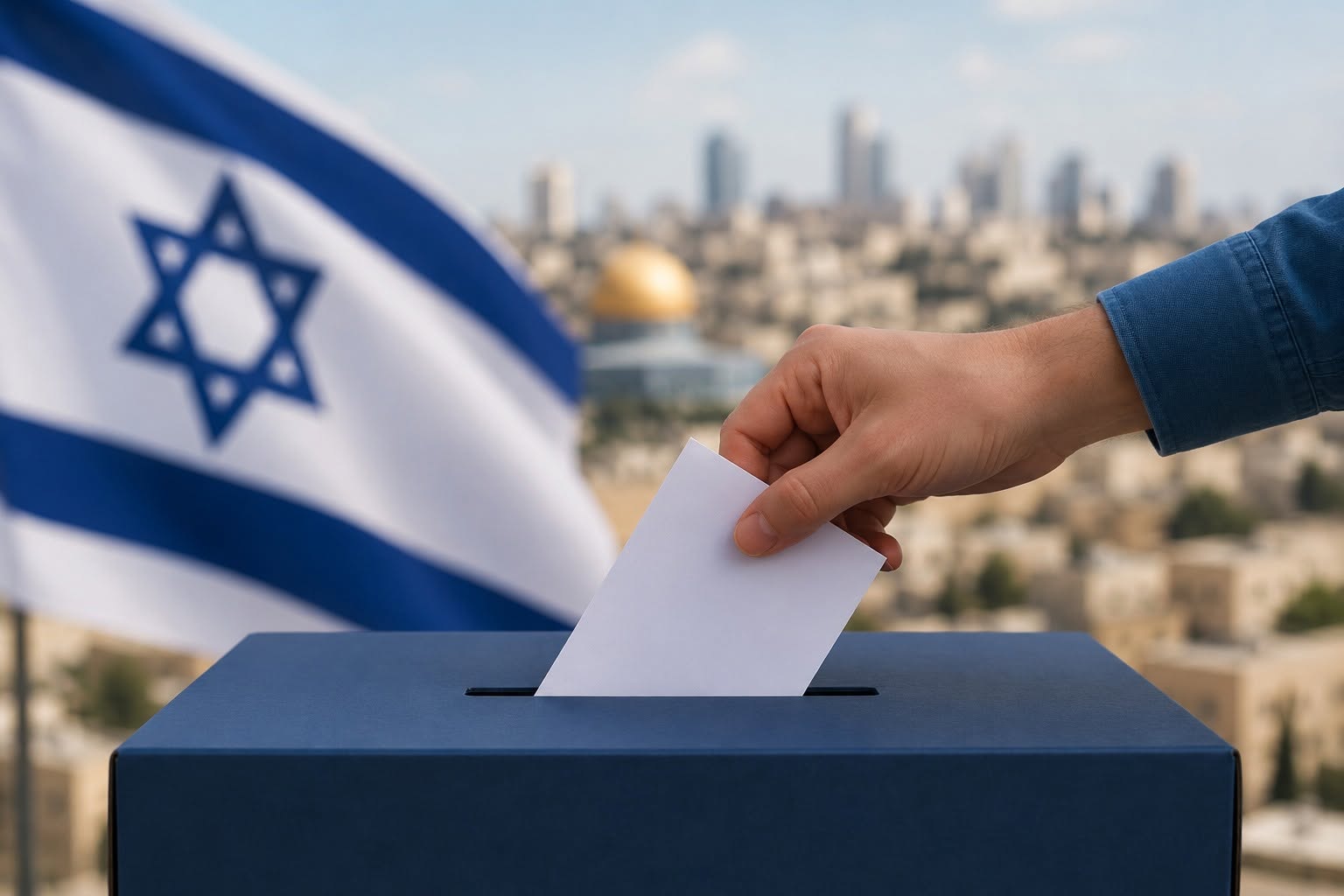
Israel is approaching one of the most consequential elections in its 78-year history. Unlike previous electoral contests dominated by economic concerns, judicial reform, or competing political personalities, this election is unfolding in the shadow of an existential, eight-front war against the Jewish and democratic state.
The stakes are even higher due to the sense of unprecedented antisemitism, defamation, and demonisation of Zionism and an inversion of moral clarity. The victim of genocide has been Nazified and placed in the defendants’ dock in the international court of public opinion. The moral inversion that’s gripped the international community, primarily in the West, has stunned even the most resilient and cynical Israeli thinkers.
The 7 October Hamas invasion and massacre represented the worst mass murder of Jews in a single day since the Nazi Holocaust. In American terms, the slaughter of approximately 1 200 Israelis would be proportionately equivalent to some 40 000 Americans murdered in 24 hours, roughly 13 September 11 attacks in a single day.
Yet the international response has produced a staggering inversion of moral and political legitimacy.
Israel, the victim of the worst terrorist invasion in its history, finds itself increasingly isolated, defamed, and delegitimised across much of the Western world. The world’s only Jewish State is routinely denounced as a genocidal, apartheid, and racist entity, while its enemies wage an increasingly sophisticated campaign to undermine its very right to exist.
This is not simply a public relations challenge. It’s the eighth front of Israel’s war, a multidimensional assault involving diplomatic, political, economic, legal, academic, media, and psychological warfare.
Whoever emerges as Israel’s next prime minister will inherit not merely a divided electorate, but an unprecedented struggle for the Jewish and democratic state’s international standing and legitimacy.
The principal contenders – Prime Minister Benjamin Netanyahu, former Israel Defense Forces Chief of Staff Gadi Eisenkot, former Prime Minister Naftali Bennett, and former Defense Minister Avigdor Lieberman – face the same fundamental challenge: restoring Israeli deterrence and public confidence while confronting an international campaign that increasingly questions Israel’s legitimacy.
With the election approaching, the political landscape remains deeply fragmented.
The critical question isn’t necessarily which party wins the greatest number of Knesset seats, but which political leader can assemble a governing coalition commanding at least 61 of the Knesset’s 120 mandates.
Recent polling scenarios suggest that neither a Netanyahu-led bloc nor a prospective alternative coalition led by Eisenkot’s Yashar party can confidently secure that majority.
Should neither political camp succeed in forming a government, Israel could enter another period of political paralysis, potentially requiring additional elections. Netanyahu would remain caretaker prime minister until a successor government is sworn in, although the existing coalition wouldn’t necessarily remain politically intact.
Three domestic issues are likely to prove decisive.
The first is the increasingly explosive controversy surrounding military service by ultra-Orthodox Jewish men.
After years of exemptions and deferments, growing numbers of Israelis are demanding a more equitable sharing of the country’s military obligations through across-the-board military service.
The issue has become particularly emotional following 7 October, as hundreds of thousands of reservists and their families have carried the enormous burdens of prolonged military service.
Public frustration has intensified over ultra-Orthodox political resistance to conscription, including confrontations surrounding anti-draft demonstrations.
For Bennett, Lieberman, and other political leaders, the demand for across-the-board military service has become a defining electoral issue, transcending the traditional divisions between Israel’s political right and left.
The second major issue is accountability for 7 October.
More than three years after the Hamas massacre, Israelis continue to demand answers about the catastrophic intelligence, military, and political failures that enabled thousands of terrorists to penetrate Israel’s defences.
The controversy surrounding an independent state commission of inquiry remains inseparable from the broader question of political responsibility.
The third, and perhaps most fundamental issue, is national security.
The recent terrorist incident in which a flydubai copilot allegedly attempted a September 11-style mass-casualty assault has heightened concerns about the vulnerability of Israeli civilians beyond the country’s borders. The incident’s circumstances and reported findings still require additional verification. But the results to date are clear. The terror pilot had flown into Israel before, raising questions about the security vetting and profiling of foreign pilots, particularly from Muslim countries.
For Israeli voters, such threats reinforce an overriding question: Who can be trusted to keep Israel safe?
That question extends directly to the future of Judea and Samaria, commonly referred to internationally as the West Bank.
Despite substantial disagreements over domestic policy and political leadership, Israeli Jewish public opinion has shifted sharply against the establishment of a Palestinian state following 7 October.
Surveys conducted by the Jerusalem Center for Security and Foreign Affairs over the past year indicate that approximately 68% to 72% of Jewish Israelis oppose Palestinian statehood under the circumstances examined.
For many Israelis, the prospect of another Hamas-controlled territory overlooking Jerusalem, Tel Aviv, and Israel’s narrow coastal plain represents an unacceptable strategic danger.
The next prime minister will therefore face a difficult dual challenge: defending Israel’s security requirements against international pressure for Palestinian statehood while rebuilding relationships with Western governments increasingly hostile to Israel.
Ultimately, this election is about far more than Netanyahu’s political survival or the ambitions of his challengers.
It’s about whether Israel can preserve its national security, democratic cohesion, and international legitimacy simultaneously.
Israel’s next government must understand that winning on the battlefield is no longer sufficient. The Jewish and democratic state must also prevail in the international battle over its legitimacy, sovereignty, and right to defend itself.
That is what makes this election among the most fateful in Israel’s history.
- Dr Dan Diker is president of the Jerusalem Center for Security and Foreign Affairs, diker@jcfa.org