


OpEds
Is Ireland supporting human rights or selective in its enmity?

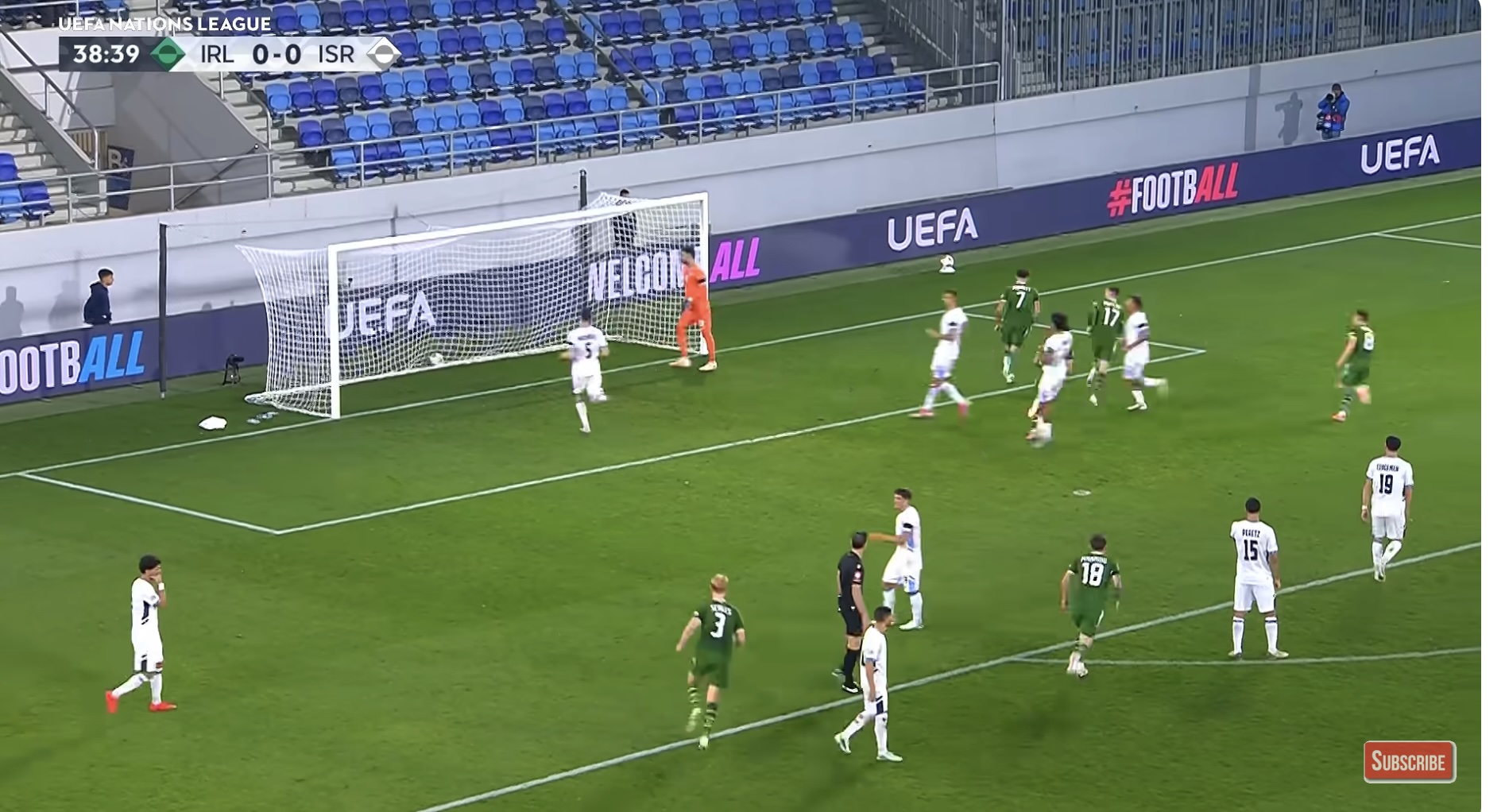
The recent Union of European Football Associations Nations League soccer matches between Israel and Ireland brought the relationship between the two countries into sharp focus. The matches were bad-tempered affairs, and were proceeded by the Football Association of Ireland (FAI) and the Irish national soccer team protesting Israel’s supposed human rights abuses in Gaza by taking the following extremely harsh steps:
- Moved the home fixture to neutral ground: The FAI relocated the match scheduled for Dublin to Serbia due to “security concerns”, public pressure, and a desire to avoid having the Israeli national team in the country. The second leg in Serbia was played behind closed doors.
- No handshakes or pennant exchanges: Ahead of the fixtures, the FAI informed Israel that the Irish players would not shake hands with their opponents or exchange customary pre-match pennants. This was probably the most odious of all the measures taken, as it moved the actions taken from criticism of Israel to slighting the players personally. In addition, the absurdity of this measure was that Anan Khalaili, an Arab-Israeli winger from Sakhnin, who played for Israel in the first match in Hungary, was similarly snubbed.
- Black armbands and anthem protest: The Irish players wore black armbands and bowed their heads in silence during the playing of the Israeli national anthem.
- Donation of match fees: The Irish players chose to donate their match fees to charity.
- Stripped-back broadcasting: The Irish national broadcaster, RTÉ, broadcasted the matches with stripped-back coverage, omitting the traditional studio analysis at half-time, and even going so far as to shun advertisements during the match.
- Player and staff stances: Goalkeeper Gavin Bazunu withdrew from the matches in protest, which left the Irish team with only two goalkeepers in the squad, one short from the standard three.
In addition, before the match even took place, more than 160 well-known Irish athletes and sports figures signed an open letter, organised by the Irish Sport for Palestine group, urging the football team to boycott the matches against Israel. It was only after an agonising debate among the players themselves that the matches even took place.
What made these actions particularly galling for Israel is the fact that Israel and Ireland are not at war, have never had any disputes over territory, or, indeed, any disputes, apart from Ireland frequently alleging that Israel is mistreating the Palestinians.
Even worse is the contrast with other countries that have fought wars, like England and Argentina, who still ensured that their players shook hands before and after their recent match in the World Cup semifinals this year. Similarly, the United States (US) and Iran have met twice in World Cups, in 1998 in France and 2022 in Qatar, and in both cases, handshakes were exchanged and the players were particularly warm to each other. For example, in the 1998 match the Iranian players gifted the US players bouquets of white roses as a symbol of peace, with the US team reciprocating with soccer pennants, and both squads breaking with standard procedure to pose together for a photograph.
It’s also important to note that Irish hostility to Israel predates the current Gaza war. Some notable incidents were:
- After Hitler committed suicide on 30 April 1945, Ireland Taoiseach (Prime Minister) Éamon de Valera, personally visited Dr Eduard Hempel, the German representative in Ireland, to express official condolences under Ireland’s strict policy of wartime neutrality. He was followed by the Irish President, Douglas Hyde, the next day. This action was widely criticised, with The Guardian newspaper calling it “one of the most embarrassing chapters in Irish history – its decision to maintain cordial relations with the Nazis even after news of the Holocaust emerged”.
- Although Ireland gave de facto recognition to Israel in 1949, it established full diplomatic relations only in December 1974, a full 26 years after Israel’s independence, having been, according to most reports, heavily influenced by the Vatican’s diplomatic position on Israel. When Ireland did finally establish diplomatic relations with Israel, it also recognised the Palestine Liberation Organization.
- Following the Six-Day War in 1967, Irish public and political sympathy shifted firmly towards the Palestinians, with Ireland frequently criticising Israel in multinational forums.
- More recently, the ongoing saga around honouring past Israeli President Chaim Herzog, who was born in Belfast and raised in Dublin before going on to become the sixth president of Israel, is telling. Herzog Park, in south Dublin, was named in his honour in 1995. In 2025, a campaign against the name was begun, and Dublin City Council attempted to remove the name in late 2025 following a push by councillors. The proposal was pulled in December 2025, but only on technical grounds, after the council’s chief executive advised of an error in the renaming process.
Some might argue that Ireland is simply committed to the defence of human rights and that Israel is being overly sensitive. However, a recent article in The Economist suggests otherwise. It details how Aughinish Alumina, a refinery in the west of Ireland, is supplying a significant portion of the alumina being used by Russia’s aluminium industry. It goes on to describe how its sales to Russia have surged since the war with Ukraine began in 2022, now totalling 68% of its exports. It goes further to detail how this alumina becomes aluminium that is used to make different weapons, from missiles to tanks.
The company apparently argues that without its sales to Russia, the plant would have to close, undermining Europe’s aluminium industry. However, The Economist counters this by showing that the European Union already imports most of its aluminium, and even if the plant stopped supplying Russia and was forced to close, Europe’s smelters could easily find alumina from other refineries in Europe. In fact, Aughinish supplies European smelters with only a very small amount of alumina. As The Economist says, this is very bad optics for Ireland.
The fact that the Irish government allows this to continue makes a mockery of its supposed commitment to human rights and leads many to question whether there are other factors at play in its strident and frequent hostility towards Israel.
- Baruch The Balanced is an attorney who can’t be named for professional reasons, but who also studied both politics and international relations at university.