Lifestyle/Community
Book discovery reignites musician’s extraordinary war story

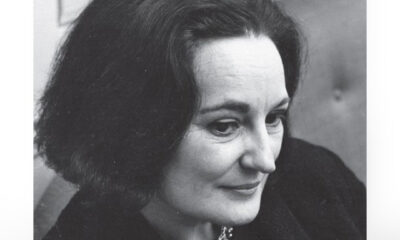
The former headmaster of Jeppe High School for Boys in Johannesburg and former manager of the Ruth First Jeppe Memorial Trust, Kevin Tait, was astonished to discover the story of acclaimed Jewish musician and former Jeppe Old Girl, Olda Mehr, in a book a friend found for him at a second-hand store. Mehr, who landed up being trapped by Nazis in Warsaw, was one of Jeppe’s most accomplished musicians.
Tait told the SA Jewish Report how his friend had by chance picked up a copy of The Piano War by South African author Graeme Friedman, believing that the book’s central character, Mehr, was a Jeppe Old Girl. He was right.
Tait then posted a picture of the book and an announcement on his Facebook page how “a chance discovery at a bookstore of The Piano War has uncovered the astonishing story of Jeppe Old Girl Olda Mehr who was surely Jeppe’s most accomplished musician ever. She came to Jeppe High School for Girls from Kroonstad High School where her family had lived before relocating to Kensington.
“She won a Unisa [University of South Africa] piano competition in 1937, and a scholarship to the Royal Academy of Music, leaving South Africa for London in July 1938,” said Tait of Mehr.
In London, she was given the singular honour as a first-year student of being selected to perform as a soloist at the Queen’s Hall under the baton of Sir Henry Wood, he said. However, her life then took an unexpected turn when she got caught up in the war while visiting family in Poland in 1939.
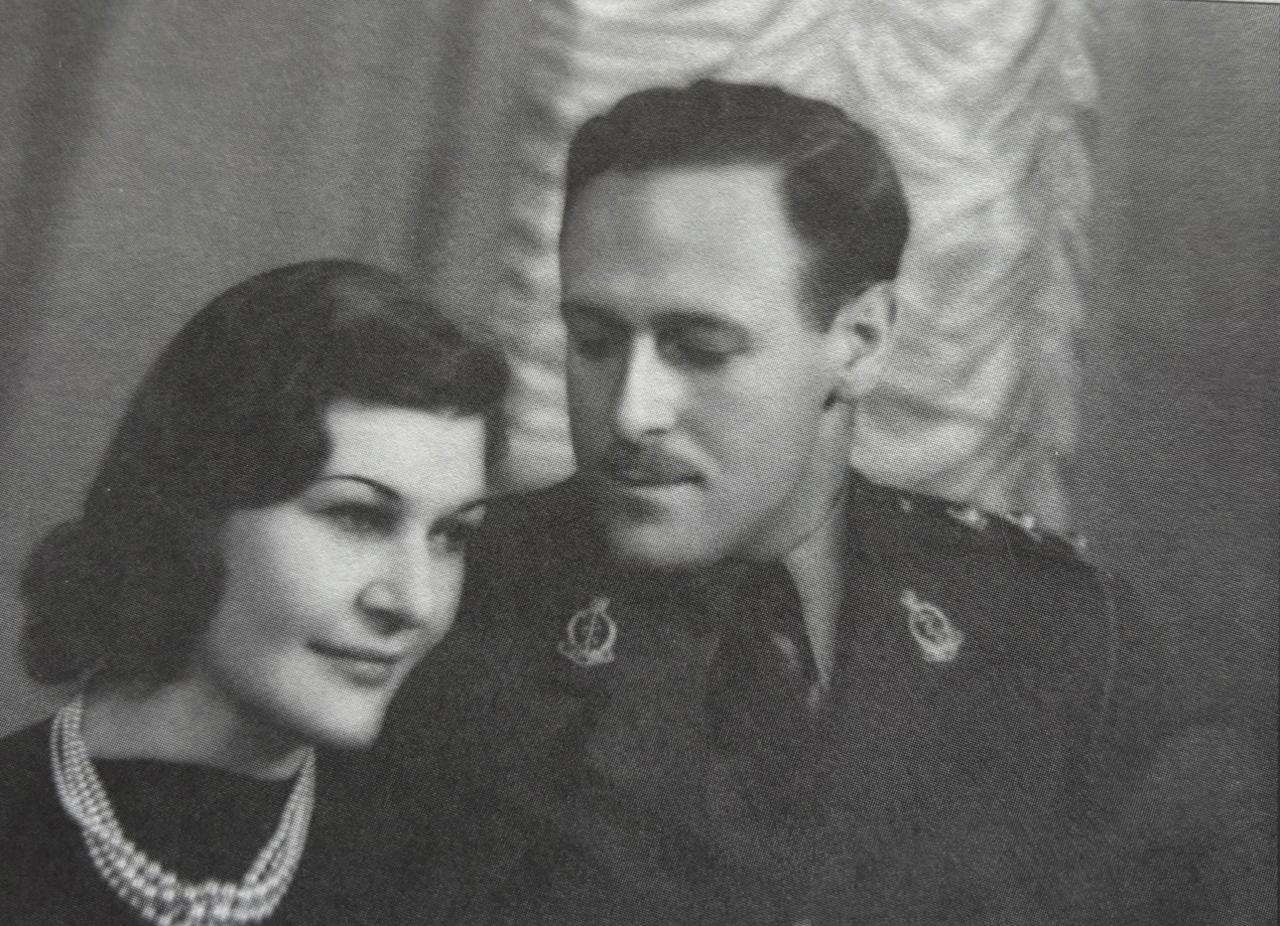
The Piano War is about Mehr and her sweetheart, Bennie Hermer, whose mutual love for playing the piano and music brought wonder to their extraordinary romance. They were impacted by World War II and the atrocities which occurred during the period.
It recounts the miraculous moment the couple were reunited after their ordeal – in Cairo in Egypt, of all places. He spotted her from his army vehicle as she walked down the street.
Tait said Mehr’s life embodied the saying, “Forti nihil difficilius” (Nothing is too difficult for the brave), the Jeppe motto. “Olda was quite something,” he said.
Friedman, who now lives in Australia, told the SA Jewish Report that he and his wife, Tracey, had been running a biography writing service called The Life Story Project, mainly for private publication. They were approached by the Hermer family many years ago to write Olda and Bennie’s story. “The couple’s story had made international news in 1942, and was bursting to be out in the world again,” said Friedman.
Mehr had already died by the time Friedman began writing the book, and he learned about her and her story through audiotapes of interviews and the oral history she shared with her children.
Hermer, however, was “very much alive and full of beans”, said Friedman. “Bennie had a treasure trove of material in a trunk tucked away at the bottom of a closet, including letters, photographs, and documents that revealed secrets even he didn’t know!”
Friedman told how he had interviewed the couple’s family members, and was lucky enough to track down someone who had served “up north” with Hermer. In addition, deep dives into archives in South Africa and England, with the help of several librarians, historians, and translators, also offered up gems.
“Bennie was a fabulous storyteller, such a lovable man,” said Friedman. “He’d be in the middle of describing a song he’d play on the piano for his fellow officers in the army and, despite an ever-present tremor, he’d get up and seat himself at the piano in his living room, and play the song for us.”
Friedman learned many wonderful secrets from Hermer about this period of history that he had not known before. “There was so much lived experience, for instance, of the ‘U-boats’; Jews in hiding; or the Catholic priests and nuns who defied the church hierarchy and the Gestapo to help Jews. The creativity and determination with which prisoners of war kept up their morale was also awe-inspiring.”
Friedman and Tait believe that the story told by The Piano War continues to be relevant today. “We find ourselves once again in a world where authoritarian, racist regimes are in the ascendency; where families are being ripped apart by polarised political views or worse; and by deportations or violence of one sort or another,” said Friedman.
“We need to remind ourselves that we have been through this before, and the forces of concern and care for others can prevail, that hope is alive in the deadliest of places.”
He said he would never forget how Hermer’s face was so alive with wonder as he described listening to Olda’s musical voice that it left him wondering whether he fell in love with the pianist first and the woman second.
The most striking part of the book is how the couple’s romance kept their hope going during the war while they were separated, and how their paths crossed again in an extraordinary coincidence, in Egypt.
After their unlikely reunion, they eventually married and settled in Bedfordview. Publisher David Rossouw wrote on Tait’s Facebook page that he remembered Dr Bennie Hermer’s rooms in Bedfordview and the pro-bono work he did at St George’s Home.
Sadly, after her trauma during the Holocaust, Mehr never performed the piano in public again. Friedman believes the psychological trauma of her experience and the losses she endured were behind her decision not to perform on stage again.
“The world missed out on an incredible performer,” said Tait. “Hopefully, telling her story will give her the stage she deserves.”
Friedman has stayed in contact with the family, even more so in recent weeks, as they are working with South African Jewish filmmaker Kevin Harris to create a docu-drama series on the book. “We are well into the early stages of the project and establishing ties with investors who share our vision for telling this remarkable story,” he said.
“Strangely, I received Kevin’s email enquiry when Tracey and I were in Warsaw not long ago,” he said. “More than two decades after the publication of the book, Kevin contacted me on the one day of my life I have spent in the city so central to the story. How to explain that?”