





World

Can SA offer anything to the Middle East?

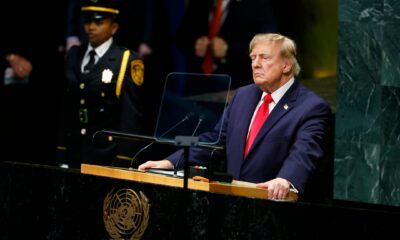
With a fragile Gaza ceasefire just about holding after two years of brutal war, the South African government still claims it has a positive role to play in the Middle East. However President Cyril Ramaphosa wasn’t among the many world leaders gathered for the flashy, made-for-TV ceremony to mark peace in Gaza laid on by United States President Donald Trump and Egyptian President Abdel Fattah el-Sisi in Sharm El Sheikh, Egypt, on 13 October.
Even Muslim states like Pakistan and Indonesia were present. This snub clearly indicates that the South African government has no role in the Israeli-Palestinian peace process.
When the Gaza ceasefire finally arrived, the South African government’s response to the Trump peace plan was tepid. Then Ramaphosa doubled down, continuing to lambast Israel for reducing aid trucks into Gaza and pressing ahead with the genocide case against Israel at the International Court of Justice (ICJ).
Chrispin Phiri, the spokesperson for the Department of International Relations and Cooperation (Dirco) told the SA Jewish Report, “South Africa remains deeply concerned that, despite the ceasefire, Israeli military operations have continued, including over 100 airstrikes targeting civilian areas. South Africa calls on all parties to honour their commitments. Hamas has released all living hostages, and must continue co-operating to ensure the dignified return of the remains of those who died in captivity.”
Phiri expressed sympathy for Hamas not being able to locate the dead hostages in Gaza’s chaos and rubble, but said, “These challenges do not absolve any party of its responsibilities under international humanitarian law. South Africa urges Hamas to continue co-operating in good faith to ensure the dignified repatriation of all remains, and calls for transparency in this process.”
Said Phiri, “South Africa’s commitment to justice and human rights is shaped by our own history of struggle against apartheid. We stand with the oppressed, and our support for the Palestinian people is rooted in principles of international law and shared humanity. We are ready to share our experiences in peacebuilding, transitional justice, and reconciliation, and to contribute meaningfully to efforts aimed at ending the conflict.
“South Africa continues to condemn the systematic violation of international law by the Israeli government, including the expansion of settlements, the blockade of Gaza, and the disproportionate use of force against civilians. These actions reflect a broader pattern of domination and dispossession that must be dismantled if peace is to be achieved. We stand ready to contribute to peacebuilding efforts, drawing on our own experience of transition.”
But critics have their doubts. Phiri sparred in the press with Ambassador Tony Leon, the former leader of the Democratic Alliance. Leon was clear that South Africa had “no role to play at all. It does not seem that Dirco has moved beyond sloganeering and posturing to offering anything of substance or an engaged and thoughtful plan for the Middle East and other global conflict areas.”
Free State University head of the Political Studies and Governance department, Professor Hussein Solomon said, “South Africa was never viewed internationally as a neutral partner, but as biased towards Hamas. So, less emphasis on hostages, and more on the suffering of Gazans.”
Former United States diplomat and writer J Brooks Spector said South Africa’s absence from Sharm El Sheikh spoke volumes about its irrelevance. “But rather than employing formal diplomatic efforts,” Spector said, “perhaps it’s possible that jointly with other nations, South Africans could pursue track-two diplomacy in pursuit of building common ground and better mutual understanding, despite the death and destruction that has occurred, or perhaps because of that and the possibilities, yet worse could come without some real trust building.” He also suggested that South Africa might “offer a symbolic contingent of security forces to serve as part of the planned stabilisation force for Gaza”.
Analyst Terence Corrigan said, “South Africa – here I mean the ANC [African National Congress] and its offshoot parties, and Dirco, which has been reserved as a closed mandate for the ANC – is entirely onside with the Palestinians. That was why the immediate response from Dirco to 7 October was to refer to an ‘escalation’ and to make it clear that this was 100% Israel’s fault. It was only after Israel retaliated and it felt that there was an equivalence of sorts, that it ventured any recognisable criticism of Hamas’s actions.
“South Africa has no experience of rival nationalism with a religious inflection, and very little with competing territorial claims,” Corrigan said. “Nor does it have some sort of exceptional ability to engage in dialogue. That’s a comforting national myth, but it’s a myth, and one rolled out for international consumption. Nor does South Africa have anything to offer in terms of inducements or security guarantees. It’s spent two decades alienating the US, and so it’s ensured itself a disinvitation from any efforts. And it has made its loathing of Israel so apparent, that as an interlocutor, South Africa is thoroughly repugnant to that side. Ironically, one minor role that South Africa might be able to play would be to help deliver the Palestinians to a compromise agreement. But there’s nothing like that in the offing that I can see, and South Africa’s positioning is such that it would never do that.”
Said Solomon, “Officially, South Africa can play no role since it’s not regarded as a neutral mediator. But there’s still a possibility of some moderate Jewish and Muslim voices in South Africa engaging with Israeli and Palestinian moderates to increase the middle ground for peace.”
Pretoria’s years-long hostility to Israel – and its difficult relations with Washington – have surely precluded it from playing a constructive role. South Africa cannot have its cake and eat it. Being so unabashedly partial to one side in this conflict will prevent it from mediating. The Israeli government would likely reject South Africa’s interventions, given its vituperative criticism and actions over the past three decades. No one said peacemaking was easy.




Louise Temkin
October 23, 2025 at 2:56 pm
Very good analysis by Gruzd.