Lifestyle/Community
‘Compassion has no borders’

For foreign nationals at the Lindela Repatriation Centre, the days are marked by uncertainty. But beyond the centre’s gates, a small network of mostly Jewish volunteers is determined to ensure those awaiting deportation are not forgotten. They provide practical aid and a reminder that compassion can reach even the most difficult places.
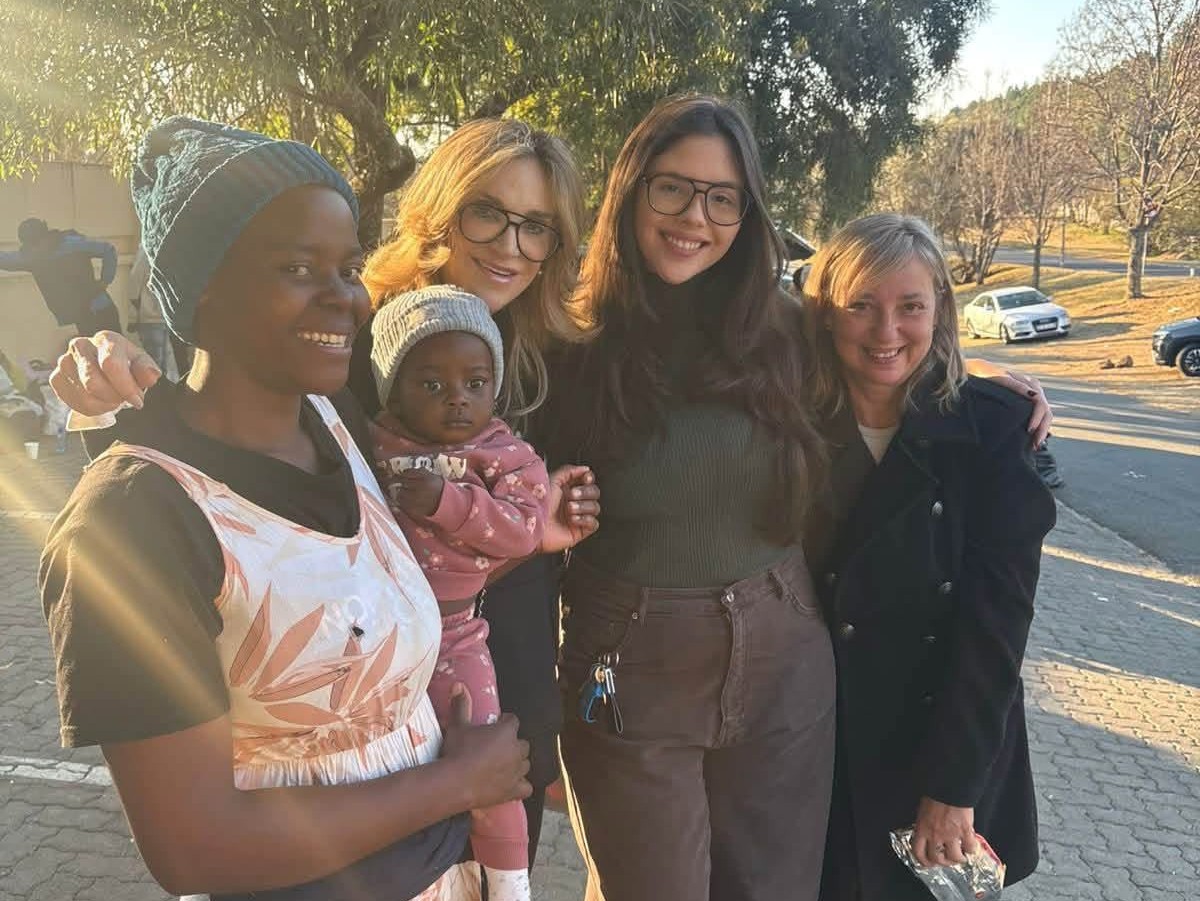
Joburgers Tayla Smith and Terri Maselle have taken it upon themselves to try to bring displaced migrants some comfort.
At the beginning of July, Smith, 25, posted on her social media that she would be visiting the Malawi Consulate in Woodmead, Johannesburg two days later with essential supplies, and inviting others to join her. Friends, family, and strangers came forward, and she raised R5 000.
Maselle, founder of The Good Human, a people-first recruitment agency, saw this post and immediately wanted to jump on board.
“For me, this wasn’t a difficult decision. Humanitarian work has been part of my life’s journey for many years. Through The Good Human, we have always believed that our purpose extends beyond helping people find employment. It’s about restoring dignity and offering hope wherever it is needed,” she said.
“I simply couldn’t walk away,” said Maselle. “These men, women, and children had been stripped of virtually everything they owned. They were sleeping in freezing conditions for days while waiting to be processed before being transported to repatriation centres. No human being should have to endure that without compassion from others.”
While at the consulate, Smith spent time speaking to Malawian nationals who were waiting for transport back home. “One conversation stayed with me,” she said. “A man named Thom shared how he had come to South Africa three years ago to find work so that he could support his children and his sick mother in Malawi. He had built a life here as a food delivery driver, but in the face of xenophobic attacks, he felt he had no choice but to leave everything behind and flee for his safety.”
Many of the people gathered at the consulate would be transported to the Lindela Repatriation Centre in Krugersdorp while funds were being raised for buses to take them home. It then became clear to Smith that the need extended beyond the consulate; there were vulnerable people arriving at Lindela who would also require support.
She started a larger donation drive, raising R15 000 in a matter of days.
Maselle also sprang into action to mobilise donations of food, blankets, clothing, toiletries, and other essentials.
“One of the most inspiring aspects has been watching people from different faiths unite around a common purpose. Jewish, Christian, and Muslim communities have worked side by side, demonstrating that compassion transcends religion, culture, and background,” she said.
“When I arrived at Lindela, I expected to distribute supplies to Malawian and Zimbabwean nationals preparing to return home. However, I noticed a small group of people standing quietly apart from everyone else. When I approached them and asked why they weren’t collecting supplies, one person softly replied, ‘We are refugees. We will come afterwards and take whatever is left’,” Smith said.
She was even more shocked to find that 23 refugees from the Democratic Republic of the Congo, Burundi, and Ethiopia had been living at Lindela for seven years.
“I spent the remainder of the day listening to their stories and trying to understand how they had ended up there. Each story revealed unimaginable hardship, loss, and resilience,” she said.
“What struck me most was the reality of their daily lives. Many struggle to afford even the most basic necessities such as soap, toilet paper, and sanitary products. One woman showed me how she tears strips of fabric from her clothing to use during her menstrual cycle because she cannot afford sanitary pads. She washes and reuses the same fabric repeatedly because she has no alternative.”
Smith believed it was necessary to step up because she believes that regardless of where people come from, no one should feel invisible or abandoned in their most vulnerable moments.
“For me, helping was never about solving every problem. It was about restoring a sense of dignity, offering practical support, and reminding people that they are not alone. These refugees have been silently suffering for years, so for me, simply offering them space to talk about their struggles instilled hope in them. Sometimes the simple act of being seen, heard, and treated with kindness can make an enormous difference,” she said.
Over the past two weeks alone, Smith and Maselle have assisted thousands – between 250 and more than 1 000 people on any given day – through the distribution of donated food, clothing, blankets, and essential supplies.
As the situation continues to evolve, those numbers grow, and the support now extends to additional vulnerable refugee groups who require urgent humanitarian assistance.
While both women have been criticised for not focusing exclusively on South Africans in need, they believe their efforts aren’t about politics but rather humanity.
“When people are cold, hungry, traumatised, and have lost everything, our first responsibility is compassion. We’re not taking sides in a political debate; we’re responding to human suffering,” said Maselle. “I believe that helping another human being doesn’t diminish anyone else. Kindness has no nationality, and compassion has no borders.
“One of the biggest lessons this experience has taught me is that empathy is not a weakness; it is a strength. The incredible generosity I have witnessed has shown me that compassion is contagious. When one person chooses to care, it often permits others to care as well.” she said.
“One of the most profound lessons I have learned through this experience is the power of social media to amplify empathy. By sharing the stories of people who are suffering, we allow others to see beyond statistics and headlines and connect with individuals on a human level. I have watched strangers come together to support people they have never met, simply because they were moved by their stories. It has reminded me that awareness can inspire action, and that collective kindness has the power to change lives,” Maselle said.