News
ISIS-inspired murderers convicted in SA

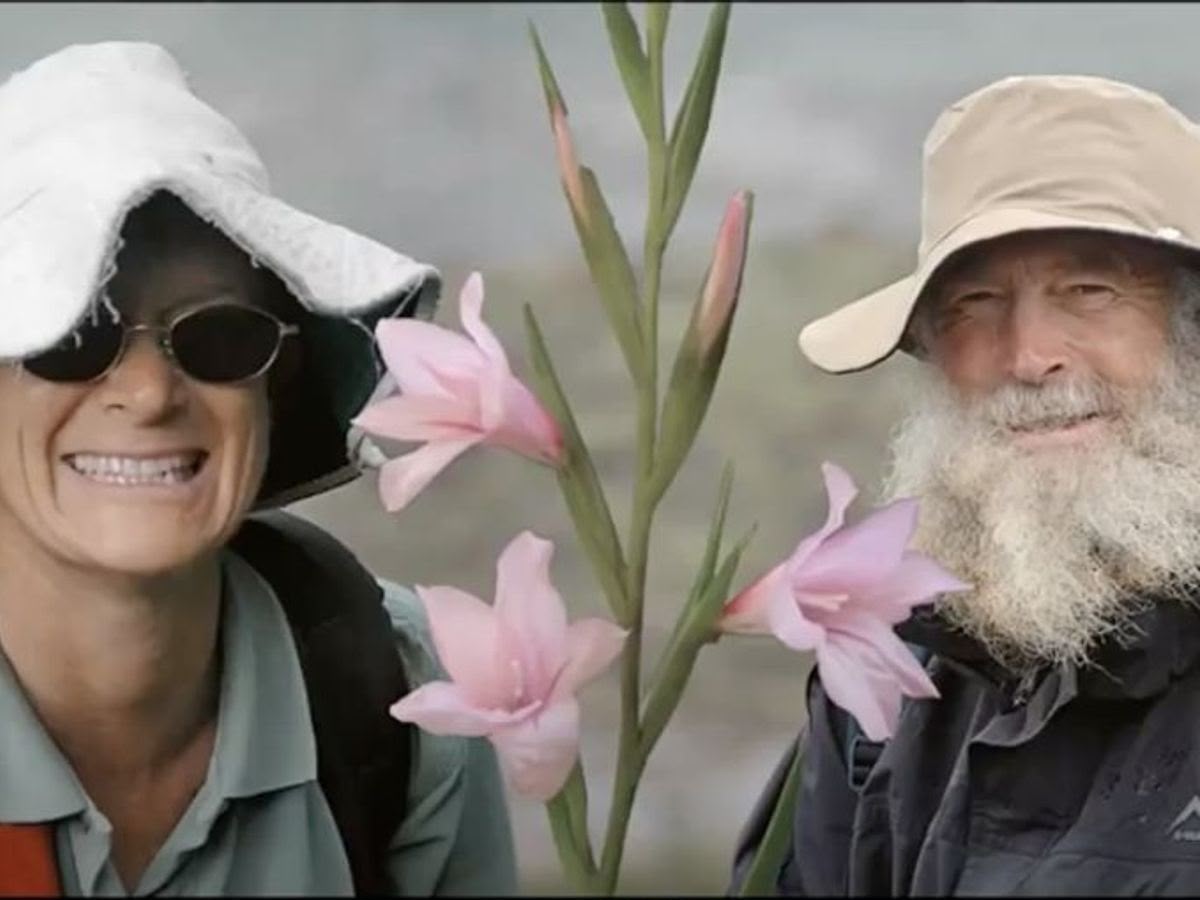
More than eight years after British botanists Rodney (74) and Dr Rachel Saunders (63) were slaughtered in KwaZulu-Natal, three people have been found guilty of kidnapping, robbing, and murdering them.
The couple were beaten, tortured, and stabbed in a 2018 attack likely inspired by Islamic State (ISIS), and their bodies thrown into the crocodile-infested Tugela River. It took three forensic experts and dental records to identify the remains, found more than a week later.
On 10 June 2026, the KwaZulu-Natal High Court convicted Italian-born Safydeen Aslam Del Vecchio, his common-law wife, Bibi Fatima Patel, and their accomplice, Mussa Ahmad Jackson, of double murder, kidnap, robbery, and theft. Judge Esther Steyn said the state had proven beyond reasonable doubt that the trio kidnapped, tortured, and murdered the elderly couple. An amount of R700 000 was taken from the Saunders’ bank accounts, and the investigation established that some of the money was to be used to fund an ISIS-inspired terror training camp.
During the investigation, the trio were accused of contravening the Protection of Constitutional Democracy Against Terrorism and Related Activities Act (POCDATARA) by hoisting the ISIS flag and having ISIS material in their possession. The Saunders’ murder prompted the British government to issue a travel advisory about possible terrorist attacks on foreign nationals in South Africa.
The court heard that Del Vecchio identified the couple as a “good hunt in the forest” in a WhatsApp message to the others, describing them as a “target” and “prey”. He wrote, “Kill the kuffar [non-believers]. Put fear in the heart of the kuffar. When the brothers go out and do this work it is very important that the bodies of the victims are never found.”
The Saunders couple moved to Cape Town from the United Kingdom in the 1970s and ran a world-renowned indigenous seeds store. Rachel’s father was Jewish, but non-practising. The two were searching for rare seeds in the Ngoya Forest when they disappeared. Days later, armed police arrested Del Vecchio and Patel in Vryheid, about 320km north of Durban, after a raid on their remote hideaway.
During the investigation, an affidavit revealed Del Vecchio had advised an acquaintance via Telegram about bomb-making. A manual called a “MujGuide” was also recovered on a digital device owned by Del Vecchio. “This manual provides highly relevant detail on how to carry out a terrorist attack, including bomb-making,” read the affidavit.
The murder was linked to ISIS internationally. In August 2018, a suspect known as “Mohammed G” appeared in the Rotterdam District Court accused of being a member of a terrorist organisation and trying to purchase Bitcoins using Rachel’s credit card details, according to Dutch news network NOS. He also had the contact of the highest-ranking ISIS spokesperson on the African continent, Mohamed Abdi Ali, in his possession. The Federal Bureau of Investigation reported that Ali had received instructions from ISIS leadership in Syria.
NOS reported that Mohammed G was familiar with Del Vecchio and Patel.
Furthermore, Del Vecchio and Patel were both already on South African security force’s watchlists. Del Vecchio was caught observing planes at Durban’s King Shaka International Airport more than two years before the murders. Patel was originally arrested with the Thulsie twins but then released. The twins were arrested in 2016 in what was believed to be the advanced stages of planning attacks against Jewish and Western targets in Johannesburg. They were jailed and released on early parole.
Despite all this, the trio wasn’t convicted of terrorism.
Willem Els, senior training coordinator on terrorism at the Transnational Threats and International Crimes Programme at the Institute for Security Studies in Pretoria, says this is quite contentious.
“For some reason, the National Prosecution Authority decided not to file any charges on the POCDATARA Act, our counterterrorism legislation, against these people,” says Els.
He thinks it would have been a “much stronger message” if they had also been charged in terms of the Act. “Even though the POCDATARA Act had some loopholes that have since been addressed through the Amendment Act, I think they would have still gotten a very good strong conviction on these cases, for all three of the perpetrators.”
While “there is an intention of ISIS and other terror organisations to be active in South Africa”, in most cases, terrorist organisations focus on fundraising and terror funding, as opposed to attacks, says Els.
He thinks the Saunders case conviction is “a victory against crime” but “could have been a major victory against terrorism. I believe we could have secured some very strong convictions there.”
He says South Africa is still under pressure regarding terrorism, because some South African individuals were designated [for terrorism] by the United States Treasury in the last few years, and because the Financial Action Task Force (FATF) greylisted South Africa in 2023.
Even though it has since been taken off the list, “South Africa still must demonstrate that it’s on the right track and it’s fulfilled the Immediate Outcomes (IOs) in terms of the FATF. The final assessment is still coming. We can move back onto the list at any time if we aren’t consistent in upholding and fulfilling these IOs.”
This happened to Angola, which is back on the greylist for the second time. “South Africa cannot afford that,” says Els.
CSO Gauteng chief executive Liron Sanders says “there are definitely terror cells operating within South Africa”.
However, to what extent, and what exactly they are doing here, “is not certain. It would appear that a large portion is related to terror financing rather than terror acts locally.”
He says the community doesn’t need to be more concerned than usual. “When and if community members do need to be concerned, we will tell them. As always, awareness and knowing your surroundings is vital, alongside reporting anything suspicious to CSO.”
He thinks the conviction is “a victory for the justice system as a whole”.
An expert on terrorism in Africa, Professor Hussein Solomon, says that money raised by terror organisations in South Africa “funds practically all ISIS franchises on the African continent”, and two of the favourite means of securing funds in South Africa are kidnapping and extortion.
Despite this, Solomon doesn’t believe that South Africa is serious about terrorism.
He says he has always argued that South Africa could learn from the French model, “where there are special courts dealing with terrorist incidents, even where there’s an overlap between criminality and terrorism, because we know the linkage between organised crime and terrorism”.
In these courts, “there are specially trained magistrates who work with the police investigating team to ensure a conviction”.
Ryan Cummings, an expert on terrorism, conflict, migration, and political instability in Africa and director of Signal Risk, says the Saunders’ murder “does tie into Islamic extremism, specifically with reference to the Islamic State, which I believe that the assailants pledged an oath of allegiance to, according to reports at the time”.
He thinks the case highlights that there are individuals in South Africa that harbour extremist sentiments of a religious nature, and “South Africa has long been considered a hotbed for extremism”.
Cummings agrees with other experts that at this point, “it’s more logistical and financial, with groups using criminality as a means of funding terrorism abroad”.
There have been at least three ISIS-inspired attacks or foiled plots in South Africa. The first involved the Thulsie twins and the second the Saunders killings. In the third, also in 2018, an ISIS-affiliated cell was arrested after carrying out an attack on a Shia mosque in Verulam, KwaZulu-Natal, and planting incendiary devices around Durban.
Police also reportedly seized ISIS-related materials and a massive cache of weapons during a search of a property in the Kliprivier area, south of Johannesburg, in 2020, in response to the kidnapping of a 72-year-old Indian national. That case is ongoing.
In the Saunders case, the accused pleaded not guilty and opted to remain silent. Del Vecchio and Patel refused to leave the holding cells below the court to hear the judgment being handed down.
The case has been postponed to 19 June 2026 for sentencing proceedings. Under South African law, the perpetrators will face mandatory life sentences. All three remain in custody. A fourth suspect, who was found to have bought cellphones belonging to the Saunders but was not involved in the kidnapping and killing, was given a suspended sentence in return for vital evidence.