





SA
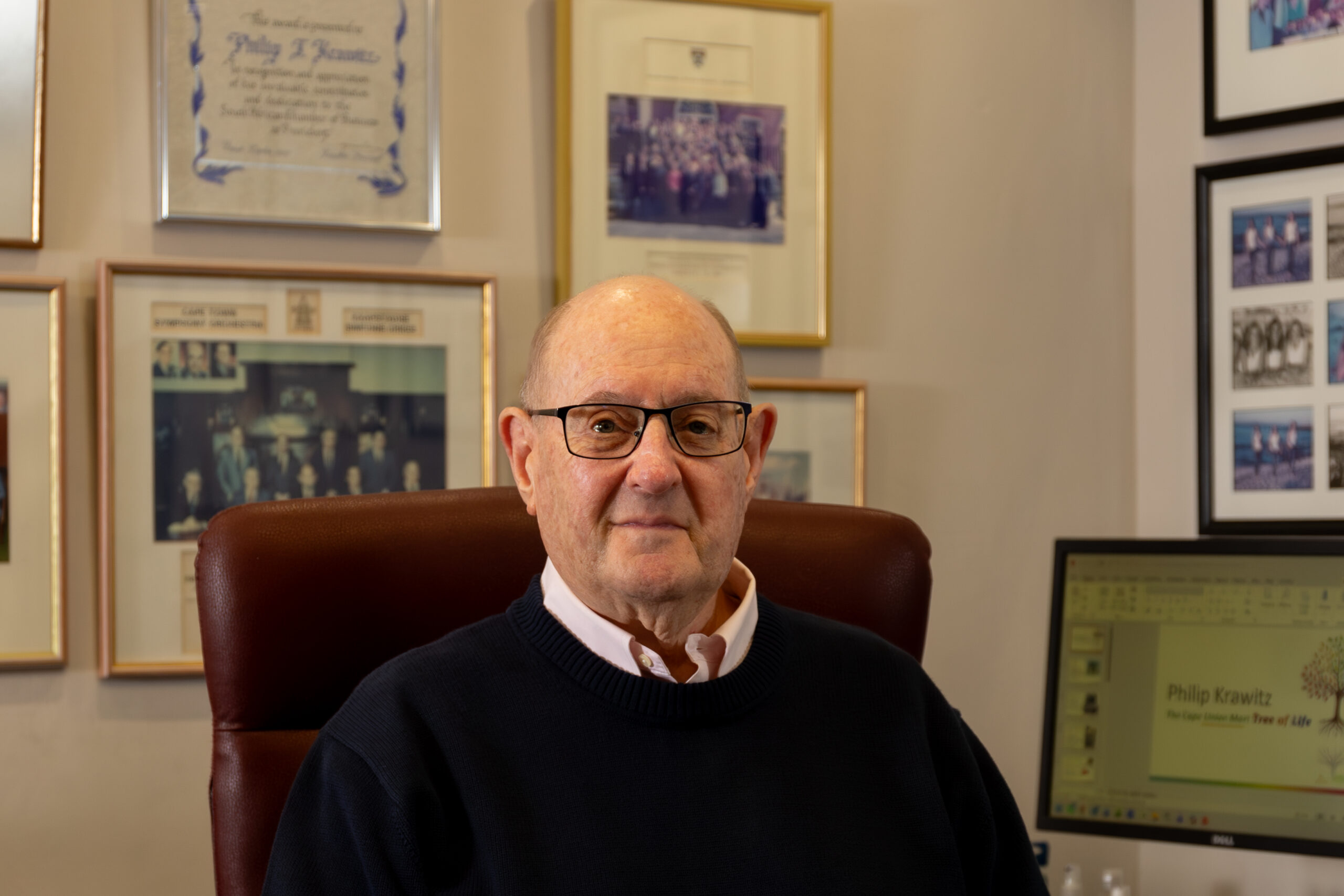
Krawitz: A voice for South African Jews

When community and business leader Philip Krawitz received a victorious judgment from the Western Cape High Court last week, a moment from 32 years ago came to his mind. “I clearly recall newly elected President Nelson Mandela addressing the Jews of Cape Town at the Marais Road Shul, on the first Shabbat after the 1994 elections.”
Krawitz said that Madiba told the community to “‘stay home or go home’ implying that he understood the centrality of Israel in the lives of Jews, and our right to ‘go home’ if we decided to make aliya”. “However, he also made the point that if we were thinking of emigrating to anywhere other than Israel, we should ‘stay home’ and help build South Africa.”
This is what Krawitz’s family has done through Cape Union Mart, the business his grandfather, also named Philip, first opened almost 100 years ago. Today, the retail group employs more than 3 000 people and has more than 250 stores across its brands.
Speaking to the SA Jewish Report in his first interview since the judgment was handed down on 4 September, Krawitz explains why, as a proudly South African business, he went to court to interdict defamation and lawless protests.
“If we don’t stand up for our Constitution and the rights provided to every South African, then our democracy will be severely compromised,” he says. “We have the right to freedom of belief, and the right to operate businesses in a safe environment.”
The judgment “vindicates our faith in the judiciary and the independence of South Africa’s law courts. It is also a triumph for democracy: it endorses the right to protest, providing the protests fall within the ambit of the law. That is a policy we have always respected and held dear.”
For almost three years the Palestine Solidarity Campaign and its supporters have staged protests outside Cape Union Mart stores and defamed Krawitz, accusing them of complicity in a “genocide” in Gaza, including the killing of babies.
Krawitz says he and his team are delighted that the judge has ordered the protesters to stop making defamatory statements about him as executive chairperson of Cape Union Mart, the company, and its brands.
Considering the wide-ranging judgment “covering every argument that we put forward, we feel it might have been more appropriate to award costs in our favour, rather than having each party cover its own costs”, he says.
Recalling Mandela’s words to the community, he says, “I was there when he made those remarks, and I will never forget them. We therefore felt it important to take a stand against those trying to badger us into cutting our connection with Israel. For that reason, we decided to say, ‘So far, and no further!’ Thank heavens, we have a Constitution and judges who endorse that right.”
While Krawitz emphasises that the right to protest “is a fundamental democratic right enshrined in our Constitution”, he says “the court has made an extremely important point, expressing that pre-emptive to the right to protest is the right to dignity and respect. Apart from contravening numerous aspects of the Gatherings Act, the protesters continued to propagate lies.”
Providing that protests are within the law, and are based on fact, “we have no argument against their legal right to protest”, says Krawitz. But it is “grossly unfair to target companies because of any perceived affiliations with which people may not agree”.
Shopping centres like the V&A Waterfront and Canal Walk allowed protests to continue after the judgment was handed down. Regarding this, Krawitz says, “We have excellent, long-standing relationships with all the shopping centres in which we are tenants. We pay our rentals on time, and expect that we should have unimpeded access to our premises in environments where shoppers feel comfortable and relaxed.”
Cape Union Mart has already been in touch with landlords of certain centres and provided them with copies of the judgment. “We will be discussing a way forward with them in the near future.”
Krawitz says that Cape Union Mart employees have been “absolutely amazing” in dealing with the protests and targeted harassment. They are Jewish, Muslim, Christian, black, white, straight, and LGBTQI+, and “they have worked together in the same harmonious spirit that has permeated our company through nearly a century. They have been at the frontline during this conflict, and we are extremely grateful to them for their loyal support.”
Cape Union Mart is a family business and “has always been the extra guest at our Shabbat table”, quips Krawitz. “We are an extremely close family, and we have all been united around handling this very unpleasant challenge.”
He says he is extremely proud of his daughter Martine Vogelman, “who has been at the forefront of our measures to counter the lies and unlawful actions that we’ve faced”. Her indignation at the slurs against her parents “sets an example for the next generation to pursue”, he says.
She has been joined by in-house head of legal, Simone Sulcas, and the two have ensured that rather than knee-jerk reactions, the family and the business have acted within the bounds of the law.
Since the judgment was handed down, Krawitz has received “more than 500 messages from all over the world, congratulating us. People who I barely recall have reached out, thanking us for standing up.”
He says it’s been “a long, and expensive battle, but the world should know that Jews will never again be singled out for discriminatory treatment because of their moral and religious affiliations”.
He extends “a huge thank you to everyone who supported us every step of the way, and especially to Martine, Simone, and our legal team”.
The Krawitz family has always been “proudly and openly Jewish, while fiercely protecting our privacy as an unlisted family business. Attempts to intimidate our family were an example of punching below the belt”, he says.
From his earliest days in business, “religion was a non-issue”. Staff, suppliers, and customers ran the full gamut of religious practice. He clearly remembers having to rent premises in his name for the company’s Muslim tailors, who were not permitted to rent premises in white areas.
“I numbered many Muslims among my circle of friends,” says Krawitz. “I always hoped that here in South Africa, we could show the world how we all live in a spirit of mutual respect and cooperation. We cannot solve the challenges of the Middle East. We can, however, show how Jews and Muslims live side by side in South Africa.
“I still harbour that belief, and hope that we can put the conflict of the past few years behind us, and show the world how we are still the Rainbow Nation.”






Sue Hepker
September 10, 2026 at 3:38 pm
What everyone admires about Philip is his unwavering bravery: the leader of the Palestinian Solidarity Campaign was a convicted thug, and his followers were supported and paid by the Iranian regime. Murder was always an option for those who stood up to them. Philip’s fearless stance makes him an important role model for young Jews worldwide. It took courage to do what he did. I salute him!
Peter Shrock MD FACS FAAP(Surg))
September 12, 2026 at 12:21 am
lol Hakavod to you! Wishing you a כתיבה וחתומה טובה!