



Lifestyle/Community
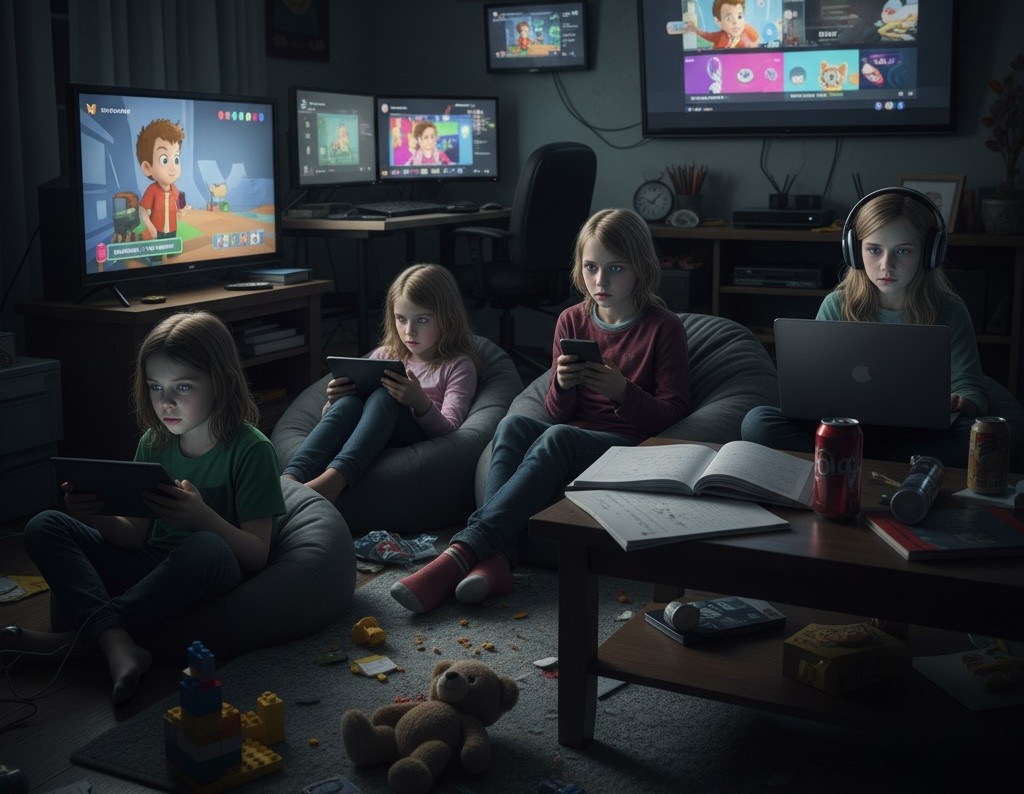
Limit screen time, whether children are ADHD or not

“Brains don’t like it. It’s not a healthy, happy thing for a brain to have too much screen time.”
So said Dr Jess Meddows-Taylor, a Johannesburg-based psychiatrist with a special interest in child and adolescent mental health, in a webinar about the effects of screentime on children with or without Attention-Deficit/Hyperactivity Disorder (ADHD) on 18 June.
She explained that mental health professionals are concerned that childhoods have gone from being play-based to being screen-based.
“There are big problems with that because our kids aren’t taking risks, they’re not learning social skills, they’re not developing resilience. And I, for one, can look at the world around me and think we pretty much need resilient people if we’re going to survive,” said Meddows-Taylor.
“So when they’re much younger, it’s all about cooperative play and emotional regulation. The older they get, the more it’s about conflict management, independence, learning to take turns, how to manage engaging with people when they’re in your presence, the social nuances, resilience in social experiences, and emotional management and autonomy,” she said.
But as a result of too much time on screens, many adolescents from 11 to 14 years old don’t have social skills and would rather stay at home on a screen than be out with other children their age.
“That’s a disaster for humankind because they don’t know how to relate to each other. They don’t know how to make conversation. And it’s what’s making them sad and depressed because we are supposed to be social creatures, and we are choosing not to be.”
Meddows-Taylor explained that while screen time affects all children, its impact can be more pronounced in children with ADHD because of differences in how their brains regulate dopamine and process rewards. ADHD is associated with challenges in the prefrontal cortex and limbic system, which can affect concentration, memory, impulse control, and the ability to manage behaviour. As a result, children with ADHD may be particularly vulnerable to the highly stimulating and rewarding nature of digital devices.
“As a result, our kids sometimes battle with impulsivity because the brakes of their brain aren’t working properly. So we don’t stop to think before we do things. We don’t stop before we jump up and shout out in class or say something blunt and sometimes hurtful to our friends,” she said. “We can be involved in risk-taking behaviours, and with that we can become quite dysregulated emotionally because the frontal lobe isn’t putting the brakes on how we respond and how we control our emotional state.
“We noticed that if the child has more than two hours of screen time a day and they’re younger than seven years old, there’s a significant clinical worsening in impulsivity and mood dysregulation. Now, imagine we’ve got an ADHD kid, who’s already got challenges in that area, just how problematic it becomes,” she said.
The more children use screens and are bombarded by loud colours and sounds, the more dopamine is being released, she explained.
“The issue is that [devices] have been made to produce dopamine. They’ve been developed to be as loud and busy and interactive and pleasure-producing as they possibly can be. We know that the more pixels that you have per square centimetre, the more vivid the imagery is, and we know that the more vivid the imagery is, the more dopamine gets produced.”
She said the worst offenders are anything with a reel ‒ YouTube Shorts, TikTok, and Facebook and Instagram reels.
“Reels are the worst. Interestingly, we all think that YouTube Kids is quite innocuous. It’s made for kids. But there are lots of bright lights and noise and busyness. Lots of dopamine,” she said.
Next on the list are any video games on a console, then other games and other apps. Short video streaming like Netflix is second from the bottom. And TV streaming is the least likely to cause dopamine release.
“Interestingly, books don’t necessarily give you a huge amount of dopamine, although you should be enjoying them. But in relation to something like TikTok, you can see the changes in dopamine in the brain,” she said.
“Dopamine systems in children’s brains are particularly concerning because their brains are very dopamine sensitive. This isn’t just ADHD kids; these are children in general. They have huge and very high receptor densities for dopamine receptors in the brain,” said Meddows-Taylor.
Once that dopamine rush stops and a screen is no longer available, children immediately get bored. However, Meddows-Taylor asserts that boredom is actually extremely important for development.
“Boredom is the seed of huge creativity for children. But what happens is that if kids are used to having lots of dopamine, not having enough doesn’t feel nice. It’s an uncomfortable feeling. How am I going to entertain myself? This feels a little bit unsettling for me,” she said, “Kids need to be bored. They need to learn how to entertain themselves because when they learn how to do something and entertain themselves, the wonder of accomplishment and creativity is incredibly important.”
She said weekday screen use should be limited where possible for children with ADHD, as the highly stimulating nature of digital devices can make it more difficult for them to transition to tasks that require sustained focus and motivation, such as homework.
Meddows-Taylor said parents should focus on shared activities rather than passive supervision of screen-based games and should give children a warning when it’s time to stop using devices. Abruptly ending screen time can leave children dysregulated and frustrated, so she advises parents to remain calm during transitions.
She also stressed the importance of encouraging children to spend more time playing and connecting with friends in person. Above all, she recommends delaying the introduction of personal devices for as long as possible, as younger children’s brains are particularly sensitive to their effects.
“All is not lost because this neuroplasticity means that we have the capacity to rechallenge that brain, to teach it to do things differently. So wherever possible, we need to make the changes early. We’re not going to beat ourselves up if we don’t get it right every day,” she said.