





OpEds
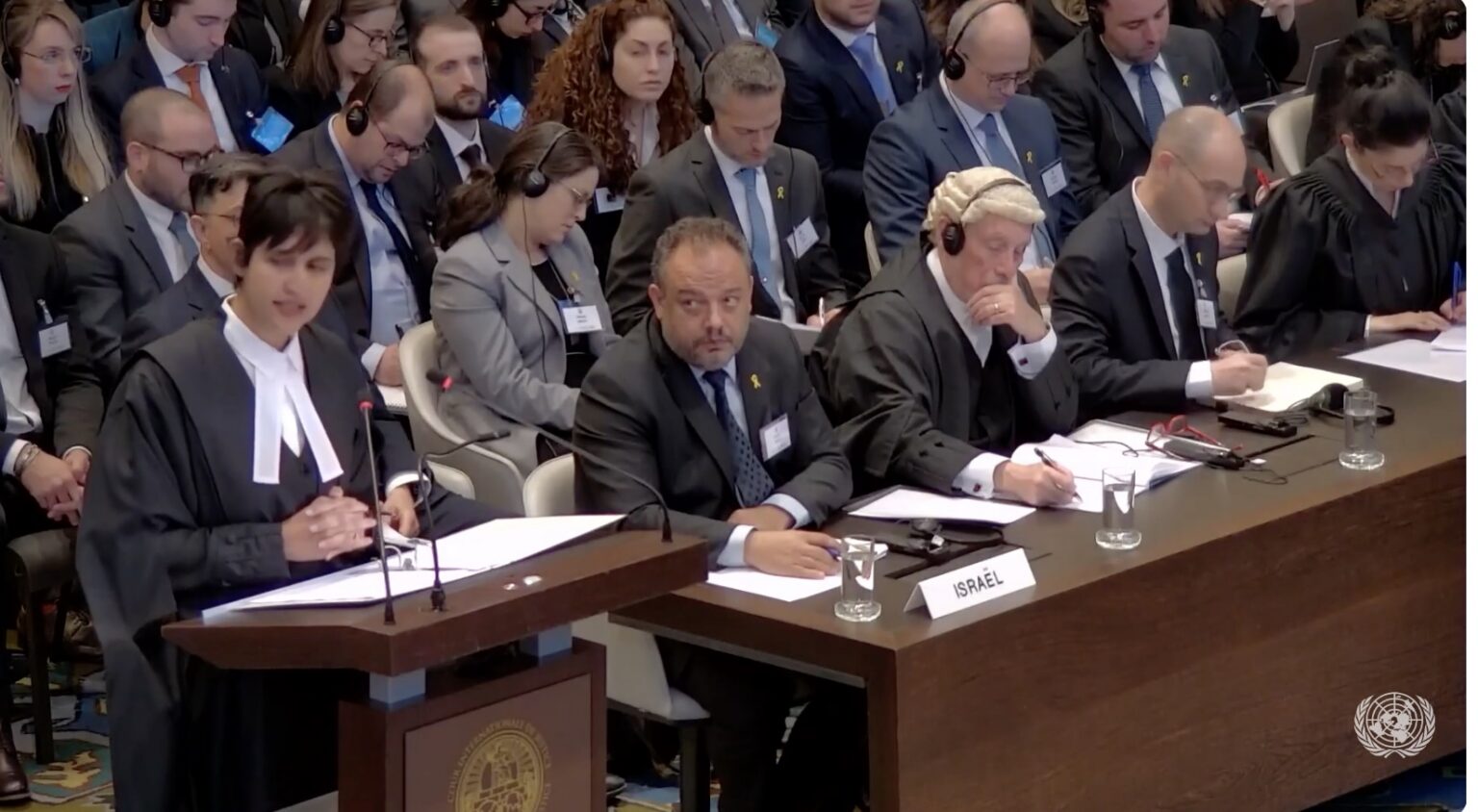
Why did South Africa’s ICJ case go from urgency to delay?

Nearly two months after Hamas launched its deadly surprise attack on the State of Israel, the African National Congress (ANC)-led government brought a case before the United Nations International Court of Justice (ICJ), accusing Israel of violating the 1948 Genocide Convention. South Africa alleged that the Israel Defense Forces were committing acts of “genocide” in Gaza.
The move was not entirely surprising, given that the ANC had refrained from unequivocally condemning the initial Hamas attack, during which approximately 1 195 people were killed, more than 5 400 were injured, and 251 others were abducted and taken into the dark and dangerous tunnel network beneath the Gaza Strip.
There have been allegations that Iran influenced and financially supported the ANC in pursuing legal action against Israel. While these claims remain contested, they have fuelled debate about the motivations behind South Africa’s decision to bring the case before the ICJ.
It is also noteworthy that none of the 22 Arab states spanning the Middle East and North Africa region took the lead in initiating similar legal proceedings against Israel. This raises legitimate questions about why South Africa, located thousands of kilometres from the conflict zone, assumed such a prominent role.
To make matters worse, Egypt, which shares a border with Gaza through the Rafah Border Crossing, maintained strict controls on the movement of Palestinians into its territory during much of the conflict. Given the geographic proximity and direct regional implications of the war, it would have seemed more logical for one or more neighbouring states to spearhead the legal challenge against Israel rather than a country situated at the southern tip of Africa.
The South African government’s recent request for an 18-month extension to submit its written response, or Memorial as it is formally known, demonstrates that there was no real sense of urgency from the outset, despite claims to the contrary when it initiated its legal campaign at the end of 2023. Common sense suggests that had the matter truly been urgent, South Africa would have acted with greater speed and efficiency in providing the legal material and evidence required for the court to make a determination.
It is quite evident that the ANC-led government was misled by Iran and Hamas, which knew that the allegations levelled against Israel were fabricated and lacked any factual basis.
It is hypocritical for the ANC-led government to initiate a legal case and then become the very party requesting a delay in its proceedings. There appears to be little logic in such a course of action. What, then, becomes of the claims that “genocide” was taking place in Gaza? Was this legal action not intended to halt what the government described as an ongoing “genocide”?
If the government already possessed the facts and evidence that prompted it to approach the ICJ, why would it require almost two years merely to submit a written Memorial? Such a delay would perhaps be more understandable if it had been requested by Israel, the respondent in the case, rather than by South Africa, the applicant.
So far, we have learned that this ICJ case has already cost taxpayers a staggering R130 million, and it is likely to require even more funding beyond 2029 should the government of the day choose to continue pursuing it. The prolonged delay risks rendering the case increasingly irrelevant, as geopolitical realities are constantly evolving and may ultimately diminish its significance in the years ahead. Israel is expected to hold elections before the end of this year, while South Africa is preparing for its own national elections in 2029. These political developments could significantly influence the nature of relations, or tensions, between the two countries.
What is clear is that the ICJ case carries not only a substantial financial burden but also far-reaching economic and diplomatic consequences, some of which South Africa has already begun to experience. Several individuals have effectively been shown the door after the United States declined to approve South Africa’s nominee for ambassador to Washington, DC. Relations between Pretoria and Washington continue to deteriorate, with tensions further exacerbated by the United States’ “Afrikaner refugee” programme. At the same time, escalating tariffs threaten to affect ordinary South Africans who are already grappling with economic hardship.
South Africa would be better served by adhering to a policy of non-alignment, refraining from direct involvement in foreign conflicts while continuing to advocate for peace and dialogue, principles it has sought to champion since 1994. Becoming entangled in distant geopolitical disputes risks imposing severe economic costs on citizens who are already struggling to make ends meet. Other major members of the BRICS intergovernmental bloc, such as China and India, have generally avoided unnecessarily escalating tensions with the United States, recognising the significant economic and diplomatic consequences that can arise from such confrontations.
- Kenneth Kgwadi is a political scientist, columnist, and research fellow at the Middle East Africa Research Institute.





CJB
June 15, 2026 at 6:38 pm
What Mr Kgwadi misses is that the ANC does *not* want a verdict but rather wants to keep the narrative of Israel genocide bubbling as long as possible. The likelihood is that the verdict will be that Israel has not committed genocide, deflating the Hamas/Iran/ANC bubble, hence the strategy of innuendo.
The ANC did not engage Bell Pottinger for research and truth-telling; they wanted vilification of their adversaries. Nothing seems to have changed (apart from Bell Pottinger being closed).
It’s worth noting that when an ICC warrant was served against a genuine genocidist and rapist (Omar al Bashir,since jailed for corruption in his own country), the ANC perjured itself in a South African court to protect him. Perjury in a foreign court seems a lower hurdle. Coincidentally, it was a crony of al Bashir who provide an explanation for the source of the $580,000 stolen from President Ramaphosa’s farm.
The ANC condemned Israel’s response to 7 October the next day, before the IDF had begun reacting while in the USA, pre-printed “genocide” posters appeared on the same day.
While political parties are free to oppose or support whichever side they choose in international conflicts, a party in government has to consider the feelings of *all* its citizenry and do what is best for the *country* — siding against our largest market’s enemies definitely adds to domestic unemployment.