





OpEds
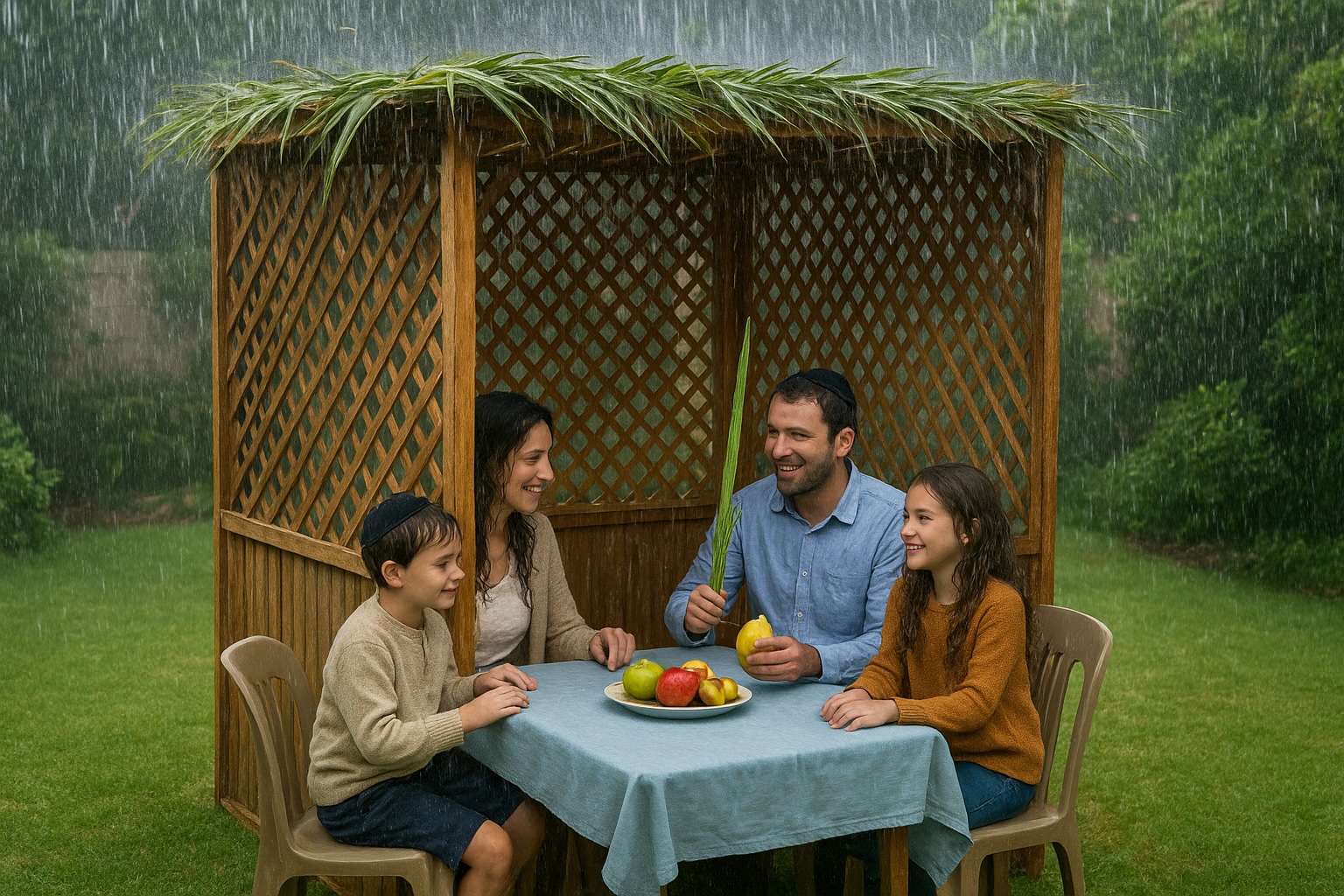
The rain on Sukkot falls out of AI’s expertise

Most of you know me as the guy who writes about geopolitics. The “geo” part isn’t coincidental – while my friends were slogging through accounting, law, and medicine – for further approved degrees please consult Joburg Jewish Mommies – I went rogue and did a Master’s in geography. The unintended consequence? I became a sort of unofficial spokesperson for everything vaguely related to the geosphere. Will it snow this winter? Where can the kids go spelunking? Early morning requests to explain the mechanics of volcanic eruptions to Howard Feldman and his audience. All roads led to my inbox.
But the single most common question? Rain. More specifically: will it rain on the upcoming wedding/Barmitzvah/birthday? These days, supercomputers crunch endless models to answer that. Why anyone thinks my input is more accurate than a stick in the ground or a broom in a tree is beyond me, but I always give it my best shot. Families still get grumpy when I’m wrong, and, if I told them it was going to rain, when I’m right.
Most people obsess over future weather. Scientists, though, also care about the past. Think tree rings revealing centuries-old climates. Or, in my case, my almost-Master’s thesis on reconstructing rainfall around Mafikeng during the Anglo-Boer War. The plan was to scour the diaries of Brits, Boers, and Basotho protagonists who all meticulously recorded when it rained. Reconstructing pre-official weather helps both historians and scientists understand societies and the skies above them. Unfortunately, that thesis never made it past conceptualisation phase, and the denizens of the North West are bereft of such a scientific contribution to this day.
Among South African Jews there’s a favourite urban – or actually rural – legend regarding the weather: Afrikaans farmers supposedly used to ask their Jewish neighbours when the “huts” were going up for Sukkot so they would know when to expect rain for their crops. Nobody knows the story’s true origin. I’m not a historian, so someone else will have to do the digging. But with the high holy days looming, Peta Krost, the editor of this fine journal, asked me to take some time out from sending Rosh Hashanah greeting cards and answer this question: can we actually prove that it regularly rains on Sukkot?
Turns out, it’s trickier than it sounds. Rainfall isn’t measured in the Hebrew calendar but in the Gregorian one, so for a start, we need the secular dates when Sukkot fell. Then, a technical question, what even counts as “rain”? A few clouds? Enough precipitation to ruin a honey covered raisin challah? And where exactly are we measuring? The whole country? Gauteng? Glenhazel?
In the old days, I would have been condemned to dusty archives; pestering rabbis for Sukkot dates over the past 20 years; and trying to line up rain records. At current freelance rates – which I should note tend towards zero – that wasn’t going to happen. But enter artificial intelligence (AI). With a ChatGPT subscription in hand, I set out to find an answer.
The first part was easy: “When was Sukkot on the secular calendar for the past 20 years?” AI instantly produced a list of dates. Whether they were right, who knows, but it sounded confident. Then I asked, “Did it rain on Sukkot?” and the AI had a meltdown. Whole Sukkot or just the first day? Night or second day? Dinner time pitter patter or full-on overnight downpour? Which Johannesburg weather station? What dataset? This, dear reader, is the kind of AI-related pushback I expect when I ask complex and controversial questions about the Middle East, not about the weather.
Eventually, parameters were set: Johannesburg; erev Sukkot night; 18:00 to 06:00 South African Standard Time; preferably from the airport station, using both Ogimet METAR (Meteorological Aerodrome Report)/SYNOP and Meteostat data.
And the big result of all that AI firepower? Shrug. The system confidently confirmed rain over the past two years – thanks, I and several drenched family members could have told you that. Any further back, the answer became either “No” or, I swear, “Maybe.” How does it “maybe” rain 18 years ago? Don’t ask me.
So, it seems that we’re back to manual. Short of a dedicated analyst combing the raw data by hand or using olden-day technology like Google and website archives, we won’t be able to find out the answer to this question. It seems that the AI isn’t the oracle of Sukkot precipitation, not for the future and apparently not for the past either. Or maybe I’m not using it right and need to attend another SA Jewish Report webinar compliments of Dan Stillerman. However, the real answer probably still lives in the gut-feel of those diligent Afrikaans farmers who, let’s face it, likely know more about the weather than I do.
Shana tova! Wishing you all a safe, healthy holiday; an end to war; and freedom for the hostages.
- Benji Shulman is broadcaster on 101.9 ChaiFM. He did his Master’s degree in geography more than a decade ago, and takes no responsibility if it rains when he said it wouldn’t.



Elizabeth Christie
October 3, 2025 at 3:56 pm
The South African Weather service (SAWS) in Pretoria should be able to help. Insurance companies frequently contact them for weather conditions related to specific dates. Someone for example may claim for damage resulting from a storm or bad weather and the service would confirm if such a storm had taken place on that date in that area.