Religion
Time to step up as who we truly are

We know how to find almost anyone these days. We can track a package across the world, find a restaurant in seconds, locate a lost phone, and instantly know what our friends are doing on the other side of the globe. We are remarkably good at finding things.
And yet, one of the hardest things to find is ourselves.
Who am I beneath everything I do? What is really going on inside me? What have I become so used to that I no longer question it? These aren’t necessarily comfortable questions, but they may be some of the most important we can ask ourselves during the high holy day season.
In fact, this very question was asked thousands of years ago, in the very first story of humanity, on the very first Rosh Hashanah.
Ayeka? Where are you?
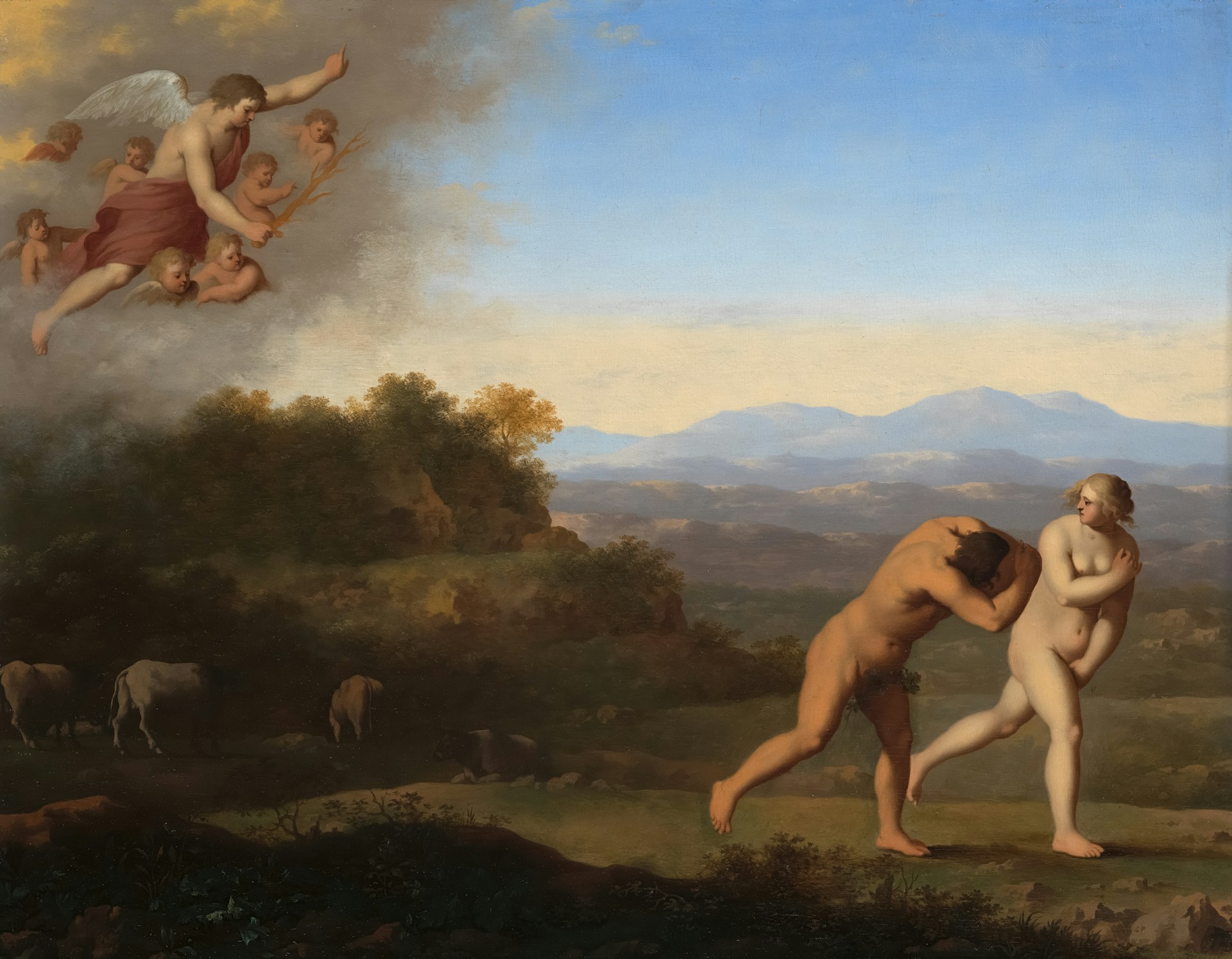
Adam and Eve had eaten from the Tree of Knowledge. They heard G-d approaching and they hid. G-d called out to Adam, “Ayeka? Where are you?”
But surely G-d knew where Adam was. He wasn’t asking for his location. He was asking something much deeper. Where are you in your life? Where are you inside yourself? Where is the person you were created to be?
I find that question particularly powerful at this time of year because we spend so much of our lives moving. We are busy, responsible, and productive. We have things to accomplish, people who need us, messages to answer, and problems to solve. We move from one thing to the next, often without stopping long enough to ask ourselves how we are actually doing, or whether we are truly living as the person we want to be.
Adam’s response to G-d is to hide. Why? Because he suddenly becomes painfully self-conscious. He sees himself as naked, exposed, and inadequate. Something has changed in the way he sees himself. Instead of seeing himself as the magnificent creation G-d made, he sees himself through the lens of shame.
And isn’t that something we all know?
We make a mistake and instead of thinking, “I made a mistake”, we begin to think, “I’m a failure”. Something difficult happens to us and slowly it becomes part of the way we define ourselves. Someone criticises us and their opinion becomes our inner voice. We compare ourselves with someone else and decide that we are somehow less.
Over time, we can create an entire story about who we are and then live inside that story. We tell ourselves that this is simply who we are, that we could never change, that it is too late, or that we are just not that kind of person. Eventually, we stop questioning those statements.
But what if the story isn’t completely true?
The Torah tells us that every human being was created in the image of G-d. Before we are anything else – before our achievements, failures, roles, personalities, successes, or struggles – there is a Divine soul within us.
That doesn’t mean we don’t have flaws. We do. It doesn’t mean we don’t have work to do. We certainly do. But it does mean that our flaws aren’t our essence. Our mistakes aren’t our identity, and our past doesn’t define us.
There is something deeper.
This is why the high holy days can be such a powerful time. They are not simply about looking at everything we did wrong. They are also about returning. Teshuvah means return. On one level, it is a return to the person we really are, beneath the noise, the expectations, the fear, and the stories we have accumulated along the way.
This is where the shofar comes in. Its shape itself seems to capture something about this journey. It begins narrow and opens wider and wider. How often do we live from the narrow end? We tell ourselves, “This is just who I am”, “I could never do that”, “It’s too late for me”, or “This is how things have always been”. We can become so accustomed to our limitations that we mistake them for our identity.
And then the shofar blows.
It calls us to open, to breathe, and to expand our sense of what is possible. It isn’t asking us to become someone else. It is asking us to become more fully ourselves – more courageous, more joyful, more connected, and more alive.
That is where the question of Ayeka becomes practical.
Over these days, perhaps we can simply pay attention to ourselves a little more. We can notice where we are, what we have been carrying, where we are living from fear rather than possibility, and where we have become smaller than we need to be.
Then we can ask ourselves a simple question: What is one small step I can take in the other direction?
It doesn’t have to be dramatic. Perhaps it’s one conversation we’ve been avoiding, one mitzvah we want to strengthen, one relationship we want to invest in, one habit we know isn’t serving us, one place where we need to forgive, or one dream we’ve stopped allowing ourselves to think about.
Teshuvah doesn’t mean becoming a different person overnight. Sometimes it means taking one step back towards the person we know we can be.
Adam hears G-d ask, “Ayeka? Where are you?” And he hides.
Later in the Torah, G-d calls to Avraham, the first Jew, “Avraham!”
And Avraham answers, “Hineni.” Here I am.
This is the journey of these days. We move from Ayeka to Hineni. G-d asks, “Where are you?” and we answer, “Here I am.”
Not because we have everything figured out and not because we are perfect. We answer because we are willing to show up, to look honestly at ourselves, to grow, and to change. We are willing to stop hiding from the parts of ourselves that need attention while remembering that those parts aren’t all of who we are.
The high holy days are a beautiful opportunity to become more present in our own lives, to stop living on autopilot, and to stop defining ourselves by the narrow story we have told ourselves.
We are being reminded that there is a Divine soul inside us with far more possibility than we sometimes allow ourselves to imagine.
So this year, when we hear the shofar, let’s hear it as a personal call.
Ayeka? Where are you?
Where have you been hiding? Where have you made yourself smaller? Where have you forgotten who you are?
And then, instead of hiding, let’s step forward and answer with Avraham’s words.
Hineni. Here I am.
I may not have all the answers, but I am here. I am listening. I am willing to begin.
Because the goal is to uncover more of the person G-d created us to be, to live a little wider, a little deeper, and a little more honestly, and to bring the unique light that only we can bring into the world.
The first human being hears Ayeka and hides. The first Jew hears his name and answers Hineni.
That is our choice too.
As we move through these high holy days, may we have the courage to stop, to look inward, and to hear the question being asked of each of us: Ayeka? Where are you?
And may we each find the courage to answer: Hineni. Here I am.
- Estee Stern is the rebbetzin of Sydenham Shul and a life coach.