Featured Item
‘We don’t leave anyone behind,’ vows former hostage

Tal Shoham, a former Israeli hostage who is on a trip to South Africa, was devastated when he saw the Hamas propaganda video last weekend showing a skeletal Evyatar David, whom he was held with in Gaza, digging what David fears will be his own grave in the same tunnel they had been kept in.
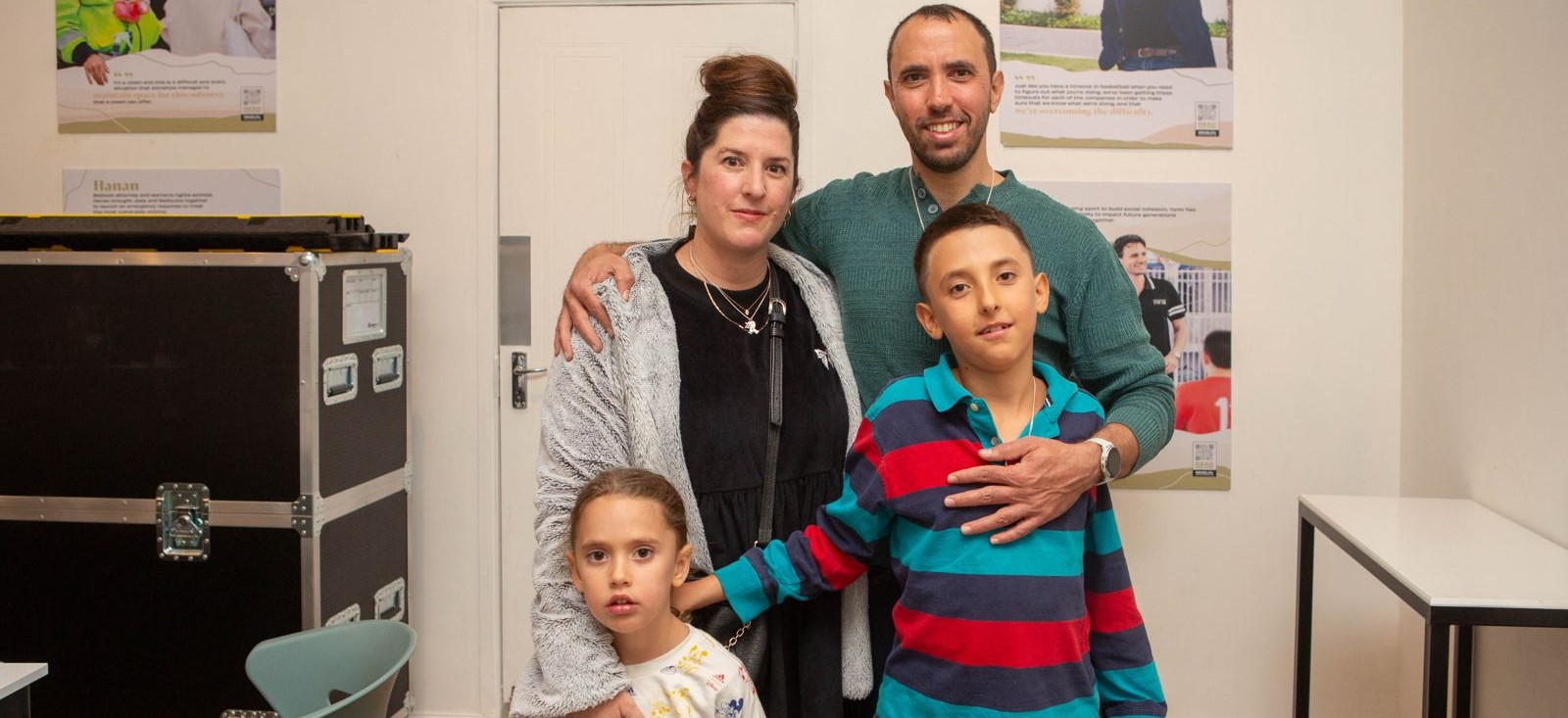
Shoham, who was held with David and Guy Gilboa-Dalal for most of his 505 days in captivity, fears that both men, who became like brothers, have just days to live. Shoham, his wife, Adi, and their children, Naveh and Yahel, who were all previously held by Hamas, were brought to South Africa by the Jewish National Fund and The Base as part of the organisations’ Hostage Healing Project.
Kidnapped from Kibbutz Be’eri on 7 October 2023, and separated from his family, Shoham was initially held in an apartment, handcuffed and alone. He decided to keep his humanity intact to survive.
“It needed to go both ways. I had to respect my captors as humans,” he told the SA Jewish Report last week. “It’s complex because there are bursts of humanity, but in the next moment, you know they will shoot you in the head because they think the Israel Defense Forces [IDF] are coming.” After 34 days in solitary captivity, Shoham’s spirits lifted when he was joined by David and Gilboa-Dalal, who were kidnapped from the Nova festival.
“Really quickly, we became a family of three. We couldn’t control what the terrorists would do to us or how much food we would have. Yet our bond was an important part of our inner strength.”
This bond extended to include Omer Wenkert when the three men were later transferred to a tunnel where Wenkert had previously been held alone. Shoham and Wenkert were released in February, while David and Gilboa-Dalal remain hostages.
“We were four men closed in a really narrow tunnel, only 1m wide, 1.8 metres high, and 12 metres long,” Shoham said. “There were four mattresses and a hole in the ground serving as a toilet. At first, I needed a lot of mental strength not to think about it, because every time I did, the walls were closing in on me.”
Aside from torturous uncertainty about the fate of Adi and their two children – whom he was later informed had been released – Shoham’s biggest struggle was starvation. “We stood against the wall for a minute not to faint when we stood up. We were starved to the point that Evyatar and I developed scurvy, a disease caused by a severe, ongoing vitamin C deficiency. We were lacking vitamins for months, eating only small pita breads or a little plain rice.” Potentially fatal if left untreated, scurvy hasn’t been seen in Western countries for the past 200 years.
Shoham and his fellow hostages initially believed that they were given such minimal food rations because their captors had limited supplies. “But near the end, they confessed that they were doing it on purpose. Their commander said we should almost not eat at all because the IDF was still fighting them.”
He said the remaining hostages are experiencing even worse starvation than he did. “I shed 27kg during my captivity, and I’ve gained 24kg back. I believe Evyatar and Guy, who lost a similar amount to me, have shed another 15kg or 20kg since then.”
Shoham said that on 7 October 2023, he, Adi, Naveh, and Yahel – then eight and three – were visiting Adi’s family on Kibbutz Be’eri. Adi was raised on the kibbutz. She and Shoham lived there until 2020, when they moved to the north to protect their children from the threat of missiles.
On 7 October, after hours of trying to protect the family in the safe room with Adi’s father, Shoham decided to surrender. He feared the terrorists would throw a grenade inside if they managed to create a hole in the bulletproof window. Though Adi’s father was ultimately killed, it was a decision that saved the rest of the family.
Outside, Adi saw the bodies of those executed, and had to physically wrestle her children away from the terrorists. “I wasn’t thinking, because they could have easily shot me or separated us. They did that in many cases,” she said. “It was instinct.” Together with her children, her mother, aunt, and young cousin, Adi was held in an apartment in Gaza. They were forced to whisper only, a habit Yahel battled to break after their release in November 2023.
“We were in extreme danger 24/7,” Adi said. “I was awake every night of the 50 nights we were held, feeling it was my job to keep my children alive until we were back home.” When they were released, Adi and the children’s nightmare continued as Shoham remained a hostage for almost a year and a half.
“The most painful thing was the terror of uncertainty,” Adi said. “The children knew where Tal was, they knew the danger he was facing every day. For all this time, they had to carry this awareness and the uncertainty of whether their father was dead or alive.”
Shoham said his children, now nine and five, have grown up fast. “After everything they went through, I feel like we have two teenagers,” he said. “They know how cruel life and people can be, but on the other hand, Adi managed to keep them children.”
Adi, a psychologist herself, said that since 7 October, she’s felt the power of the Jewish community, worldwide, the comfort of knowing they aren’t alone. “The community has a DNA of morals, of not leaving brothers behind,” she said.
Though she has never met David, she feels like she knows him. “Seeing him like this has broken us, and we feel like we cannot stay quiet,” she said. She urged the community to speak out about the horrors David and the remaining hostages are facing. “It feels like we’re sitting on the beach watching a person drown,” she said.